HD Hyundai and Kiewit Join Forces to Build a New American Shipyard, Creating 3,000 Jobs
The United States is preparing for a new chapter in its shipbuilding industry as South Korea’s HD Hyundai partners with American engineering and construction giant Kiewit to develop a new shipyard. Construction is expected to begin in 2027, with operations targeted for 2029 and approximately 3,000 domestic jobs projected once the facility is operational.
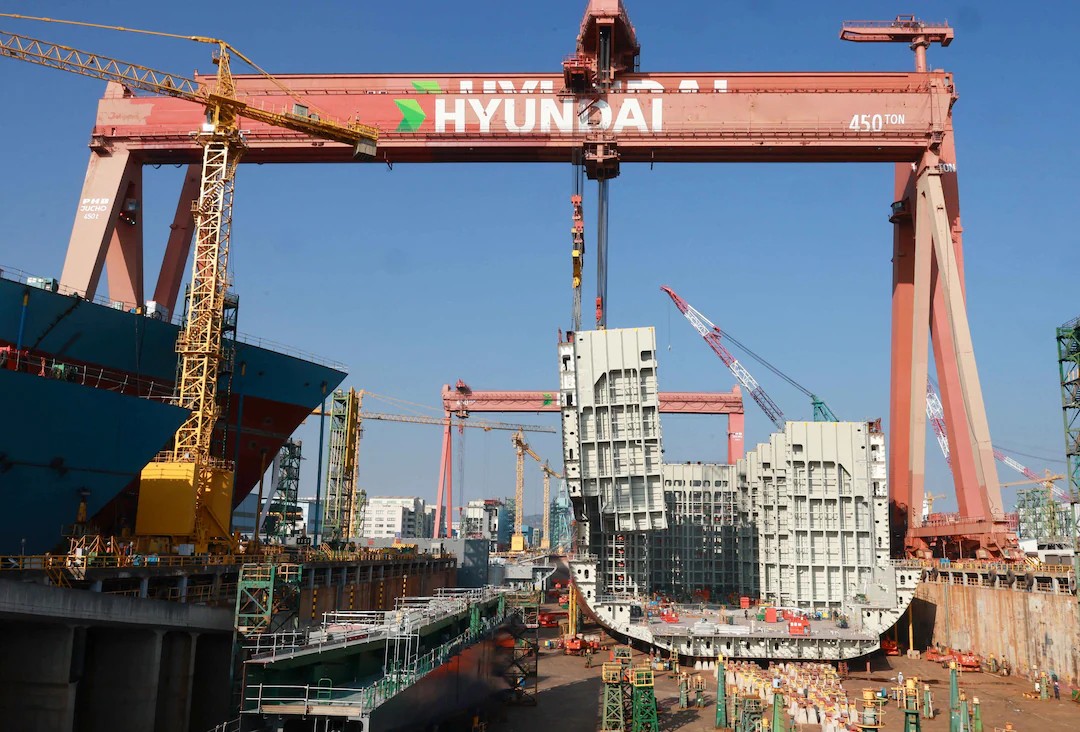
For decades, shipbuilding has been one of the clearest demonstrations of a nation’s industrial capabilities. Building a ship requires far more than steel, engines and a dry dock. It demands specialised engineering, extensive supply chains, skilled workers and the ability to coordinate thousands of components into a single functioning vessel.
Now, two major industrial players are preparing to bring those capabilities together in the United States.
South Korean shipbuilding giant HD Hyundai has signed an agreement with American engineering and construction company Kiewit Corporation to establish a joint venture that will build an advanced shipyard in the United States.
Announced on 23 October 2026, the agreement sets out an ambitious timeline: construction is expected to begin next year, and the partners are targeting the start of operations in 2029. Once operational, the facility is expected to create approximately 3,000 American jobs.
The announcement arrives as Washington seeks to strengthen American shipbuilding capacity and South Korean companies look to expand their involvement in the US maritime industry.
But the significance of the project extends beyond the number of jobs it could create. The proposed shipyard represents an attempt to combine established Asian shipbuilding expertise with American industrial infrastructure, potentially supporting commercial shipping, naval logistics and a wider network of domestic suppliers.
A New Shipyard Rather Than a Revived One
One of the most significant aspects of this agreement is the decision to develop a new facility rather than acquire and reopen an existing shipyard.
The distinction matters.
Reviving an existing shipyard can provide access to established infrastructure, but it can also mean working around facilities designed for older production methods. A new development offers the partners an opportunity to plan the layout, equipment and manufacturing processes around modern shipbuilding requirements from the beginning.
HD Hyundai will contribute its shipbuilding technology, production expertise and operational experience. Kiewit, meanwhile, will bring its engineering, construction and industrial fabrication capabilities to the project. The companies intend to use their complementary strengths to develop a modern American shipbuilding operation.
The location of the new shipyard has not yet been publicly confirmed in the reporting available at the time of writing. The companies have therefore not established a specific American port or state as the final destination for the development.
Nor has a definitive project cost been disclosed in the reporting reviewed.
Those details will be important as the project advances, particularly because the location will influence access to ports, industrial suppliers, transport infrastructure and the skilled workforce required to operate the facility.
For now, the agreement establishes the direction of travel: a new shipyard, a Korean-American industrial partnership and a target opening in 2029.
Who Is HD Hyundai?
To understand why this partnership matters, it is worth examining the company on the South Korean side of the agreement.
HD Hyundai is a major industrial group with extensive interests in shipbuilding and related maritime technologies. Its shipbuilding operations are associated with the construction of commercial vessels and specialised ships, supported by engineering capabilities that extend across vessel design, production and offshore applications.
South Korea has become one of the world’s leading shipbuilding nations, competing internationally in complex vessel categories that demand advanced manufacturing, careful project management and sophisticated engineering.
Large commercial ships can take years to design and construct. Their production requires coordination between hull fabrication, propulsion systems, electrical installations, navigation equipment and countless other systems.
HD Hyundai’s experience in managing these demanding processes is a central reason its involvement could be valuable to an American shipyard seeking to expand its capabilities.
Under the new partnership, the company is expected to supply the technical expertise and production knowledge required to establish the operation. The objective is not simply to construct a facility, but to develop a functioning shipbuilding business capable of competing for work in the American market.
Official company website: “HD Hyundai” (https://www.hd.com/en?utm_source=chatgpt.com)
Kiewit: The American Industrial Partner
On the American side, Kiewit brings a different but equally important set of capabilities.
The company has extensive experience in engineering, construction and major infrastructure projects. Those capabilities are relevant to a development of this scale, where building the shipyard itself will require substantial planning, fabrication facilities, industrial infrastructure and coordination between contractors.
A shipyard is not simply a large building beside the water. It is an interconnected production environment that must accommodate heavy materials, large structures, specialised equipment and the movement of components through different stages of construction.
The layout must support efficient workflows while allowing workers and machinery to operate safely.
Kiewit’s contribution is therefore expected to extend beyond providing a construction site. Its industrial expertise will help translate HD Hyundai’s shipbuilding requirements into an American manufacturing facility.
Chad Johnson, president of Kiewit Maritime, said the partnership presented an opportunity to expand American shipbuilding capacity, develop a skilled workforce and strengthen domestic supply chains.
The partnership combines two different forms of industrial experience: HD Hyundai’s shipbuilding knowledge and Kiewit’s engineering and construction capabilities.
Official company website: “Kiewit” (https://www.kiewit.com/?utm_source=chatgpt.com)
What Will the Shipyard Build?
The new facility is expected to explore opportunities in both commercial shipbuilding and military support vessels.
That dual focus could prove important to the project’s long-term prospects.
Commercial shipbuilding serves the wider maritime economy, including the vessels needed to transport goods and support industrial activity. Military support vessels serve a different purpose, helping naval forces maintain logistics and operational capabilities.
The joint venture is also expected to investigate opportunities to manufacture and supply ship blocks and modules to existing American shipyards.
These components are significant because shipbuilding does not always require every section of a vessel to be constructed at the same location.
Large hull sections and other structural modules can be fabricated separately before being transported to a shipyard for assembly. A specialist facility capable of producing such components could therefore support other American shipbuilders, even when it is not constructing an entire vessel from beginning to end.
For the United States, this creates the possibility of strengthening more than one facility through a single investment.
However, the partners have not yet publicly confirmed a definitive production list, a specific number of vessels or contracts awarded to the proposed shipyard.
Its eventual workload will depend on commercial opportunities, customer demand and any relevant government procurement arrangements.
The immediate objective is to establish the facility and explore those markets.
A Smart Shipyard for a Modern Industrial Era
One of the most interesting aspects of the development is the potential to apply modern manufacturing technology to American shipbuilding.
South Korea’s shipbuilding industry has invested heavily in advanced production methods, automation and digital manufacturing systems. HD Hyundai has been developing a future-oriented shipyard model intended to make better use of data and improve manufacturing efficiency.
Reporting on the proposed American development describes an ambition to incorporate technologies such as digital twins, automated production systems and robotic welding. These systems could help coordinate manufacturing processes, improve quality control and address some of the challenges associated with labour-intensive ship construction.
A digital twin is a virtual representation of a physical object, system or process. In an industrial setting, it can help engineers model production, monitor performance and identify potential problems before they become costly physical issues.
Robotic welding and automated fabrication can also improve consistency in repetitive manufacturing tasks, provided the systems are properly configured and maintained.
The purpose is not to eliminate the human workforce. Rather, advanced production technology can help skilled workers complete complex tasks more efficiently while reducing avoidable errors and improving safety.
Shipbuilding will continue to require experienced engineers, welders, technicians, electricians and production specialists.
The challenge is to combine those skills with manufacturing systems capable of delivering vessels and components reliably, at competitive cost and to the required standards.
If the proposed facility achieves that balance, it could become a model for how new shipbuilding infrastructure is developed in the United States.
The 3,000-Job Promise
The headline figure is difficult to overlook: approximately 3,000 American jobs are expected once the shipyard becomes operational.
That projection represents a substantial employment opportunity, although the companies have not yet provided a detailed breakdown of the positions or a timetable for individual recruitment phases.
The workforce could include production workers, welders, engineers, electricians, maintenance technicians, logistics personnel, manufacturing specialists and management staff. These are typical requirements of a large shipbuilding operation, rather than a confirmed list of positions for this particular facility.
The wider economic impact could also extend beyond the shipyard’s direct employees.
A functioning shipbuilding operation requires materials, equipment, transport, maintenance and a network of specialist suppliers. Local businesses capable of serving those requirements could benefit from the development, depending on where the facility is located and how much of its supply chain is sourced domestically.
Training will be another important consideration.
Advanced manufacturing systems require workers who understand both traditional industrial processes and modern production technologies. Developing that workforce will be essential if the project is to meet its employment ambitions and sustain operations over the longer term.
Nevertheless, the 3,000-job figure should be understood as a projection associated with the operational facility, not a claim that those jobs already exist or will all be created during construction.
The number of construction jobs, the recruitment schedule and the division between permanent and temporary positions have not been fully detailed in the announcements reviewed.
The project’s employment promise will ultimately be measured by the jobs it delivers as the shipyard develops.
The Bigger Picture: South Korea’s Shipbuilding Ambitions in America
The agreement also fits into a wider economic and strategic relationship between Washington and Seoul.
South Korea has pledged $150 billion for investment in the American shipbuilding sector as part of a broader $350 billion investment commitment connected to a trade arrangement involving US tariff reductions. The shipbuilding component is intended to support cooperation between the two countries in a strategically important industrial sector.
That context helps explain why the HD Hyundai–Kiewit agreement matters beyond the interests of the two companies.
Shipbuilding is closely linked to international trade, energy transportation, industrial supply chains and national security. A country’s ability to build and maintain vessels can affect its commercial competitiveness as well as its capacity to support naval operations.
South Korea brings extensive shipbuilding experience, while the United States offers a substantial domestic market and an established network of industrial, commercial and defence customers.
Cooperation could allow American shipbuilding operations to benefit from Korean manufacturing expertise while developing domestic infrastructure and employment.
The arrangement also creates commercial opportunities for South Korean industry, providing a route into a market where local production capacity and supply-chain participation are important considerations.
It is a partnership built around shared industrial interests, but its success will depend on execution rather than announcements alone.
Can the Project Help Rebuild American Shipbuilding?
That is the larger question.
A new shipyard could add valuable capacity, introduce modern production methods and create opportunities for workers and suppliers. Yet one facility cannot, by itself, resolve every challenge facing an entire national industry.
Shipbuilding requires sustained demand, reliable investment, competitive production costs, skilled labour and suppliers capable of meeting demanding schedules.
The proposed operation will need customers, contracts and a clear production strategy. It will also have to demonstrate that its technology and manufacturing methods can deliver practical advantages in the American operating environment.
The potential to supply ship modules to other yards may offer an additional route into the market, allowing the venture to participate in the wider industry as well as pursue complete-vessel construction.
The proposed military-support segment may also provide opportunities, but any defence work will depend on applicable procurement requirements and contracts. The announcement does not establish that the venture has already secured a US Navy shipbuilding contract.
The distinction is important. The agreement represents a strategic commitment to develop new capacity, not proof that the facility has already achieved its intended industrial role.
Construction is expected to begin in 2027, leaving the partners with substantial work to complete before the planned 2029 operational target.
A New Chapter for American Shipbuilding
The HD Hyundai–Kiewit agreement brings together two companies with complementary industrial strengths and a shared ambition to expand American shipbuilding capacity.
For HD Hyundai, the project offers an opportunity to apply its production expertise in a major overseas market. For Kiewit, it creates a new industrial partnership that combines its engineering and construction experience with specialised shipbuilding knowledge.
For the United States, the potential benefits include additional manufacturing capacity, an opportunity to introduce advanced production systems, a stronger domestic supply chain and approximately 3,000 projected jobs.
The project also reflects a wider shift in the way countries approach strategic manufacturing. Rather than relying exclusively on domestic expertise or imported finished products, industrial partnerships can combine technology, infrastructure and workforce development across national boundaries.
Whether this new shipyard becomes a significant force in the American maritime industry will depend on what happens next: where it is built, how construction progresses, which contracts it secures and whether it can recruit and train the workforce required to operate it.
For now, the agreement establishes an ambitious timetable and a clear objective.
By 2029, HD Hyundai and Kiewit aim to have a new American shipyard in operation, creating thousands of jobs and adding another piece to the infrastructure needed to strengthen the United States’ shipbuilding industry.