D Expressions Of Dior “ JOY ” Raymonde Zehnacker: The Woman Who Understood Christian Dior
The Other Half of Christian Dior
Christian Dior was brilliant beyond his time. His imagination could transform a sketch into a vision of femininity, his understanding of elegance could reshape the direction of fashion, and his name would eventually become synonymous with one of the most influential revolutions in haute couture history. Yet to understand Dior fully, we must look beyond the man whose name appeared on the label.
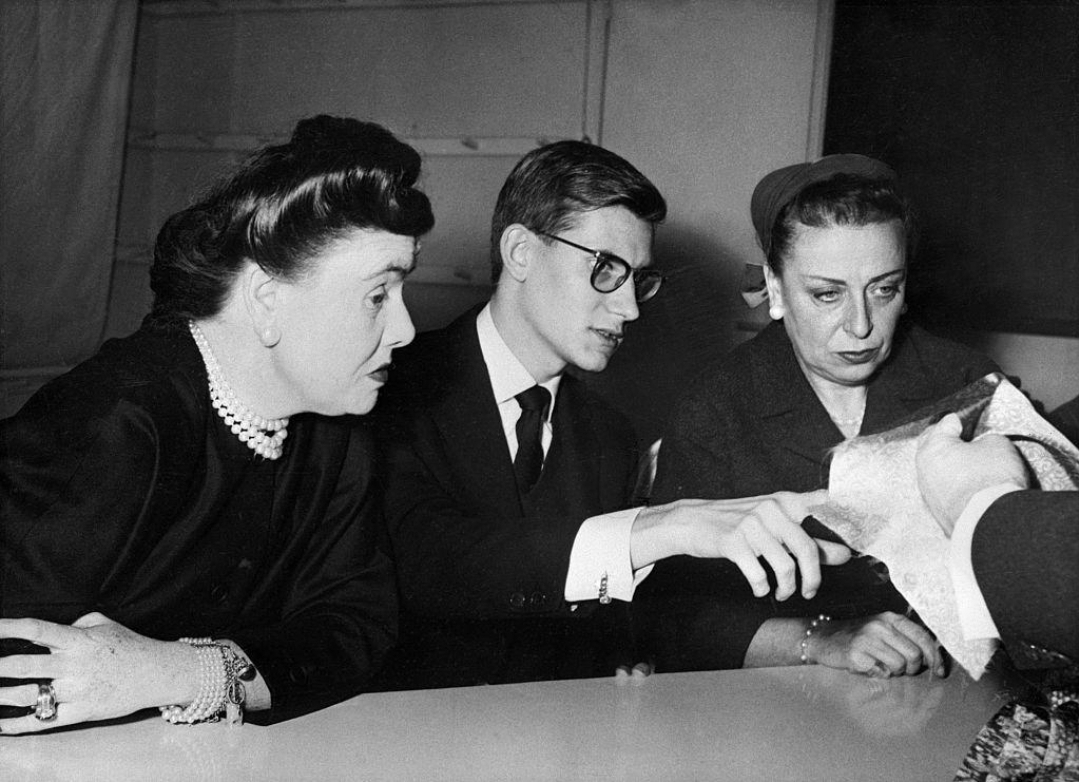
Behind the couturier stood a woman who understood how he thought, recognised what his ideas needed to become reality, and possessed the qualities that he himself acknowledged he lacked.
Her name was Raymonde Zehnacker.
In Dior by Dior, his autobiography, the couturier described her as his “other half,” explaining that she was his exact complement: reason to his fantasy, order to his imagination, discipline to his freedom, and foresight to his recklessness. These were not merely words of affection. They were an unusually candid acknowledgment that his creative genius operated most effectively alongside someone capable of giving it structure.
The official history of the House of Dior, preserved through La Galerie Dior, similarly identifies Zehnacker as the organisational pillar of his studio and an intimate friend. She was his right hand, his protector and the woman who helped steer him through the intricate world of fashion when he was still finding his footing as a couturier.
Perhaps the most fitting description of her contribution is that she was Dior’s translator.
Not a translator of languages, but of ambition. She understood the meaning behind his ideas, the intentions concealed within his sketches, and the possibilities that others might struggle to recognise.
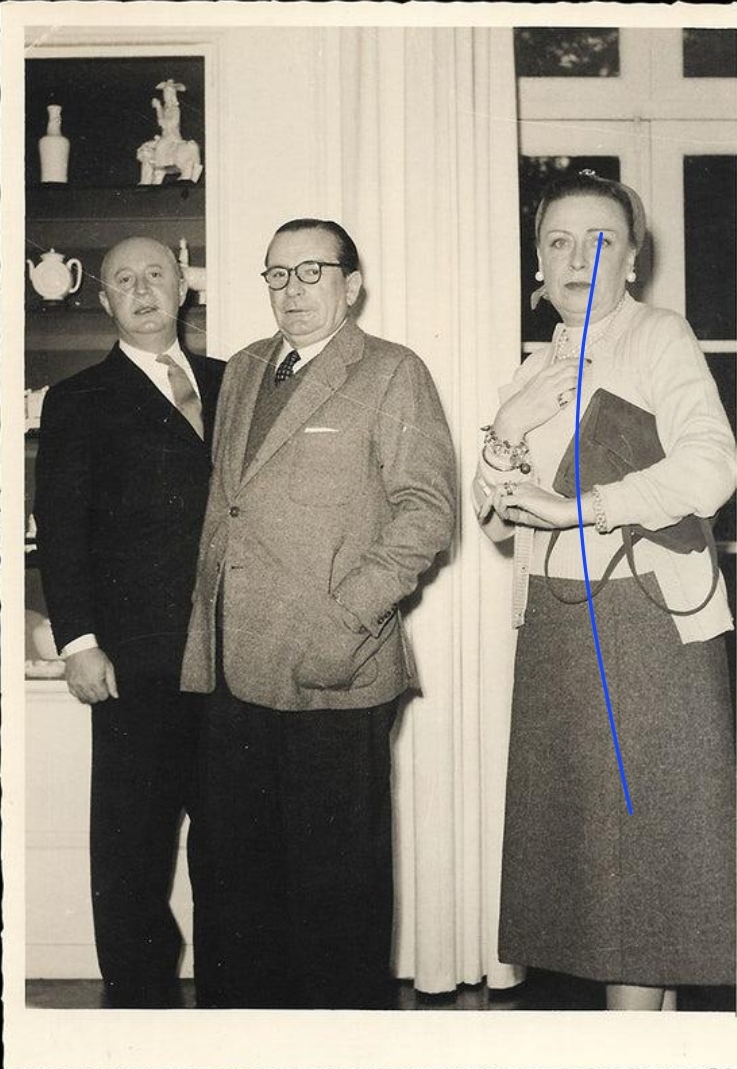
Where Dior could imagine, Zehnacker could organise. Where his creativity threatened to exceed the limits of practicality, she helped establish the order necessary to make his vision work.
Fashion history remembers the designer who creates the silhouette. It does not always remember the person who understands what that silhouette demands of an entire organisation.
To understand why Zehnacker mattered so much, we must return to the beginning of their professional relationship, to the house of Lucien Lelong, during one of the most difficult periods in the history of French fashion.
The first meeting between Dior and Zehnacker belongs to the period when both were associated with Lucien Lelong, one of the most important figures in Parisian haute couture. It was a professional relationship that would eventually become something much more significant.
Dior had already begun building his reputation before the war. He worked as a fashion illustrator before joining Robert Piguet in 1938, where he developed his understanding of the relationship between a designer’s imagination and the finished garment. After military service and the disruption of the French fashion industry, he joined Lelong’s house during the Second World War, working alongside another future couturier, Pierre Balmain.
The precise chronology deserves attention. Although accounts differ slightly on the dates of Dior’s employment, La Galerie Dior places his arrival at Lelong in the early 1940s and preserves his own recollection of how he entered the house.
In Dior by Dior, he wrote that Paul Caldaguès introduced him to Lucien Lelong, who hired him almost immediately.
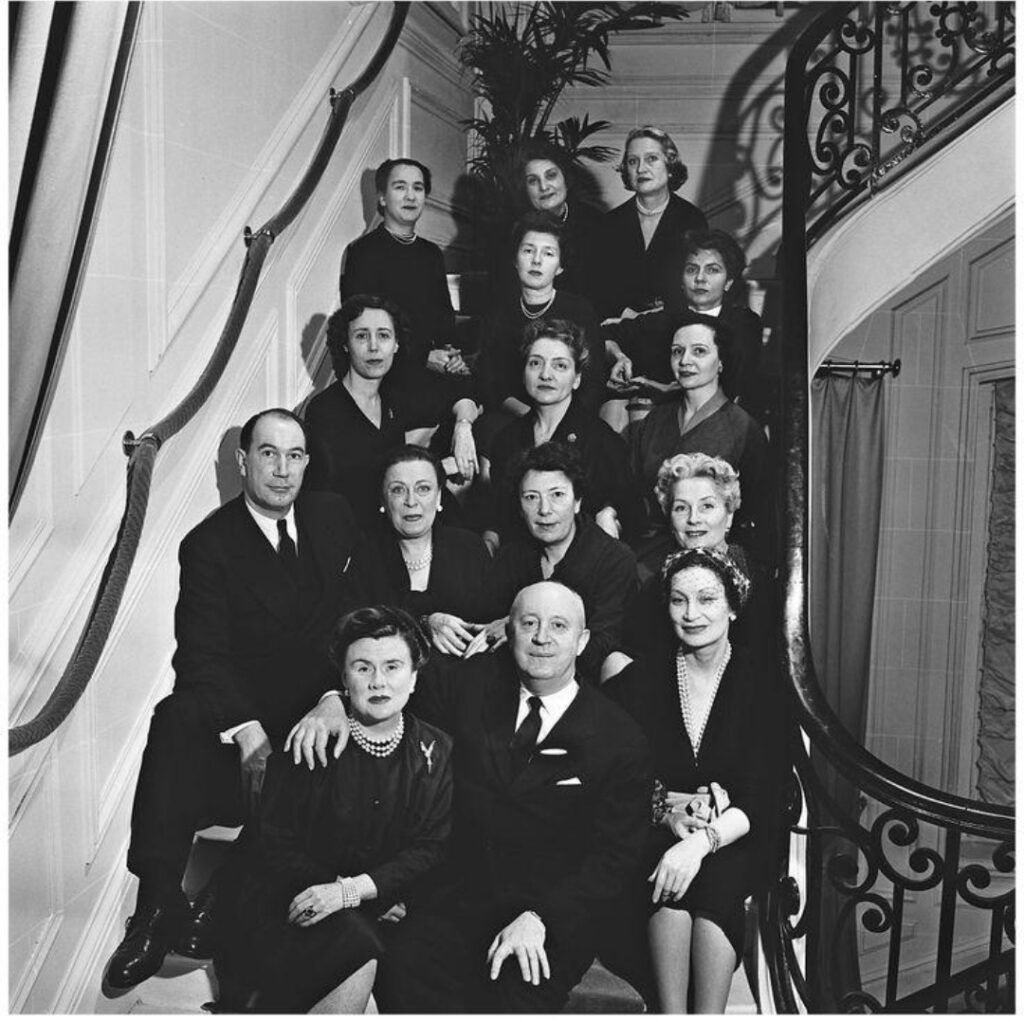
Dior regarded Lelong’s establishment as an excellent school of couture, one considerably larger than Piguet’s, where he could learn more about his profession.
This is an important distinction: the surviving account identifies Caldaguès, rather than Zehnacker, as the person who introduced Dior to Lelong. Zehnacker entered his story through their shared professional world at the house, and it was there that the relationship which would shape the next chapter of his career developed.
We should resist the temptation to assign her an introduction that the available evidence does not establish. Her significance requires no embellishment. What matters is that she came to know the man behind the designs before the world knew him as Monsieur Dior.
Working within Lelong’s establishment meant operating in a demanding environment where creative decisions had to coexist with the realities of production, materials, clients and an industry fighting to survive. For a designer with Dior’s imagination, such an environment could be both a school and a test.
Zehnacker understood the practical world in which his ideas had to live. Dior would later describe her not simply as an employee or colleague, but as the person whose qualities balanced his own. Their connection was built on an understanding that extended beyond the drawings themselves.