7:7 Years — The Unseen Guide
There are no rules written on the wall at Ferrari.
No document that says how long a driver must stay, how a champion must be treated, or when a driver becomes more than simply another name attached to the scarlet car.
Ferrari has never really needed such rules.
Instead, there are traditions. Expectations. Unspoken hierarchies. And sometimes, an understanding that develops so slowly that nobody notices it happening.
Charles Leclerc may be one of the clearest examples of that.
Seven years.
Seven years at Ferrari.
Seven years watching seasons come and go, teammates arrive and leave, regulations change, cars succeed and fail, and championship dreams repeatedly move just beyond reach.
And perhaps the strangest part of all is that Leclerc has been there for almost the entire modern Ferrari story.
While the drivers around him changed, Charles remained.
The Driver Who Stayed
Think about the names.
Sebastian Vettel.
Carlos Sainz.
Fernando Alonso before him.
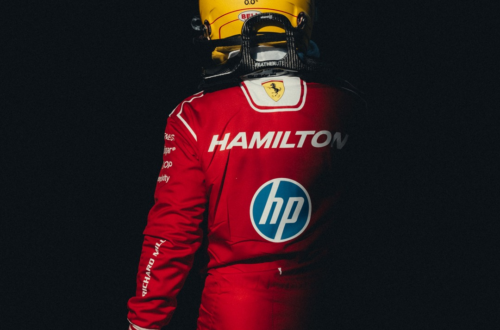
Lewis Hamilton now.
Different personalities. Different driving styles. Different expectations. Different eras of Formula 1.
Yet Ferrari remained Ferrari.
And through much of this period, so did Charles Leclerc.
He has worked through the same Ferrari culture, under the same leadership structure, while watching other drivers enter the garage believing they could be the man to restore the championship.
Some lasted years.
Some left frustrated.
Some became champions elsewhere.
Leclerc stayed.
That matters.
Because Ferrari is not simply another Formula 1 team. It carries memory.
Every failure is remembered. Every missed opportunity becomes part of the mythology. Every championship that slips away becomes another chapter in a story that has been going on for generations.
For a young driver, that environment can become overwhelming.
For Leclerc, it has become home.
Two Men, Two Ideas
There is another interesting parallel.
For years, one man held the crown.
Lewis Hamilton.
Champion. Benchmark. The driver whose career became synonymous with winning at Mercedes.
And then there was Charles, watching.
Not necessarily waiting for Hamilton specifically, but waiting for his own moment.
Hamilton understood order.
The structure around him had to function. The garage had to work. The team had to understand its priorities. A championship-winning operation requires discipline.
Charles represents something slightly different.
Harmony.
Ferrari cannot function simply by putting the fastest driver in the fastest car and hoping everything works itself out. The garage needs to breathe together. Engineers, drivers, strategists and leadership have to move in the same direction.
That is where the idea of the unseen guide begins.
Leclerc has spent years learning Ferrari from the inside.
He has seen what works.
He has seen what doesn’t.
He has watched teammates arrive with their own philosophies and watched those philosophies collide with Ferrari’s reality.
He has experienced strategy mistakes, pressure, expectations, criticism and the weight of driving for the most famous team in Formula 1.
That experience cannot be purchased.
It cannot be downloaded into a simulator.
And it certainly cannot be learned in one season.
The Unwritten Rule
Perhaps there is an unwritten rule at Ferrari.
Not that Charles is automatically the leader.
Not that he should always receive priority.
Not even that he should be protected from criticism.
It may simply be that Charles understands Ferrari because Ferrari has been teaching him for seven years.
That is different.
Fernando Alonso understood Ferrari.
Sebastian Vettel understood Ferrari.
Carlos Sainz understood Ferrari.
Lewis Hamilton is learning Ferrari.
But Charles has lived through Ferrari.
There is a difference between joining a team and growing inside one.
Leclerc arrived young enough that Ferrari became part of his Formula 1 identity. He wasn’t simply a driver who came to Maranello looking for another contract.
He became Ferrari’s driver.
And while the championship has changed hands, Ferrari’s drivers have changed and the cars have changed, Charles has remained one of the constants.
Seven Years of Watching
Seven years gives you perspective.
You begin to understand the personalities in the room.
You learn when engineers are confident and when they are pretending to be.
You learn how the team reacts to pressure.
You learn what Ferrari sounds like when everything is going right — and what it sounds like when everything is falling apart.
You learn that a race isn’t necessarily lost on Sunday.
Sometimes it is lost on Saturday.
Sometimes it is lost in development.
Sometimes it is lost in communication.
Sometimes it is lost months before the first race.
Leclerc has watched all of it.
And that could become incredibly important as Ferrari moves into another phase of its championship pursuit.
Outlasting the Names
There is something almost ironic about Leclerc’s Ferrari career.
When he arrived, the expectation was that he might eventually become Ferrari’s future.
Now, seven years later, he is part of its history.
The future has arrived several times.
And Charles is still here.
Vettel came with a championship pedigree.
Sainz came with something to prove.
Hamilton arrived carrying perhaps the greatest championship résumé of the modern era.
Leclerc has survived all three eras.
That doesn’t automatically make him Ferrari’s number one.
But it does make him something Ferrari cannot simply replace.
Experience inside Maranello has a value that doesn’t appear on a timing screen.
And Perhaps He Outlasts Hamilton Too
That is the uncomfortable possibility.
Lewis Hamilton may have arrived at Ferrari as the established champion, the proven winner, the man who had already climbed the mountain.
But Charles has something Hamilton doesn’t.
Time inside Ferrari.
If Hamilton’s Ferrari chapter eventually ends, Leclerc may still be sitting in the other side of the garage.
Still watching.
Still learning.
Still pushing.
Still waiting for Ferrari to give him the car capable of turning potential into a championship.
And perhaps that is the real meaning of seven years.
Leclerc hasn’t simply survived Ferrari.
He has absorbed it.
The team that once needed to teach him what Ferrari meant may eventually discover that the driver they kept beside them has become one of the people who understands what Ferrari needs.
Not because anyone appointed him.
Not because there is a rule.
But because seven years creates its own authority.
The Unseen Guide
Maybe Ferrari doesn’t need another driver to tell it how to win.
Maybe it needs somebody who remembers why it keeps failing to.
Charles Leclerc has witnessed the changes.
He has watched champions come and go.
He has shared the garage with different philosophies, different teammates and different versions of Ferrari.
Through all of it, he remained.
That makes him more than a driver who has spent seven years wearing red.
It makes him a witness.
And perhaps, eventually, an unseen guide.
There are no rules saying Charles Leclerc has to be Ferrari’s future.
There are no rules saying he has to outlast everyone who comes through the other side of the garage.
But if history is any indication, there is a very good chance he will.
He has already outlasted most of them.
Perhaps Lewis Hamilton is simply the next chapter.
And when that chapter closes, Charles may still be there — seven years wiser, carrying seven years of Ferrari’s victories, mistakes, disappointments and dreams with him.
Still waiting.
Still driving.
Still Ferrari.