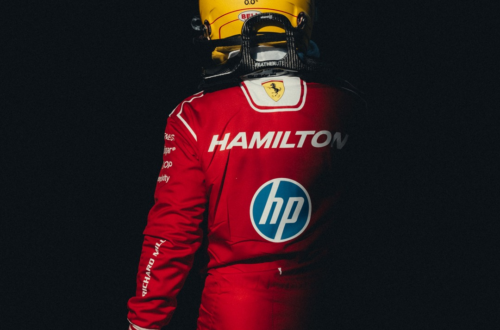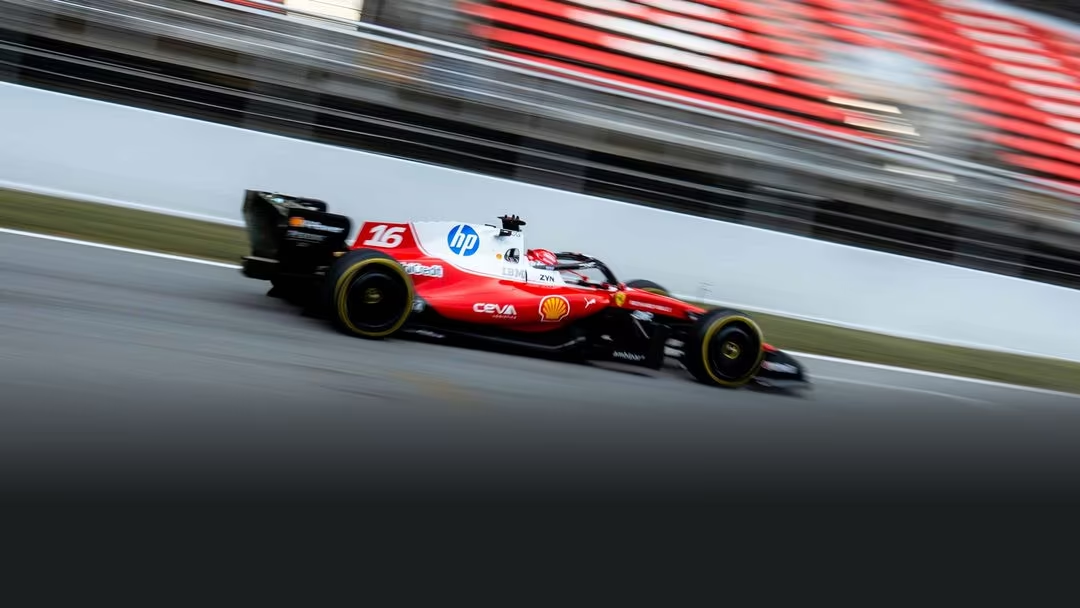
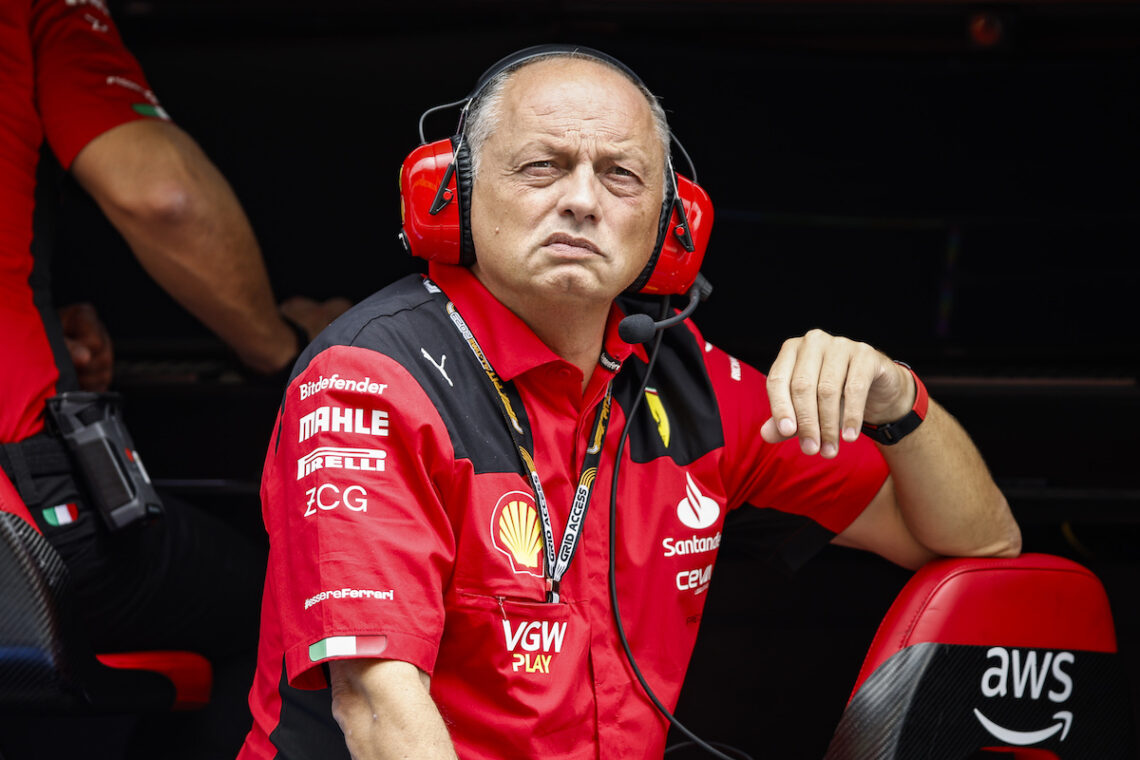
For Scuderia Ferrari, the second half of the 2026 Formula 1 season is beginning to look less like a recovery and more like an opportunity.
But there is a part of this year’s technical battle that deserves considerably more attention.
Fuel.
The conversation around Ferrari has understandably centred on the SF-26’s chassis, aerodynamic development, power unit and the performances of Charles Leclerc and Lewis Hamilton. Yet beneath all of that is another engineering competition: the race to turn the new generation of 100% sustainable fuel into usable performance.
Charles Leclerc may have put it most simply:
“This championship will be won by upgrades.”
I agree.
But upgrades don’t necessarily mean a new floor or a different front wing.
In 2026, the fuel itself is part of the performance equation.
From E10 to Advanced Sustainable Fuel
To understand why, we need to go back to the fuel Ferrari was running before the 2026 regulations arrived.
Formula 1 moved to E10 fuel in 2022, meaning the fuel contained approximately 90% conventional fuel and 10% renewable ethanol. The ethanol component was already sustainably sourced, but the underlying fuel still contained fossil-derived components.
That changed completely for 2026.
Formula 1’s new regulations require race fuel to use Advanced Sustainable components, with carbon sourced from materials such as municipal waste, non-food biomass, recycled materials and, depending on the pathway, captured carbon used in synthetic fuels. The objective is to eliminate newly extracted fossil carbon from the fuel itself.
This is not simply a case of taking the old E10 formulation and replacing the ethanol.
The chemistry changes.
And when the chemistry changes, the combustion characteristics change with it.
That is where Ferrari and Shell have had to do some serious work.
Ferrari and Shell Had Four Years to Solve It
Shell began developing Ferrari’s 2026 fuel formulation as early as 2022, when the previous fuel formulation entered competition.
That gave the partnership approximately four years to develop, simulate and test the new formulation before the 2026 regulations came into force. Shell says its programme involved more than two million fuel simulations over those four years, examining how different fuel molecules and blends would behave inside Ferrari’s power unit.
This is an important distinction.
The 2026 fuel isn’t simply “green petrol.”
It is a deliberately engineered fuel formulation.
Shell’s scientists have effectively had to ask:
Which molecules can replace the fossil-derived components while still producing the combustion characteristics Ferrari’s new power unit requires?
That means combustion speed, energy content, knock resistance, ignition behaviour, thermal characteristics and overall efficiency become critical.
And this is where the argument that “100% sustainable fuel must burn better” falls apart.
It doesn’t.
There is no inherent guarantee that the new sustainable fuel produces a better burn rate than the previous E10 formulation.
The objective is to make the sustainable formulation perform as effectively as possible within the new regulations.
That is an engineering achievement, not an automatic consequence of the fuel being newer.
And Ferrari’s Fuel Isn’t Actually the Same as the Old E10
This is where the public conversation can become confusing.
The old E10 formula was effectively a 90/10 fuel-and-ethanol blend.
The 2026 Ferrari/Shell fuel is something fundamentally different.
Shell describes the Ferrari formulation as a bespoke Advanced Sustainable Race Fuel, with the sustainable components derived from approved advanced feedstocks. Shell’s current description of the fuel powering Ferrari’s SF-26 says the formulation contains just 1% fossil additives, with the remainder derived from advanced sustainable feedstocks.
That distinction is important because “100% sustainable” refers to the regulated sustainable component definition and lifecycle requirements; it does not mean that every molecule in every commercial description is literally free of every fossil-derived additive.
Shell’s Ferrari race fuel is also not a fuel you can simply buy at a Shell forecourt. It is a bespoke competition formulation.
So when we talk about Ferrari’s fuel advantage, we are talking about a highly specialised racing formulation.
The Biggest Change May Be How Fuel Is Measured
There is another reason fuel matters so much in 2026.
Under the previous regulations, fuel usage was constrained by mass flow, measured in kilograms per hour.
The 2026 regulations shift the emphasis toward the energy content entering the power unit, with a maximum of 3,000 MJ per hour.
That changes the game.
Ferrari and Shell aren’t simply looking for a fuel that contains more energy.
They need to maximise how efficiently the power unit converts the permitted energy into useful propulsion.
That makes the relationship between fuel chemistry and the combustion chamber far more important.
And it means a fuel formulation that looks similar on paper can behave very differently once it is being burned at the extreme operating conditions of an F1 power unit.
This Is Where Leclerc’s Upgrade Argument Becomes More Important
Leclerc’s argument that the championship will be won through upgrades therefore goes further than aerodynamics.
Ferrari can introduce a new floor.
It can revise its wings.
It can improve its chassis.
It can unlock more from the power unit.
And Shell can continue refining the fuel formulation.
All of these developments ultimately have to work together.
That is why I don’t believe Ferrari’s championship position can be judged simply by looking at horsepower.
The question is:
How efficiently can Ferrari turn its available energy into lap time?
The 2026 power units themselves have changed dramatically. Electrical power now accounts for approximately half of the system’s output, while the MGU-K can deliver up to 350 kW, compared with 120 kW previously.
That means the fuel, combustion engine, battery, MGU-K and energy recovery system are no longer separate stories.
They are one story.
Barcelona Was the Warning
Ferrari’s victory in Barcelona was therefore more interesting than simply seeing Lewis Hamilton stand on the top step.
The SF-26 won using Shell’s 2026 V-Power Race Fuel, and Shell specifically points to the fuel’s development around Ferrari’s new-generation power unit.
Hamilton’s Barcelona victory also required careful battery management during the race.
That is precisely what Ferrari needs to understand.
The car doesn’t need to be dominant everywhere.
It needs to be efficient.
If Ferrari can combine the chassis performance Leclerc believes exists underneath the SF-26 with improved aerodynamic efficiency, stronger power-unit performance and a fuel formulation capable of extracting maximum efficiency from the available energy, the competitive picture can change very quickly.
But Sustainable Doesn’t Automatically Mean Faster
This is where Ferrari fans should be careful.
It would be easy to look at Shell’s new fuel and assume that because it represents a technological step forward, Ferrari should automatically gain performance.
That’s not how this works.
The fuel is designed to satisfy a completely new regulatory requirement while maintaining competitive performance.
Shell itself describes the challenge as extracting and manufacturing the required molecules while maintaining performance, efficiency and sustainability.
The previous E10 fuel had years of development behind it.
The 2026 fuel is a new chemical environment.
Ferrari therefore has to learn how the new formulation behaves with every aspect of its power unit.
And that learning process itself can produce performance.
A small improvement in combustion efficiency can become more electrical energy available.
More efficient combustion can alter thermal management.
Better thermal behaviour can change cooling requirements.
Reduced cooling requirements can potentially influence packaging and aerodynamic efficiency.
Suddenly, something that began as a fuel development becomes a chassis advantage.
That is the part of the 2026 story that deserves more attention.
Mercedes Has Already Shown What a Complete Package Looks Like
This is why Ferrari’s challenge against Mercedes isn’t simply about finding one magical upgrade.
Mercedes has demonstrated a remarkably rounded package through the opening half of the season.
Ferrari, meanwhile, has remained in the fight.
The Scuderia sits between Mercedes and McLaren in the Constructors’ Championship, meaning it is neither lost at the front nor under immediate threat of collapse from behind.
That is actually a good position from which to develop.
Ferrari doesn’t need to panic.
It needs to keep improving.
And Then There Is Monza
Now the opportunity becomes even more interesting.
Kimi Antonelli is facing a major grid penalty at Monza because Mercedes needs to replace power-unit components, potentially transforming the championship mathematics for one weekend.
Ferrari, meanwhile, is bringing further development of its own.
And Monza is Ferrari territory.
If the SF-26 can qualify strongly, manage its tyres and energy efficiently, and Ferrari’s latest power-unit development delivers what the team expects, the opportunity is obvious.
A championship leader starting deep in the field changes the points equation.
Ferrari has two drivers capable of taking advantage of it.
The question is whether they can do so without taking points away from each other.
Hamilton Still Believes
Hamilton’s position is particularly interesting.
He has already won for Ferrari.
He has experienced what the SF-26 can do when the circumstances come together.
And with the championship still having considerable distance to run, there is no reason for the seven-time world champion to abandon the fight.
But Hamilton cannot win this championship alone.
Ferrari has to give him a car capable of doing it.
And that means development.
Leclerc Has a Point But He Needs the Win
Charles Leclerc’s position is perhaps even more important.
He understands Ferrari better than anyone outside the engineering room.
He knows where the car works.
He knows where it doesn’t.
And he understands that the championship is ultimately going to be decided by who develops fastest.
But there is one thing I believe Leclerc needs to change.
He needs to want the win.
Not simply a podium.
Not simply to finish ahead of McLaren.
Not simply to beat Hamilton.
The win.
Because if Ferrari produces the upgrade that changes the SF-26’s competitive level, somebody has to convert it into points.
And Leclerc has already shown that he can.
Ferrari Doesn’t Need Team Orders — Yet
This is where I stand with Fred Vasseur.
I don’t believe Ferrari needs team orders yet.
Not now.
Not with the championship still capable of changing through upgrades.
Ferrari needs both drivers pushing.
It needs Hamilton chasing Antonelli.
It needs Leclerc chasing Hamilton.
And it needs the two of them extracting every possible point from the car.
If one driver eventually emerges as the clear championship contender, then Ferrari can reassess.
But right now?
Let them race.
The Constructors’ Championship is still more important than deciding which Ferrari driver is theoretically number one.
The Real Ferrari Upgrade May Not Be the One You Can See
This is the most important point going into the second half of 2026.
When Ferrari rolls out a new floor, everyone can see it.
When a new rear wing appears, the paddock photographs it.
When a new front suspension component arrives, journalists immediately start explaining it.
But fuel is different.
You cannot see the molecules.
You cannot see the combustion process.
You cannot look at the SF-26 and immediately know whether Shell has found another fraction of efficiency.
Yet those fractions can matter enormously.
Ferrari’s 2026 fuel has been developed over four years, through millions of simulations, specifically to work with the team’s new power unit.
The transition from E10 to Advanced Sustainable Fuel is therefore not simply an environmental footnote.
It is part of the performance war.
And that brings us back to Leclerc.
This championship may indeed be won by upgrades.
But in 2026, upgrades are no longer just carbon fibre.
They are software.
They are aerodynamics.
They are batteries.
They are combustion chambers.
They are power-unit calibration.
And increasingly, they are the molecules inside the fuel tank.
Ferrari doesn’t necessarily need the biggest upgrade.
It needs the most efficient one.
Because if the SF-26’s chassis foundation really is as strong as Leclerc believes, and Ferrari can combine that foundation with aerodynamic gains, power-unit development and a fuel formulation that extracts every permitted megajoule as efficiently as possible, then the championship picture could look very different by the time the season reaches its final races.
The question isn’t whether Ferrari has another opportunity.
It does.
The question is whether Maranello can turn that opportunity into performance.
And in 2026, performance begins long before the fuel reaches the cylinder.