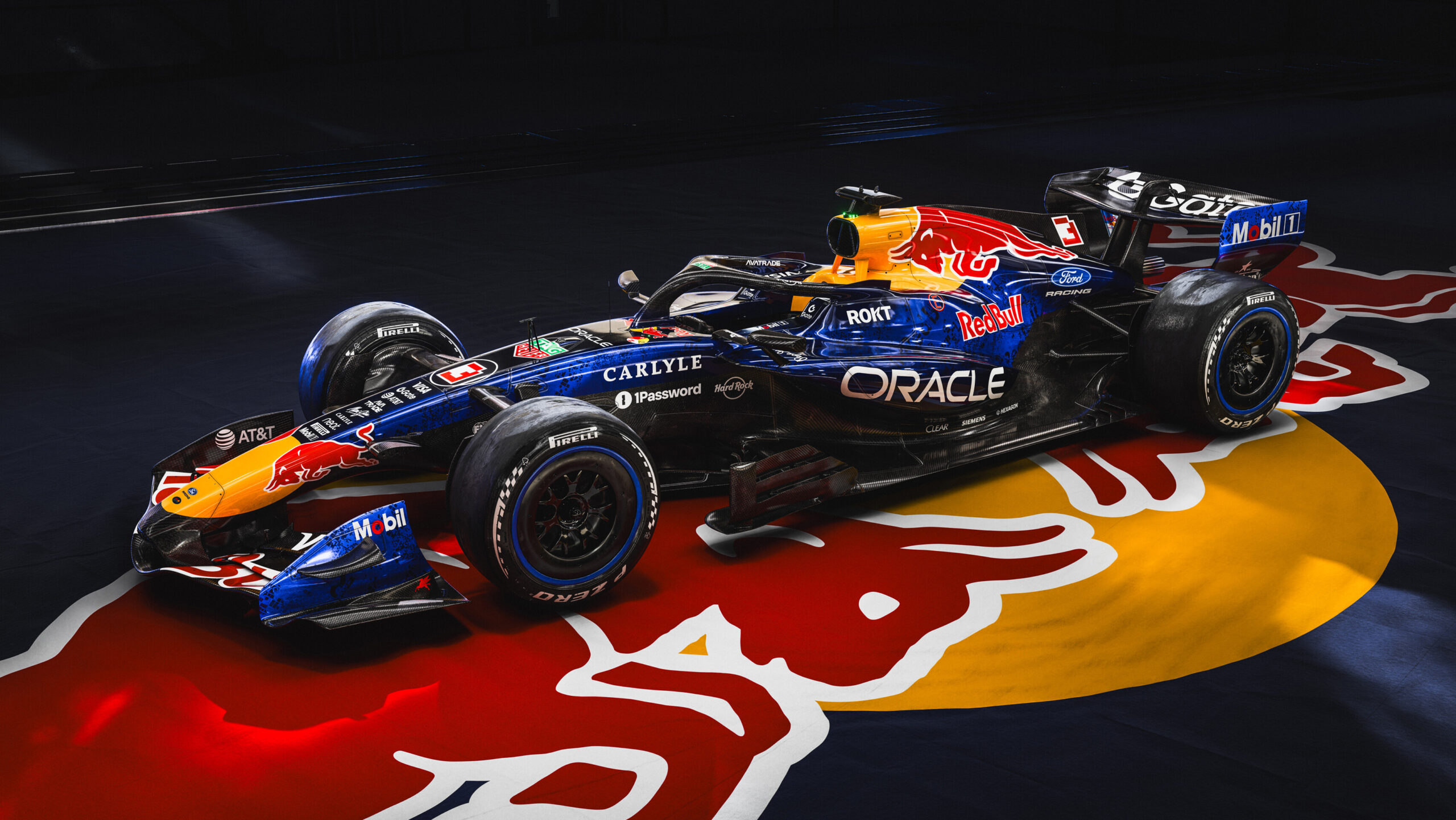
BUDAPEST — One race after stepping back to analyze a series of high-speed aerodynamic failures, Red Bull Racing is reintroducing its reworked, rotating rear-wing concept on the RB22 for this weekend’s Hungarian Grand Prix.

Four-time Formula 1 World Champion Max Verstappen confirmed that the updated aerodynamic development—famously dubbed the “Macarena” wing—has been refitted to his car ahead of Friday practice at the Hungaroring.
From Innovation to Unpredictable Liability
Red Bull originally debuted its variation of the rotating rear wing at the Miami Grand Prix. Inspired by Ferrari’s early-season active rear-wing design, Red Bull’s upside-down approach featured a larger gap between upper wing elements to significantly lower drag on straightaways.
However, the aggressive design quickly proved troublesome on track:
- Austrian Grand Prix (Red Bull Ring): Verstappen suffered a sudden rear-end spin during qualifying when airflow failed to reattach upon corner entry.
- British Grand Prix (Silverstone): A similar failure prevented downforce from restoring as the upper flap closed, leaving the car aerodynamically unbalanced and ending Verstappen’s race in the gravel trap.
The lack of downforce during turn-in prompted the Laurent Mekies-led squad to remove the wing for the Belgian Grand Prix at Spa-Francorchamps, prioritizing safety and allowing technical director Pierre Waché’s engineering team time to conduct a thorough investigation.
Rigorous Testing and Reproduction
Speaking to Viaplay ahead of the Hungarian GP, Verstappen revealed that Red Bull’s technical team successfully managed to recreate the glitch under controlled conditions, enabling engineers to design a targeted fix through extensive simulations and bench testing.
“We assume that it has been resolved, but I obviously don’t know that for sure yet,” Verstappen remarked. “They have carried out multiple tests and run further simulations. Hopefully, it closes properly now. That is the goal.”
Verstappen emphasized that replicating the exact failure in simulations was a crucial breakthrough.
“Fortunately, they were also able to simulate it. It is already very good that you can reproduce the problem. Now I just hope it has been fixed, because you obviously don’t want that happening here either.”
High Stakes at the Hungaroring
Bringing the active concept back at the tight, twisty Hungaroring represents a calculated gamble. With its relentless sequence of medium- and high-speed corners, a mid-corner loss of downforce at Budapest would carry a severe performance and safety penalty.
Nonetheless, Red Bull’s decision to reinstall the wing reflects confidence that the root cause has been addressed. As the team looks to optimize downforce and stability, the performance and reliability of the reworked “Macarena” wing will be one of the primary technical focal points of the Hungarian Grand Prix weekend.