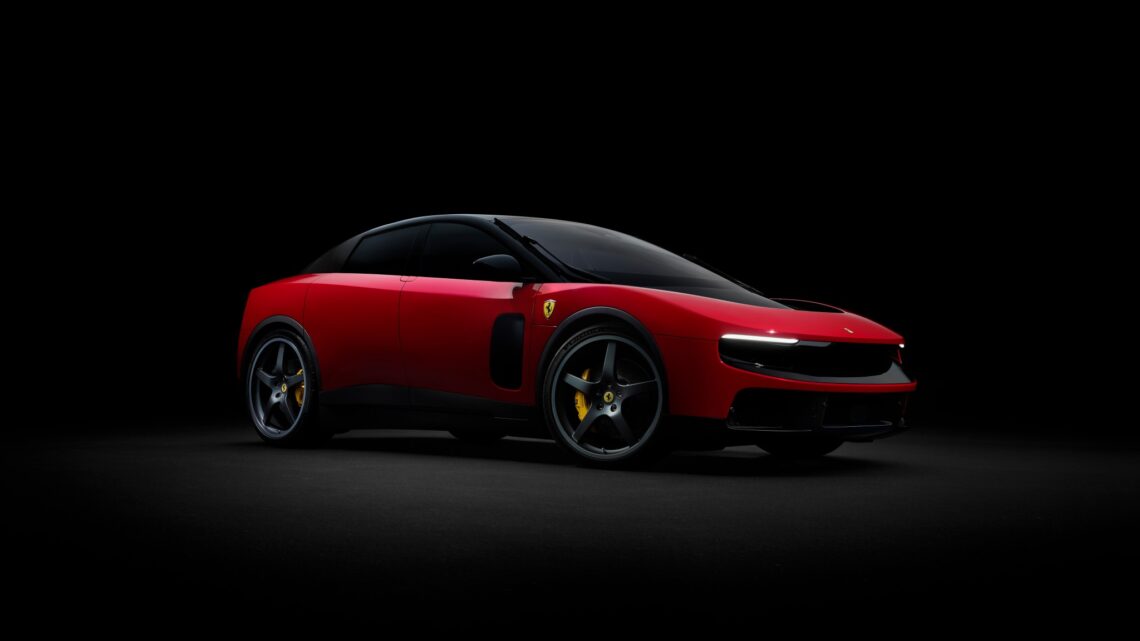
The launch of the Ferrari Luce Maranello’s first-ever pure electric vehicle and its first five-seater—has sent absolute shockwaves through the automotive world. With an exterior shaped by Jony Ive’s creative collective LoveFrom, a massive €550,000 price tag, and a radically minimalist design, it was bound to polarize.
But the real firestorm isn’t just about the styling or the lack of a V12 exhaust note. It’s about how Ferrari is managing its customer base. Rumors immediately began swirling that Ferrari would use its legendary, iron-fisted allocation system to force collectors to buy the Luce just to stay on the list for future limited-edition hypercars.

Ferrari’s Chief Marketing Officer, Enrico Galliera, immediately came out to crush those rumors, explicitly stating that dealers have been ordered to only sell the Luce to clients who “truly want it.” He noted that forcing it onto people would create “negative ambassadors” who would flip the car, destroying its residual value. Ironically, right after this PR storm, Ferrari announced Galliera is stepping down after 16 years, replaced by former BMW Italy boss Massimiliano Di Silvestre.
Some critics are looking at this entire saga and claiming Ferrari is desperately begging its customers to buy a product they don’t want.
They are completely missing the point.
This isn’t desperation; this is masterclass, textbook luxury marketing.
The Allocation Myth vs. True Luxury Logic
For decades, the standard playbook for ultra-luxury automotive brands has been a carrot-and-stick game. To get a GT3 RS, you buy a Macan. To get a Daytona SP3, you buy a Purosangue. It’s a proven method to boost volume in secondary segments while rewarding brand loyalty.
When a vehicle represents a monumental paradigm shift like the Luce—a 1,035-horsepower, zero-emission, liftback five-seater—using the “stick” is a fatal error.
“Make sure that anyone who asks for this car truly wants it, and isn’t buying it to please Ferrari because they’re somehow looking for other types of benefits.” — Enrico Galliera
By publicly drawing a line in the sand and stating that buying a Luce won’t buy you favoritism for the next hypercar, Ferrari is doing something incredibly sharp: they are protecting the product’s integrity.
If Ferrari forced the Luce onto traditional petrolhead collectors who only want high-RPM combustion engines, those cars would end up sitting under covers in dark garages, resold to brokers in six months out of spite. That kills residual values, and in the luxury market, residual value is everything.
Market Cultivation, Not Market Pleading
Ferrari isn’t begging the old guard to buy in; they are aggressively marketing an entirely new ecosystem to a completely different demographic.
The Luce isn’t built for the traditionalist who measures a Prancing Horse solely by the scream of a naturally aspirated engine. It is explicitly designed for the new wave of ultra-high-net-worth individuals: tech founders, green-energy barons, and collectors who prioritize raw engineering, silence, and cutting-edge digital integration over old-school heritage.
Look at the raw engineering under the skin:
- The Power Split: Four independent electric motors delivering a staggering 1,035 hp, deeply rear-biased (831 hp at the back, 282 hp up front) for pure, tail-happy physics.
- Chassis Rigidity: A massive, hollow single-piece monobloc casting made from 75% recycled aluminum that increases torsional rigidity by 35% over anything Ferrari has built before.
- Analog Tactility: Ditching the frustrating touchpads of recent models to return to real, physical switchgear on the steering wheel, alongside an e-manettino that shifts torque targets 200 times per second.
Beyond the Papal Blessing: Real-World Presence
To kick off this new marketing era, Ferrari pulled off a massive symbolic coup by taking the Luce straight to Castel Gandolfo, where Pope Leo XIV became the first person outside the company to sit behind the wheel and even take it for a brief spin.
Now, there is absolutely nothing wrong with the Pope rolling the Luce forward—it’s a massive PR win that underscores the car’s quiet luxury and sustainable mission. But let’s be honest: a slow, stately crawl through papal gardens isn’t exactly going to convince the critics.
The real test for Ferrari’s marketing strategy won’t happen in the Vatican. It will happen when we see tech billionaires, design purists, and avant-garde collectors actually driving the car out in the real world. The Luce needs to be seen tearing through mountain passes, sitting outside high-end design studios, and silently dominating urban spaces.
The backlash against the Luce’s minimalist exterior and its pastel blue launch color has been fierce—even wiping 8% off Ferrari’s stock value post-reveal. Critics are yelling that “the legend is dead.”
But the leadership shift at the top of Ferrari’s marketing department indicates a brand that realizes it needs a pivot toward a highly aggressive, experience-driven marketing campaign. Di Silvestre’s job isn’t to force the car onto people—it’s to get the right people behind the wheel so the world can see what a 1,000-plus horsepower electric Ferrari can actually do on tarmac. Once the real-world footage drops, the narrative will shift from “compliance car” to a legitimate leap forward.