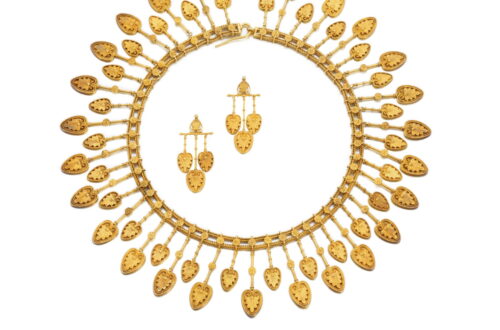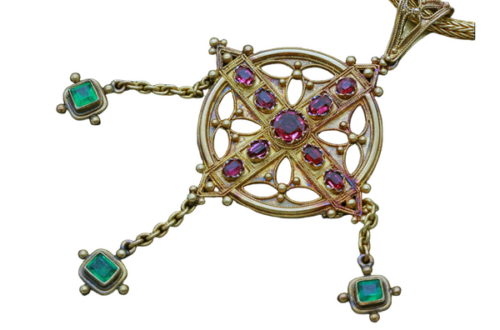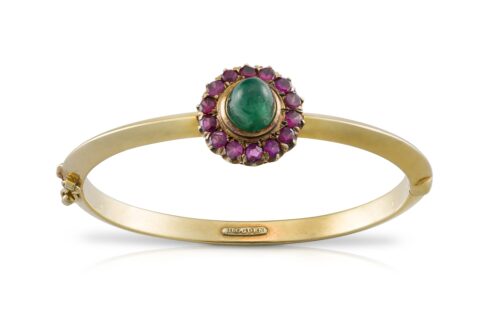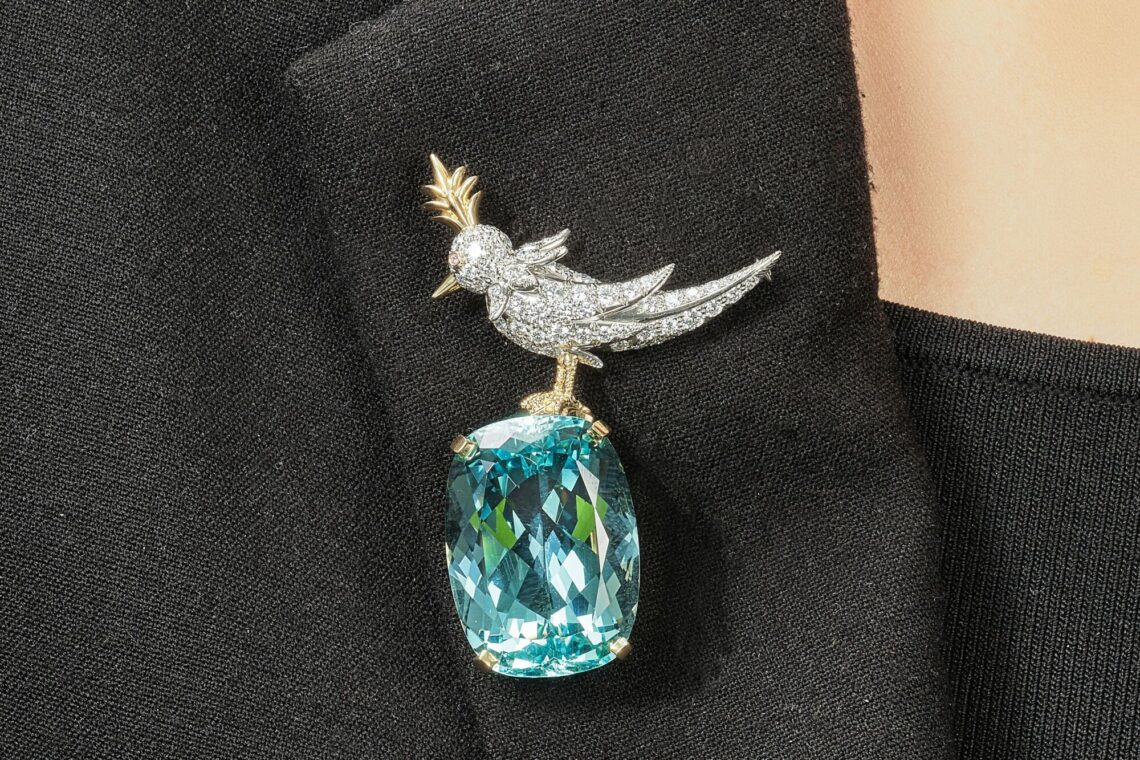
The early 1900s was a spectacular, transformative window for high jewelry. This period was dominated by two overlapping design movements: Art Nouveau (celebrating fluid, asymmetrical nature) and the Edwardian Era / La Belle Époque (defined by ultra-luxurious, white-on-white platinum and diamond lace-work).
Looking at Tiffany & Co. and Dutray, we see two completely different tiers of early 20th-century luxury. One was a global superpower setting trends on a massive scale, while the other was a master class in local, classic European craft.

Tiffany & Co. – The Golden Age of Innovation
By the early 1900s, Tiffany & Co. was already an international powerhouse, but this specific era marked a massive artistic shift. In 1902, the company’s legendary founder Charles Lewis Tiffany passed away, and his son, Louis Comfort Tiffany, became the brand’s first official Art Director.

1. Louis Comfort Tiffany’s Art Nouveau Movement
While the brand was famous for the classic diamond “Tiffany Setting” engagement ring (introduced in 1886), Louis Comfort brought the Art Nouveau movement to the forefront. He didn’t just care about the monetary value of a gemstone; he cared about its color and how it caught the light. His jewelry featured:

- Organic Motifs: Sinuous lines, dragonflies, peacocks, wild blossoms, and tangled grapevines.
- Unconventional Stones: He pioneered the use of colorful, translucent stones like opals, moonstones, tourmalines, and native American turquoise.
- Masterful Enameling: Tiffany pieces from this era are famous for intricate cloisonné and champlevé enameling, which gave pieces an ethereal, stained-glass quality.
2. High Edwardian Glamour
Simultaneously, Tiffany’s New York workshops catered to the “Gilded Age” elite with stunning Edwardian pieces. These were grand, majestic, and monochromatic. They mastered the use of platinum, a metal newly introduced to jewelry because its incredible strength allowed craftsmen to create gossamer-thin, lace-like settings. They produced massive tiaras, “dog collar” chokers, and festoon necklaces dripping with Old European cut diamonds and seed pearls.