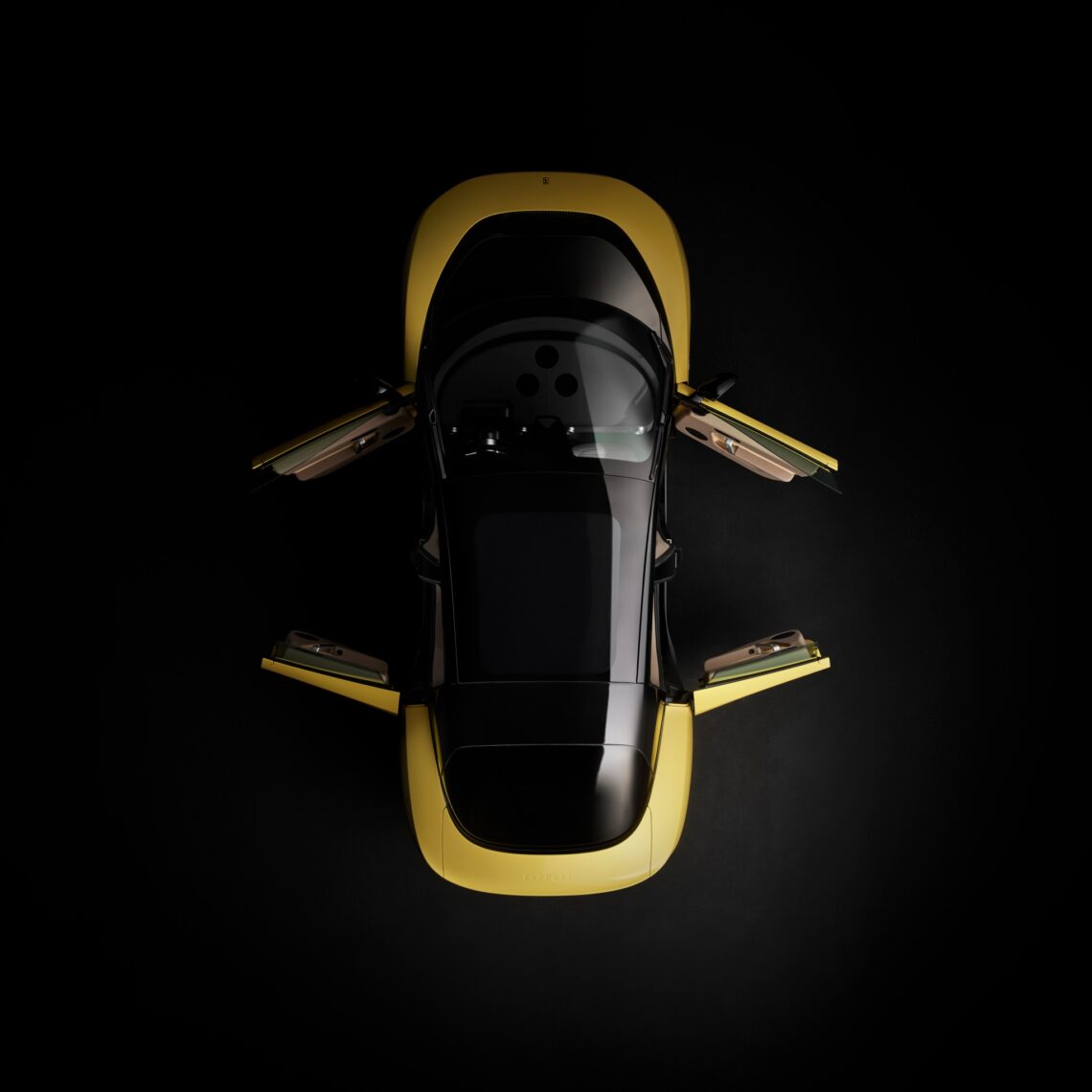
The unveiling of Maranello’s first-ever all-electric vehicle, the Ferrari Luce, has sent a profound shockwave through the automotive world. For a brand whose entire identity is woven from the high-rpm scream of internal combustion, entering the EV landscape was always going to be a tightrope walk. But while everyone braced for an electrified performance coupe or a hyper-low hypercar, Ferrari dropped something else entirely: a highly abstract, four-door, five-seat grand tourer that looks less like a traditional exotic and more like a high-tech luxury manifesto.

If you find yourself looking at the Luce with a sense of visual detachment, you are far from alone. Much like the newly minted, upcoming all-electric AMG models, the Luce marks a severe, jarring break from established brand DNA.
A Design That Refuses to Scream “Ferrari”
For anyone enamored with Ferrari’s current stable, the Luce is a hard pill to swallow. It shares absolutely zero design philosophy with the muscular, sculpted lines of the V12 12Cilindri or the aggressive, high-riding stance of the Purosangue. Instead, the Luce is defined by an incredibly smooth, cab-forward silhouette, rolling on massive 23-inch front and 24-inch rear wheels the largest ever fitted to a roadgoing Ferrari.

The exterior styling was handled outside Maranello, designed in collaboration with LoveFrom, the creative collective led by former Apple design icons Sir Jony Ive and Marc Newson. This partnership explains why the car trades raw, romantic sex appeal for a hyper-minimalist, shell-like glasshouse and a blunt, segmented front nose.
While certain EVs like the upcoming all-electric AMG GT can slowly grow on you after staring at their proportions long enough, the Luce presents a much steeper mountain to climb. Rather than looking like a traditional performance machine, it borders on an anonymous, futuristic concept. In fact, following its global debut in Rome, the editorial team at Edmunds shared a harsh collective verdict on the Luce’s aesthetics, with some editors explicitly calling it an “amorphous blob” that lacks the romance expected of a vehicle wearing the Prancing Horse. It is a styling direction that feels detached from the legacy of the brand, leaving purists feeling isolated by its sterile, ultra-clean surfaces.
Behind the Wheel: How Does It Actually Drive?
Because the high-tech software was still in its final pre-production tuning phases during the exclusive journalists’ preview, nobody outside of Ferrari’s inner circle has truly pushed the Luce to its limits yet. To date, the most famous person seen riding in it is Pope Francis during a high-profile showcase, but as a reviewer, the Pontiff understandably didn’t provide feedback on the car’s lateral dynamics or high-speed stability.

However, looking at the engineering under the skin, it is clear that Ferrari did not hold back.
Rather than using synthetic, fake engine noises pumped through speakers, Ferrari has patented an acoustic system that uses a precision accelerometer on the rear axle. It captures the natural, mechanical frequencies of the rotating electric components and amplifies them much like an electric guitar pickup to deliver an authentic, functional soundscape both inside and outside the cabin.
Furthermore, the driving dynamics will rely heavily on a unique paddle-shifting system. The paddles don’t mimic a traditional gearbox; instead, they alter torque vectoring and regenerative braking on the fly. Drivers pull the left paddle to dial in heavy regeneration and pull through a corner, then click the right paddle to aggressively feed a torrent of electricity back to the wheels. Early reactions from Scuderia drivers like Charles Leclerc who experienced the violent acceleration as a passenger with Lewis Hamilton behind the wheel confirm that the pure physics of 1,035 horsepower passing through four independent motors is nothing short of brutal.
Did Ferrari Actually Need an EV in the Lineup?
The short answer is: logically, no; financially, absolutely.
Purists will always argue that a silent, battery-heavy vehicle runs entirely counter to Enzo Ferrari’s original mission. Yet, the ultra-high-end luxury market has shifted. There is an affluent, tech-forward demographic that views multi-million dollar EVs not just as eco-friendly transportation, but as the ultimate contemporary style statements.
Even if it only captures a small, niche percentage of traditional supercar buyers, capturing a sliver of that lucrative market is far better than leaving it entirely to competitors. Priced at a staggering €550,000 (roughly $640,000 USD), the Luce isn’t meant to replace the roaring V12s or twin-turbo V8s that define the brand’s heritage. It is a calculated, unpretentious extension of the brand designed to capture a fresh generation of clients who prioritize flawless minimalist design, everyday usability, and silent, effortless power over the legacy of the internal combustion engine.
The Luce represents an entirely new phase. Whether its Apple-esque aesthetics will eventually grow on the Tifosi remains to be seen, but Maranello has made its opening move into the electric era, and they did it entirely on their own terms.
For a closer look at the vehicle’s unique layout, high-tech interior details, and physical toggles, check out this exclusive first look at the Ferrari Luce in Rome, which provides an excellent visual tour of the car’s real-world proportions and design nuances.