The story of the Apollo Intensa Emozione (IE)—affectionately known in hypercar circles as the Dragon—is the ultimate anti-establishment tale of modern performance motoring. It is the story of how an independent visionary resurrected a dead German racing brand to stage an unapologetic revolt against the silent, digitized hypercar era.
The Fall and the Phoenix
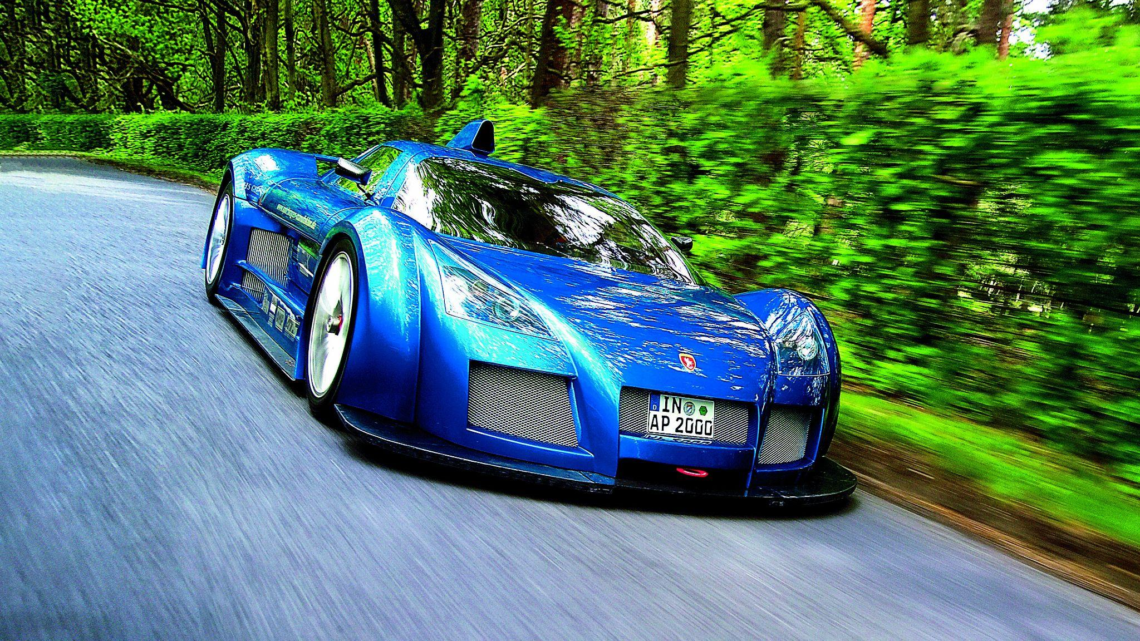
To understand the Apollo IE, you have to trace its roots back to Roland Gumpert. In the mid-2000s, the former Audi Sport boss created the Gumpert Apollo, a vehicle that shattered track records but suffered from polarizing design and brutal financial headwinds. By 2013, the company fell into bankruptcy and faded into near obscurity.

Most corporate investors viewed the collapsed brand as a dead asset. Norman Choi, a Hong Kong-based entrepreneur and die-hard automotive purist, saw an opportunity.
Choi acquired the remains of the company, rebranded it as Apollo Automobil, and set out with a singular, radical objective: while global automotive titans were embracing hybrid batteries, turbochargers, and automated driving aids, Apollo would build something raw, mechanical, and deliberately unfiltered.
His mandate was simple: build a car that provokes pure, overwhelming sensation. They named it the Intensa Emozione—Italian for “Intense Emotion.”
The Vision of the Dragon
To bring the project to life, Choi enlisted young automotive designer Jowyn Wong. Wong bypassed the sterile, ultra-sanitized aesthetics common in modern supercars. Instead, he drew inspiration from apex predators, fighter jets, marine life, and ancient mythology.

The resulting carbon-fiber body was a masterpiece of menacing functional art. It featured razor-sharp aero channels, a massive Le Mans-style dorsal fin, complex active winglets, and a striking triple-outlet titanium exhaust built to resemble a biomechanical tail. The silhouette was so wildly aggressive that the chassis variants quickly earned individual mythic monikers like the Golden Dragon, Black Dragon, and Ocean Dragon.

Underneath the dramatic exterior, the engineering was uncompromising. The all-carbon monocoque chassis weighed just 105 kg (231 lbs). To fine-tune the platform, Apollo partnered with HWA AG in Affalterbach, Germany—the legendary motorsport outfit famous for engineering Mercedes-AMG’s most iconic GT1 race cars.
A Screaming V12 Manifesto
While modern hypercars rely on quiet electric torque, Apollo went in the opposite direction. Nestled behind the cockpit sits a 6.3-liter, naturally aspirated V12 engine co-developed with Autotecnica Motori.
Free from turbochargers or hybrid power packs, the engine revs all the way to a ear-splitting 9,000 RPM, churning out 780 horsepower and 760 Nm of torque. Mated to a race-spec 6-speed Hewland sequential transmission, the power delivers a mechanical, violent driving experience that forces the driver to stay entirely present.
The complex aerodynamic elements generate a staggering 1,350 kg (nearly 3,000 lbs) of downforce at 186 mph—literally pinning the car to the tarmac like a true prototype racer.
The Legacy
Strictly limited to just 10 production units globally, each priced at nearly $2.7 million, all 10 examples were claimed before the public launch was even completed.

The Apollo IE stood as a defiant statement in an era dominated by screens and software. It proved that in a rapidly electric world, there remains an unshakeable appetite for pure, visceral engineering—a true living, breathing dragon brought to life on the open road.