Atlantis - The Lifestyle

The Phantom Seven: Uncovering the Riva Aquarama Lungo Mystery

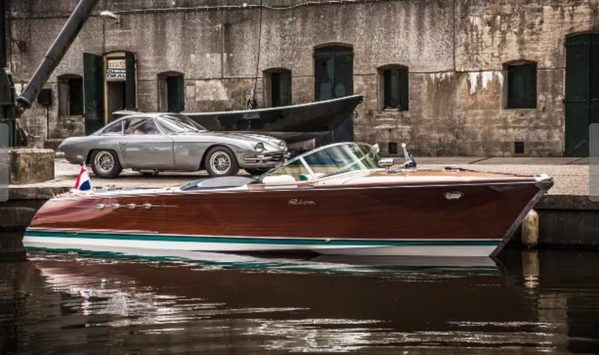
The Riva Aquarama Lungo series (#496–#502) represents the zenith of the mahogany era, often referred to as the “Ferrari of the Sea”. While the two icons officially collaborated on the metal-hulled Riva Ferrari 32 in 1990, their paths crossed much earlier through shared mechanical DNA and Enzo Ferrari’s personal affinity for the brand.

The Engine Crossover: Powering the Legend

While Riva traditionally used American-derived powerplants, the engineering philosophy of the Lungo era mirrored Ferrari’s obsession with high-output performance.

  • Standard Power: Most Aquarama Lungos were equipped with twin Riva-Crusader V8 engines (often 220hp to 320hp each), which were highly modified versions of American blocks refined specifically for the Italian elite.
  • The Ferrari Parallel: Just as Enzo Ferrari demanded engines that were “the heart of the car,” Carlo Riva treated his engines as the soul of the boat. The Lungo’s 8.72-meter hull was extended specifically to handle the weight and torque of these high-performance twin V8s, pushing top speeds near 50 knots a “supercar” pace for the water in 1972.
  • The Lamborghini Precedent: The possibility of a Ferrari-engined Lungo is fueled by the famous Hull #278, which Ferruccio Lamborghini commissioned with twin 4.0L V12 engines from the Lamborghini 350 GT. This historic “engine swap” established the precedent that a Riva hull could be a vessel for Italian supercar power.

Feature: The Alpha (#496) and The Omega (#502)

Hull #496: The Genesis and the “Commendatore” Connection

As the first of the seven Lungos, #496 is the most significant in terms of provenance.

  • The Connection: Enzo Ferrari was a known admirer and friend of Carlo Riva. While he famously owned Hull #330 (a Super Aquarama), #496 is the boat that transitioned Riva into the ultra-high-performance Lungo era that Enzo championed.
  • Mechanical Detail: #496 served as the testbed for the extended hull design, ensuring the “Ferrari of the Sea” could maintain its legendary handling despite the increased length and power.

Hull #502: The Finale and the “Missing” Folklore

The very last Lungo produced, #502, is the most mysterious of the set.

  • The Folklore: Because it is the final hull before the production shifted to the “Aquarama Special” (#503), it is often the subject of “missing boat” rumors. Enthusiasts frequently hunt for #502 in private Mediterranean docks, looking for the tell-tale “transitional” features that bridge the Lungo and Special designs.
  • Public Status: Like the rest of the “Phantom Seven,” #502 remains a ghost. It is widely believed to be held in a private collection in Lake Iseo, never appearing at public auctions or boat shows, thus maintaining its status as a “missing” piece of history.

Summary of the “Phantom Seven”

Hull NumberModelSignificance
#496LungoThe First: The definitive registry pioneer linked to the Ferrari era.
#497–#501LungoThe Inner Circle: Five hulls hidden in private elite collections.
#502LungoThe Last: The finale of the series and the source of “missing” folklore.