The Lifestyle

The Blue Steel Catalyst: How Peugeot Swapped Flour for Fire in 1810

The story of Peugeot in 1810 is the ultimate tale of industrial reinvention. It’s the moment a quiet family of French grain millers looked at the dawn of the Industrial Revolution and decided to completely change their destiny.

Before 1810, the family’s livelihood in the eastern French commune of Hérimoncourt relied entirely on the steady, rhythmic turning of a waterwheel at their grain mill, Le Moulin de Sous-Cratet. The patriarch, Jean-Pierre Peugeot, had spent his life running this mill, alongside a modest textile dyeing and tanning business. It was stable, agrarian, and deeply traditional.

But when Jean-Pierre passed away, he left the mill to his sons, Jean-Pierre II and Jean-Frédéric.

The Pivot: Grain to Steel

The brothers had a radical vision. They looked at the heavy timber machinery of the grain mill and realized that the true power of the site wasn’t the wheat it ground, but the hydraulic energy generated by the river rushing past it.

Europe was changing fast; Napoleon Bonaparte was dominating the continent, and the demand for high-quality domestic manufacturing was skyrocketing. The brothers realized that the future belonged to metal, not flour.

In 1810, Jean-Pierre II and Jean-Frédéric entered into a partnership with a local businessman named Jacques Maillard-Salins. Together, they made a bold move: they gutted the old wooden grain mill, tore out the grindstones, and rebuilt the site from the ground up as a steel foundry and cold-rolling mill.

This company was registered under the name Peugeot Frères (Peugeot Brothers).

[The 1810 Formula]

Hydraulic River Power + High-Grade Iron Ore = Cold-Rolled Precision Steel

The Mastery of the “Blue Steel”

The brothers didn’t just want to melt iron; they wanted to master precision. Utilizing the waterwheel to drive heavy mechanical hammers and rolling machines, they pioneered techniques in cold-rolling steel.

This process allowed them to produce thin, highly flexible, and incredibly resilient sheets of tempered steel—often recognizable by its distinct, dark bluish tint. Because their steel was tougher and held an edge better than almost anything else on the market, the Peugeot brothers quickly found their niche.

The Original Product Lineup

Long before anyone dreamed of an internal combustion engine, the Peugeot name became synonymous with premium household and industrial tools. Their 1810 foundry laid the exact metallurgical foundation for:

  • Saws and Chisels: Highly sought after by carpenters for their durability.
  • Watch Springs: Requiring extreme precision and microscopic uniformity.
  • Corset Bones & Umbrella Ribs: Driving the fashion industry of 19th-century Europe with flexible, unbreakable steel wiring.

The Lion is Born: The family was so confident in the toughness, speed, and flexibility of their steel that they eventually sought a logo to match. They chose a Lion walking on a arrow. The arrow symbolized the speed of their saws; the lion’s teeth symbolized the strength of their blades.

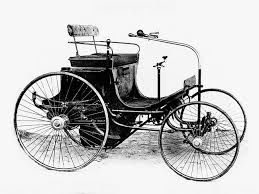
Without that critical decision in 1810 to abandon the family grain business and master the high-stakes world of precision metallurgy, the mechanical expertise required to build the first Peugeot petrol car eighty years later simply wouldn’t have existed.

Leave a Reply

Your email address will not be published. Required fields are marked *