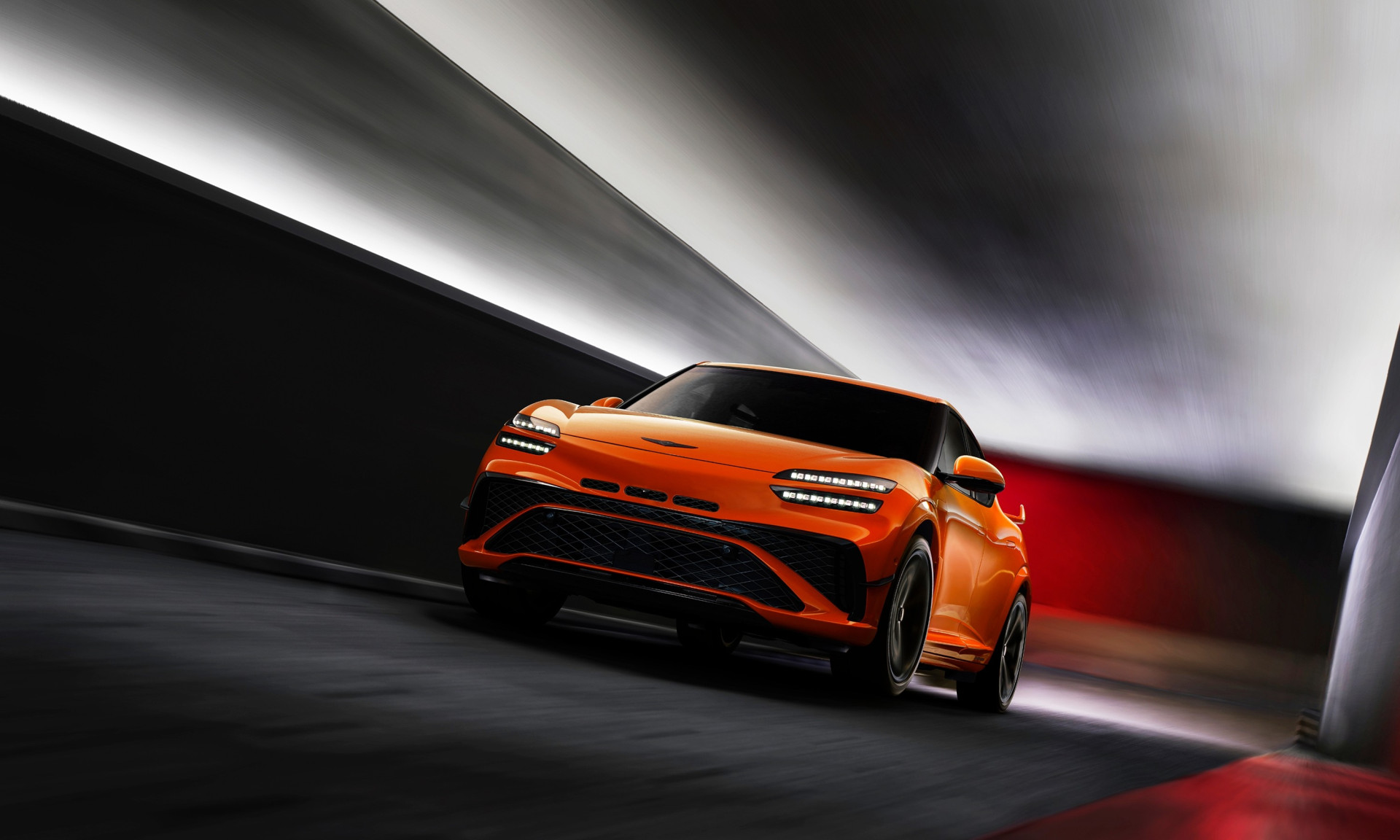
Genesis is no longer just playing the premium value card; with the launch of the Magma sub-brand, they are hunting for pure aesthetic and technical credibility. The production-ready Genesis GV60 Magma makes an aggressive opening statement in the high-performance electric crossover space. On presence alone, it commands immediate attention. Yet, when you look past the initial shock of the fiery signature paint, a deeper analysis reveals a design that nails the macro-proportions but leaves a few technical opportunities on the table.

The Stance: Punching Out of Its Weight Class
The absolute triumph of the GV60 Magma is its architecture. By dropping the ride height by nearly an inch (20mm) and stretching the track width by a massive 50mm, Genesis has completely erased the upright, slightly tall-boy crossover proportions of the standard EV.
The resulting footprint puts the GV60 Magma in elite styling territory. Stance-wise, it shares an undeniable visual DNA with the low-slung, muscular silhouettes of the Ferrari Purosangue and the Mercedes-AMG GLE 63S. It possesses that rare, planted “bulldog” premium crossover look where the body feels draped over the massive 21-inch forged wheels rather than merely sitting on top of them. It looks fast, heavy, and mechanical before it even moves.
The Front Bumper: Aggression vs. Integration
Moving to the nose, Genesis has deployed a hyper-functional front fascia featuring a triple-vent design, an expanded open grille for vital battery and motor cooling, and sharp aerodynamic canards. It gives the EV a genuine motorsport face.
However, looking closely at the execution, there is a distinct sense that the design team could have worked these aggressive elements deeper into the actual bodywork. Rather than sculpting these ducts directly out of the main body panels, the front end relies on heavily contrasted, distinct trim pieces to frame the vents. Had Genesis chosen a more integrated approach—reducing the separate trim layers and letting the sheet metal itself form the boundaries of the grille—the nose would look less like it was fitted with an aftermarket aero kit and more like a singular, fluid block of high-end engineering.
The Rear End: Fixed Wings vs. Seamless Curves
The profile of the GV60 showcases gorgeous, seamless body curves that flow cleanly from the front wheel arches all the way past the rear passenger doors. It is a highly cohesive, rounded shape. But when that flow hits the tailgate, it meets a prominent, fixed wing-type spoiler.
Given that Genesis just stunned the motorsport world at Le Mans with the unveil of their Magma GT3 Concept and the breathtakingly curvaceous Magma GT Supercar Concept, the decision to use a rigid, fixed spoiler on a road-going crossover feels slightly retro. To preserve the car’s beautiful, round aerodynamic flow, a retractable wing would have been a masterstroke.
- The Benefit: An active aero wing would stay completely flush, maintaining those pristine rear curves during city driving, and deploy electronically only when high-speed stability demands it.
[Front End] ──(Seamless Architecture)── [Rear Doors] ──[Fixed Wing breaks the arc]
*Ideal: Active, flush spoiler
The Trim Dilemma: Sculptures Aren’t Made of Plastic
The rear diffuser handles its aerodynamic duties well enough, but it suffers from the same vulnerability as the front bumper: an over-reliance on black contrast trim to create visual drama.
While the gloss black finish manages to break up the visual mass of the rear bumper, it feels like a shortcut. Extending the actual body paint over those lower trim sections would have instantly made the car look lower and wider. More importantly, it would have challenged the designers to act as true sculptors. Instead of using dark trim to disguise where the body ends and the aerodynamic elements begin, integrating the technical hardware—like the diffusers and vents—directly into beautifully shaped, color-matched bodywork would have elevated the GV60 Magma from a highly aggressive EV to an unpretentious masterpiece of modern automotive sculpture.