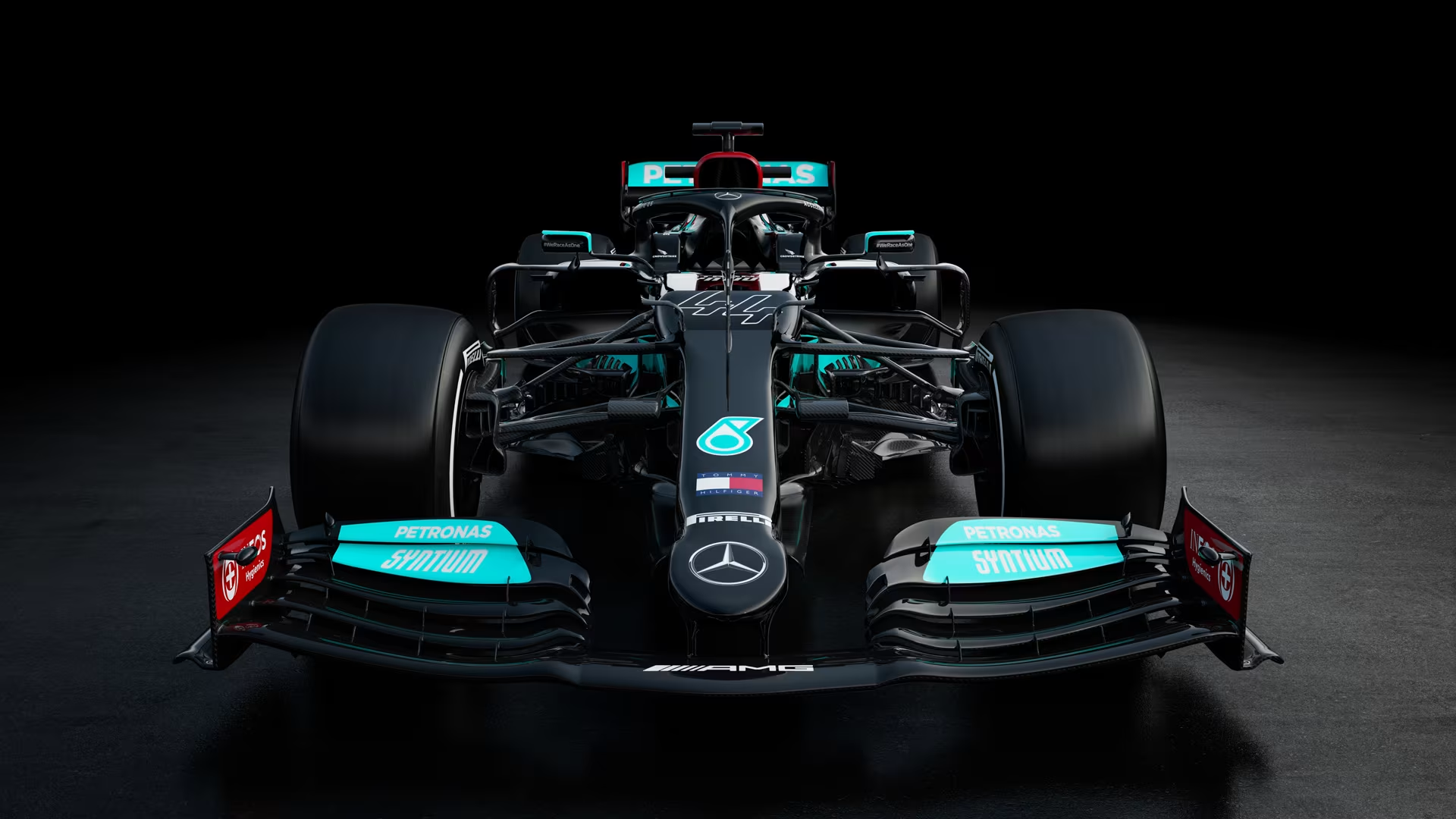
As the 2026 Formula 1 season enters its high-speed summer phase, the technical narrative has shifted from the power units to the complex dance between chassis and rubber. While Mercedes currently holds a significant performance advantage, their engineering team has been unusually vocal on technical platforms about the hurdles remaining before they can claim true supremacy.
From James Allison’s candid admissions on the Performance People podcast to deep-dive aerodynamic breakdowns, the message is clear: the W17 is a work in progress.
The Tire Bottleneck: Narrower, Harder, Faster
The most significant revelation came from Technical Director James Allison, who identifies the 2026 Pirelli tires as the primary bottleneck for the current era. With tire widths reduced by 25mm at the front and 30mm at the rear to cut drag, the W17 is effectively being choked by its own mechanical grip.

“Everything you do with the chassis and aerodynamics still has to go through the tires. If you can’t get them into the window, the 585 HP behind you doesn’t mean a thing,” Allison noted, echoing his recent comments on the Nextgen Auto platform. He described the new compounds as “quite a step worse” due to their narrower profile, forcing the car to work much harder to find traction.
Aerodynamic Stability: The W17 Rear-End Philosophy
While rival teams like Ferrari have chased peak downforce, Mercedes has pivoted toward a philosophy of “stability through the arc.” On his YouTube technical analysis, aerodynamicist Kyle Forster (Kyle.Engineers) broke down the W17’s distinctive design.

Unlike the extreme downwash sidepods seen elsewhere, the W17 features a “kinked-up” rear bodywork intended to provide more predictable airflow to the rear wing. This strategy is designed to combat the “nervous” rear-end behavior typical of the 2026 flat-bottom cars. By prioritizing a stable platform over raw peak numbers, Mercedes is giving its drivers Kimi Antonelli and George Russell a more forgiving car during the critical transition into “Straight-Line Mode” (SM).
Active Aero and the 400ms Battle
The paddock’s favorite topic remains the W17’s active aerodynamics. As discussed on the latest F1 Nation technical review, the W17 is currently under scrutiny for how its front wing flaps actuate.
Engineers have explained that the goal is not just reducing drag, but shifting the center of aero pressure forward under braking to provide better turn-in. While there is ongoing debate regarding the 400ms closing window required by FIA regulations, the Mercedes camp remains confident that their “multi-stage” actuation is fully legal and provides a “courageous” advantage on high-speed straights like those in Montreal.
The Driver Internal Data: Antonelli vs. Russell
Finally, the engineering team has touched on the fascinating data split between their drivers. On the Wheel Sports podcast, analysis of the team’s telemetry revealed that rookie Kimi Antonelli is currently finding a more effective “Goldilocks zone” for his tires.
Engineers noted that Antonelli’s high-rotation driving style actually helps keep the narrower 2026 compounds within their ideal temperature window better than Russell’s traditional smooth inputs. It’s a technical edge that has seen the young Italian secure a string of podiums, forcing the more veteran Russell to spend extra hours in the simulator to bridge the gap.