The Lifestyle

The Jeweler: Bijouterie Dutray (Le Mans, France)

If you have come across a vintage chronograph or piece of jewelry bearing the name Dutray, you are looking at an object tied directly to a historic French institution rather than an independent global manufacturing brand.

Here is the technical reality of what “Dutray” signifies, the history of the house, and how their private-label chronographs came to exist.

The Jeweler: Bijouterie Dutray (Le Mans, France)

Bijouterie Dutray is an elite, historic French jewelry and watch institution based in Le Mans, France (located at 1 Place Saint-Nicolas).

Rather than a mass-production brand, Dutray operates out of a beautiful, vaulted wood-fronted boutique inside a historic hôtel particulier (grand private townhouse) in the heart of the city. For decades, they have served as a premier regional purveyor of high jewelry, fine gems, and luxury Swiss horology—acting as an authorized retailer for top-tier houses like TAG Heuer, Longines, Tudor, and Oris.

The “Private Label” Chronograph Era

Like many high-end European jewelers in the mid-to-late 20th century (similar to Tiffany & Co. in the US or Beyer in Switzerland), Dutray commissioned private-label timepieces.

During the 1960s and 1970s golden era of mechanical chronographs, prestigious jewelers would contract Swiss manufacturers to supply high-quality watches with the jeweler’s own name stamped on the dial. If you own a “Dutray Chronograph,” you own a piece built with an authentic Swiss mechanical heart, explicitly retailed to the high-society racing crowd of Le Mans.

Noteworthy Pieces & Collector Items

Because of Dutray’s unique location—the epicenter of endurance motorsport, home to the 24 Hours of Le Mans—their watch and jewelry history is deeply intertwined with mechanical utility and racing heritage.

1. The Vintage 1960s/70s Dutray Chronographs

These are the most collectible items bearing the Dutray signature. Because they were commissioned for a high-end storefront in a racing town, they were typically built to a very high standard:

  • The Movements: Under the dial, these chronographs generally utilize robust, legendary Swiss workhorse ebauche movements of the era, such as the manual-wind Landeron (e.g., Landeron 48 or 149/248) or Valjoux calibers.
  • The Aesthetic: They often feature classic “Panda” or reverse-Panda dials, dual-subdial layouts (running seconds and a 30- or 45-minute counter), and precise outer tachymeter or telemeter scales meant for calculating track speeds.

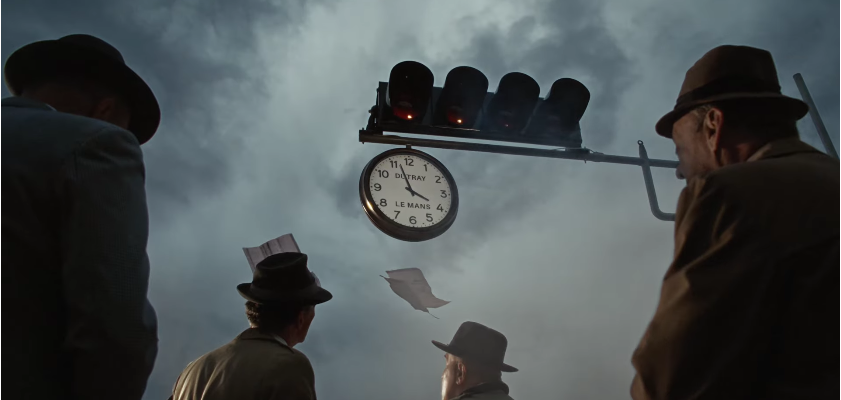
2. The Le Mans “Paddock” Dashboard & Wall Clocks

Dutray occasionally collaborated with instrument makers or commissioned bespoke timekeepers designed to echo dashboard instruments. Vintage mechanical stopwatches, garage clocks, and wall pieces signed by Dutray or featuring their local insignia are highly sought after by vintage endurance racing collectors who decorate classic automotive garages.

3. High Jewelry: The “Skeleton Key” Estate Necklaces

On the jewelry side, the House of Dutray is known for classical French metalwork and estate designs. One of their most famous aesthetic footprints in vintage collector circles is their intricate, simulated-diamond Silver Skeleton Key Pendants. These beautifully engraved, ornate statement pieces have a massive cult following among vintage jewelry collectors—strongly channeling the same dramatic, gothic-glam style popularized by iconic musicians like Christine McVie of Fleetwood Mac.

The Verdict: A Dutray piece is defined by its regional pedigree. It tells a story of unpretentious French luxury, regional artisan curation, and a direct connection to the golden age of mechanical motorsport.