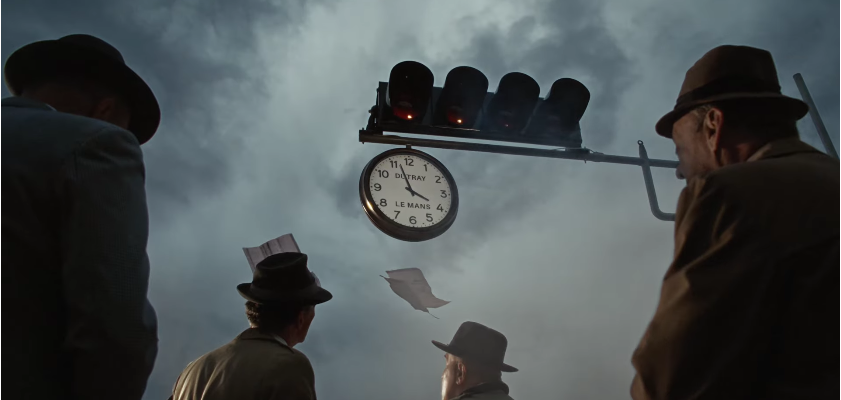
When collectors or watch enthusiasts dive into the legacy of Maison Dutray, they quickly realize something fascinating: the “man himself” wasn’t a reclusive watchmaker hidden away at a bench in Geneva. Instead, the family lineage behind the name operated as the absolute cultural, high-society hub of motorsport timekeeping in Le Mans, France.

For over a century, the Dutray family built an unpretentious French luxury powerhouse. But the golden era of the house—the period that created those collectible mechanical chronographs—is defined by an intense, multi-decade intersection with the world’s greatest endurance race.
The Ultimate Honor: Clockmaker to the 24 Hours of Le Mans
To understand the prestige of the Dutray family, you have to look at the pit lane of the Circuit de la Sarthe. For decades, the Automobile Club de l’Ouest (ACO) didn’t look to corporate Swiss marketing giants to build their infrastructure; they turned to their elite local jeweler.
[1959: The Iconic Long-Stem Round Clock] ➔ [1970: Immortalized in Steve McQueen's "Le Mans"] ➔ [1974: The First Pit Lane Digital Clock]
In 1959, Dutray was commissioned to build the official trackside clock overlooking the grid. They delivered a massive, elegant round dial suspended on a long steel stem right next to Race Direction. It became an instant monument. When Steve McQueen arrived in 1970 to film his cinematic masterpiece Le Mans, that exact Dutray clock was given a lingering, dramatic close-up to build tension as the 24-hour countdown ticked away—cementing the jeweler’s name in global automotive history.
As technology evolved, the family evolved with it:
- In 1974: Dutray engineered the circuit’s very first digital track clock, partnered with Tissot.
- In 1976: They pivoted back to classical styling, designing the iconic square, dual-faced pit lane master clock in a technical collaboration with Seiko.
The “Pinkies Down” Retail Philosophy
The family patriarchs ran the Place Saint-Nicolas boutique with an elite but deeply grounded ethos. They understood that a true luxury watch or piece of high jewelry shouldn’t just be an exercise in snobbery; it required technical utility and material mastery.
When drivers, factory team principals, and wealthy industrial magnates poured into Le Mans every June, the Dutray boutique was the unofficial paddock hub. The private-label chronographs they commissioned during this era stamping “Dutray” onto Swiss Landeron and Valjoux dials were created precisely because their clientele demanded high-grade, reliable mechanical tools capable of calculating lap speeds on the Mulsanne Straight, backed by a name they trusted.
The Legacy: While global corporations eventually took over track sponsorship in the 2000s, vintage replicas of the famous 1959 Dutray pit clock remain prized centerpieces inside the official 24 Hours of Le Mans Museum. The man behind the brand was the ultimate regional tastemaker a bridge between raw mechanical motorsport and refined French artistry.