The whispers from Hollywood are beginning to solidify into reports: Jonathan Majors, an actor whose meteoric rise was dramatically intercepted by legal troubles, is reportedly eyeing an action film for his imminent return to the screen. For an industry perpetually obsessed with comebacks, this news arrives not just with anticipation, but with a palpable undercurrent of strategic questioning. Is a high-octane action movie truly the judicious first step back into the spotlight for an actor whose public image has been so severely fractured by an assault conviction?

This question, far from being a cynical swipe, stems from a genuine curiosity about how narratives are rebuilt in the unforgiving arena of public opinion. For many, the immediate, almost visceral, thought arises: wouldn’t an action movie, brimming with physical confrontation and on-screen aggression, further reinforce the very “violent tendencies” that have become tragically intertwined with his public persona? It’s a valid and deeply uncomfortable query that Hollywood, and Majors himself, cannot afford to ignore.
The Genre Dilemma: Action as a Double-Edged Sword
Jonathan Majors is, undeniably, no stranger to the action genre. Before his highly publicized assault case, he was on an undeniable trajectory as a compelling physical performer and a captivating antagonist. His turn as Damian “Dame” Anderson in Creed III was a visceral, emotionally charged performance that showcased his physical prowess and intense acting chops. Here, his character’s aggression was rooted in deep-seated pain and betrayal, making him a formidable, albeit tragic, figure. It was a role that, while violent, was also nuanced and critically acclaimed.


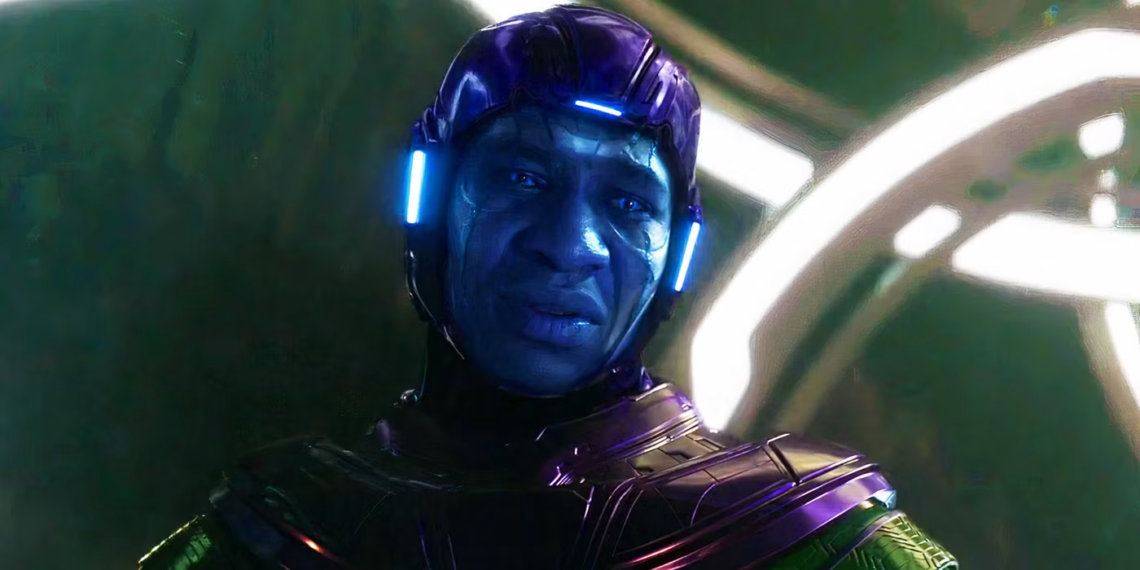
Then, of course, came his formidable introduction to the Marvel Cinematic Universe as Kang the Conqueror. While his appearances in the MCU were often characterized by a slower, more deliberate, almost cerebral form of menace – more existential threat than raw brawler – they established him as a powerful, commanding presence capable of anchoring a sprawling superhero saga. These roles, prior to the legal entanglements, solidified his image as a powerful, dynamic force on screen.
However, the context has irrevocably shifted. The pre-trial Majors could embody on-screen aggression as an exercise in character work, a demonstration of his range. The post-conviction Majors enters a different landscape. For some segments of the audience, the line between character and performer has blurred, tainted by headlines and court proceedings. In this charged environment, every punch thrown, every physical struggle depicted in a comeback action film, risks being viewed through a potentially damaging lens. It could, inadvertently, serve as a stark, visual reminder of the very accusations that led to his downfall, rather than an escapist cinematic experience.

One could argue that an action role offers a clear path to commercial viability, leveraging a pre-existing fanbase and a genre known for its broad appeal. It allows an actor to deliver a physically engaging performance that doesn’t require deep emotional vulnerability, which might be a strategic play in navigating a delicate public reentry. Yet, this very advantage also presents its most significant risk.
The Path Not Taken (Or, Perhaps, to Be Taken Later): The Power of Reinvention

Considering the circumstances, some might argue that a more astute strategic move for Majors’ first project back would be a role that actively seeks to redefine or gently recalibrate public perception. Imagine a character in:
- A nuanced drama: A powerful, emotionally complex role that demands introspection and vulnerability, allowing audiences to connect with a different facet of his acting. This could be a film focused on redemption, or perhaps a character grappling with deep internal conflict.
A family-friendly narrative: A lighter, more wholesome project that showcases warmth, empathy, and perhaps a comedic touch, aiming to soften the sharper edges of his recent public image.
An independent film: A smaller, critically driven project that prioritizes artistic integrity and a powerful message over commercial spectacle, allowing him to subtly re-establish his talent away from the intense glare of a blockbuster.
Such choices, while perhaps less commercially immediate, might offer a more deliberate and sensitive approach to image rehabilitation. They could allow audiences to see him in a different light, to separate the art from the unfortunate headlines, and to begin the slow process of rebuilding trust and admiration for his craft.
What Comes Next for Jonathan Majors? The Unwritten Chapter
The road ahead for Jonathan Majors is fraught with challenges and opportunities. Hollywood has a storied history of actors making spectacular comebacks after personal and legal battles, but each journey is unique and depends heavily on several factors:
The Project Itself: The choice of his first post-case film will be scrutinized intensely. Is it merely an action spectacle, or does it contain layers of character depth that might allow for a broader interpretation of his performance?
Public Reception: The ultimate arbiter. Will audiences be willing to separate the artist from the controversy? Will the critical reception be forgiving, or will past events overshadow his talent?
His Own Narrative: Beyond the screen, how will Majors engage with the public? Will there be interviews, statements, or quiet work that allows him to address the past and demonstrate growth?
The Studio’s Strategy: The production company behind his comeback film will also be under immense pressure. Their marketing and PR strategy will be crucial in shaping the narrative around his return.
Jonathan Majors is a profoundly talented actor. His early work demonstrated a captivating range, a magnetic screen presence, and an ability to inhabit complex characters with remarkable depth. The question now is not just about what role he takes, but how that role, and its subsequent public discourse, will shape the unwritten chapters of his career.
An action movie offers a fast track back to commercial visibility, a chance to flex the physical prowess that audiences admired. Yet, it also walks a perilous tightrope, risking an inadvertent reinforcement of the very “violent tendencies” that shadow his recent past. Whether this reported choice is a strategic misstep or a calculated gamble to reclaim his narrative through sheer force of performance remains to be seen. What is certain is that his return will be one of the most closely watched cinematic events of the near future, dictating not just the trajectory of his career, but perhaps offering a wider commentary on Hollywood’s capacity for redemption.