
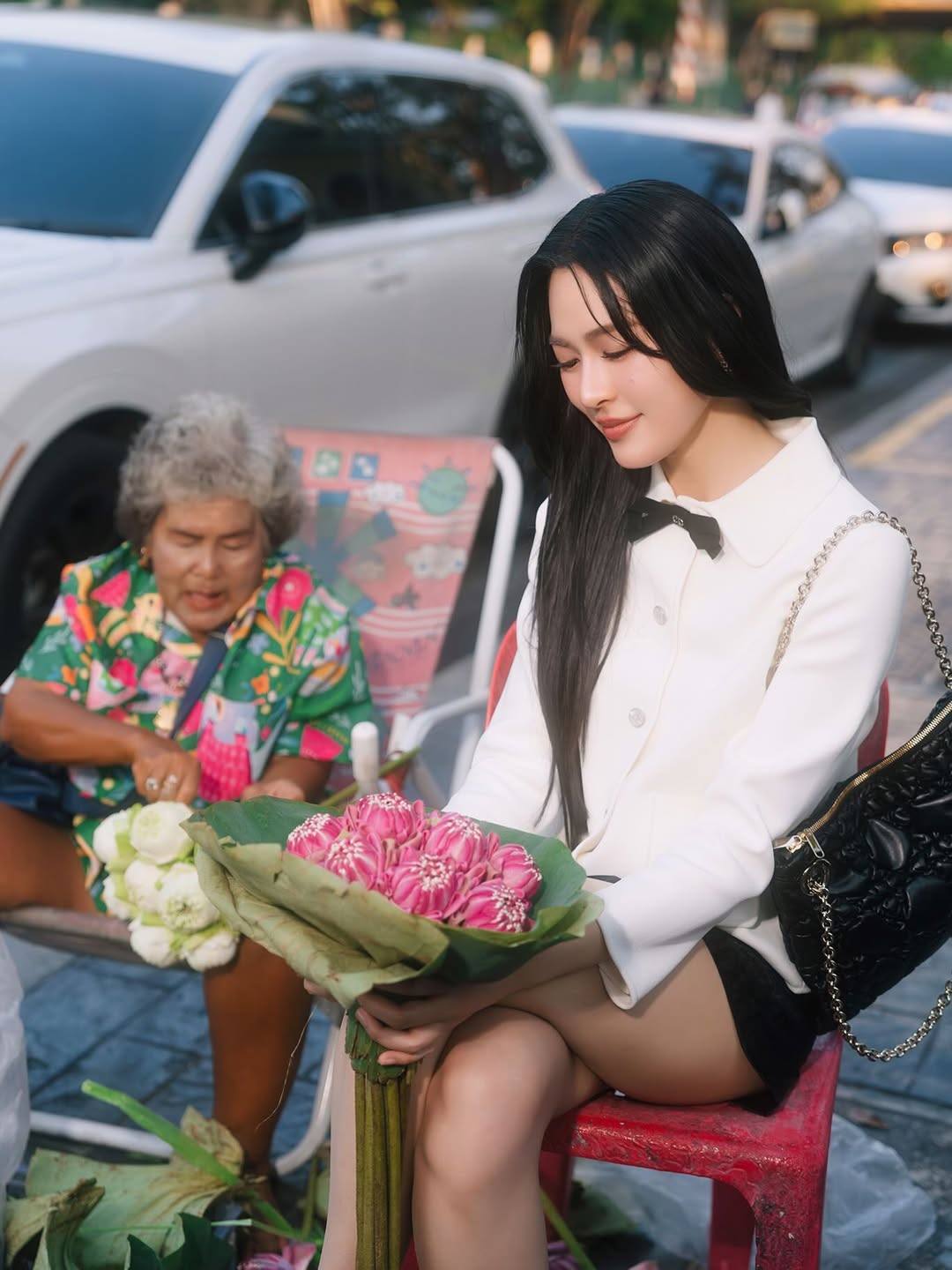
In the botanical world, the genus Nelumbo comprising the Sacred Lotus (Nelumbo nucifera) and the American Lotus (Nelumbo lutea), is the ultimate metaphor for the resilient soul. It is a plant that refuses to be defined by its environment. Rooted in the anaerobic muck of riverbeds, it ascends through murky depths to unfold a bloom of such startling purity that it appears physically incapable of holding onto a single drop of mud.

Biologists call this the “Lotus Effect,” a microscopic structural self-cleaning property. But for the human observer, the Nelumbo is more than a feat of nanotech; it is a question of identity. And nowhere is that question more poignant than when the flower is held by a woman who refuses to be fully seen.
The Anatomy of Rebirth
Rebirth is often romanticized as a gentle awakening, but the Nelumbo tells a grittier story. To reach the surface, the lotus must push through resistance. It is a mechanical struggle toward the light.

- The Mud: Represents the past, the trauma, or the stagnant environments we are born into.
- The Stalk: The journey of “becoming,” often long and invisible beneath the surface.
- The Bloom: The final realization of a new self.
Yet, when we see a woman holding these flowers in a portrait or a fleeting moment on a riverbank, the narrative shifts from the plant to the person. We witness a “lingering question” that the flower itself cannot answer.
The Woman Holding the Flower: A Lingering Question
While the lotus is transparent in its beauty, the woman holding it often remains an enigma. She becomes a mirror for the viewer’s own uncertainty. In contemporary art and high-fashion photography, this “Lotus Bearer” archetype is frequently used to explore the complexity of female identity.


“She holds the rebirth in her hands, but does she own it, or is she still haunted by the mud she left behind?”
When you look at her, you are forced to ask: Who are you?
- The Survivor: Is she the woman who has successfully navigated the dark and now carries her triumph like a trophy?
- The Seeker: Is she holding the Nelumbo as a map, hoping the flower’s purity will finally rub off on her?
- The Architect: Did she plant this rebirth herself, or is she merely the guardian of a beauty she doesn’t yet feel she deserves?
The “Lotus Effect” on Identity
The most unsettling part of the image is the disconnect. The Nelumbo is perfectly clean, yet the woman’s eyes often suggest a lingering shadow. This creates a powerful tension: the flower represents the result of rebirth, but the woman represents the process.
She is the part of the story that is still “out of frame.” She is the slow lap at Fiorano, the hidden draft of a magazine article, the silent moment before a public appearance. She is the person who has changed her name, her city, or her life, but still carries the weight of the water in her lungs.