In the hyper-accelerated landscape of global automotive manufacturing, retreat often seems like the path of least resistance. As domestic Chinese automakers rapidly consolidate market share and Western legacy brands quietly trim their overseas footprints, conventional wisdom suggested that Detroit might retreat to its North American stronghold.

Instead, General Motors just executed a monumental, forward-looking maneuver.
Extending its 50-50 joint venture with SAIC Motor for another two decades—stretching their binding partnership through 2047—GM isn’t pulling back from the world’s largest auto market. Rather, it is fundamentally recalibrating China’s role inside its global ecosystem.
From Showroom Sales to Global Innovation Engine
Historically, the foreign automotive joint venture operated on a predictable, top-down formula: Western brands supplied the underlying platform architecture, and local partners managed regional manufacturing and sales distribution. However, the renewed SAIC-GM framework flips that classical paradigm entirely on its head.
Following an aggressive restructuring phase that included factory consolidations and structural realignments, GM is officially converting its Chinese operations from a regional sales engine into a primary global engineering, software, and export hub for New Energy Vehicles (NEVs).
Rather than exporting Western technology east, GM will leverage China’s mature supply chains, battery manufacturing efficiency, and localized R&D through the Pan Asia Technical Automotive Center (PATAC) to define its next generation of electrified products:
- 30 New Electrified Models by 2030: The renewed joint venture is committing to launch at least 30 pure electric, plug-in hybrid (PHEV), and extended-range electric (EREV) vehicles by the end of the decade.
- The Xiao Yao Super-Architecture: Utilizing locally developed multi-energy architectures, new vehicles will be built specifically to cater to software-defined cabin demands and rapid platform iteration.
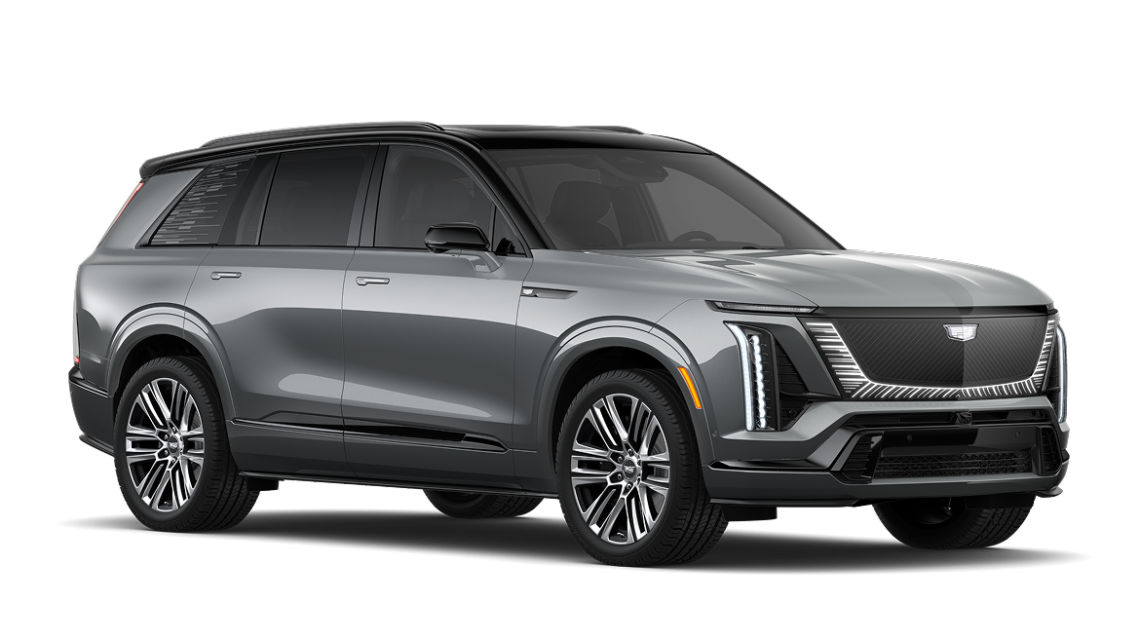
- Brand Realignment: SAIC-GM will sharpen its domestic retail focus strictly on premium offerings—Buick and Cadillac. Meanwhile, Chevrolet will exit the local Chinese retail market, shifting its China-based production footprint toward export-only manufacturing under the SAIC-GM-Wuling umbrella.
[ The SAIC-GM Joint Venture 2.0 ]
50-50 Strategic Extension (2026 – 2047)
|
+—> Domestic Focus: Buick & Cadillac NEVs
|
+—> Export Markets: Middle East, South America, Mexico & Asia
|
v
Chinese R&D / PATAC –> Xiao Yao Architecture –> 30 NEV Launches by 2030
The Export Strategy: Building in Shanghai, Shipping to the World
Furthermore, this 20-year renewal cements China’s role as an offshore production fortress for non-US global markets. With the upcoming overseas shipment of the Buick Electra L7 scheduled for October, SAIC-GM is initiating its first wave of high-end, Chinese-built premium NEVs bound for international roads.
By leveraging low-cost, high-tech manufacturing in Shanghai, GM plans to deploy these Chinese-engineered Buicks and Cadillacs across high-growth regions, including the Middle East, Africa, South America, Mexico, and the broader Asia-Pacific corridor. Crucially, due to elevated tariffs and geopolitical policy barriers, GM has confirmed these vehicles will not be exported into the United States—keeping its North American manufacturing footprint distinctly isolated from its Asian export pipeline.
Navigating the Paradigm Shift
To understand GM’s long-term calculus, one must look past short-term quarterly turbulence and examine the profound structural changes sweeping the mobility sector.
Undoubtedly, adapting to an electric, software-centric automotive world represents a monumental evolution—a pivot as decisive as the cultural inflection points explored in “The Beautiful Terrifying Shift” on Dlifestylemagazine.com. Rather than fighting the tide, GM’s decision to embed its engineering directly within China’s mature EV supply chain reflects an audacious long-term strategy.
Moreover, in an era where digital acceleration can sometimes dilute brand clarity—a friction examined in “The Chat: The Silent Game and Our Disconnect”—sharpening focus around Buick and Cadillac provides a streamlined narrative for Chinese luxury buyers. Building something truly new often requires dismantling outdated legacy models, echoing the transformative milestones celebrated in “Mazel Tov, She’s Pregnant”.
Ultimately, as the auto industry navigates this high-stakes realignment, taking a measured, long-term stance provides the kind of calm strategic clarity described in “The Saturday Morning Reprieve: A Stroll to the Summit with Mika.in.Paris”. By securing its foundation in Shanghai through 2047, General Motors isn’t merely surviving the electric revolution—it is positioning itself to engineer it from the ground up.