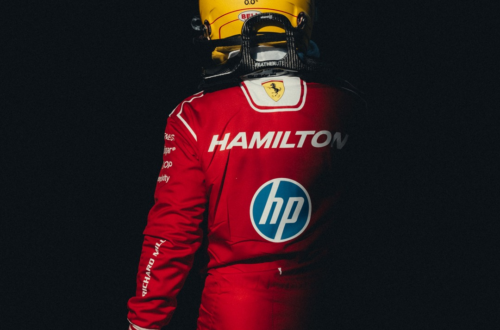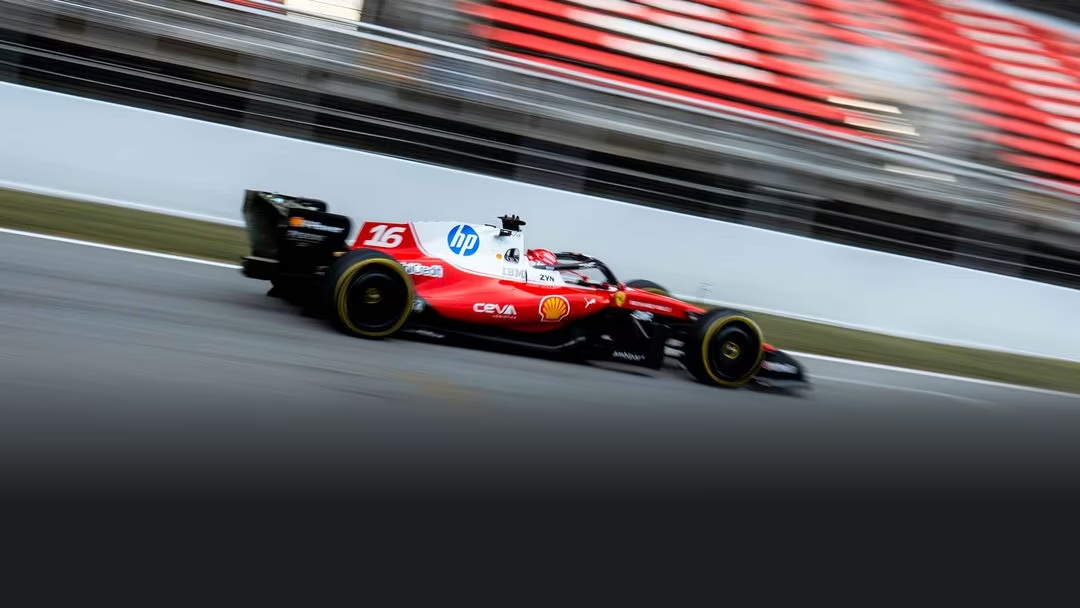
The bond between Charles Leclerc and Scuderia Ferrari is no longer just a racing contract; it has evolved into a joint mission. When the historic Italian stable announced that Leclerc had signed a multi-year contract extension, it solidified a clear thesis: Leclerc is the definitive centerpiece around whom the future of Maranello is being constructed.

While Ferrari historically keeps contract lengths guarded, the language surrounding this agreement points to a long-term commitment that stretches deep into the sport’s radical new regulatory era. The extension ensures Leclerc will lead the Scuderia through multiple seasons, providing critical stable leadership as the team faces down a massive structural overhaul. For Leclerc, the contract reflects a fierce loyalty to the team that nurtured him since his Academy days; for Ferrari, it is an insurance policy securing one of the most blistering qualifiers of a generation.
But while the ink on the contract secures the long-term horizon, the immediate ground reality is defined by the heavy, high-tech demands of the active season.
The SF-26: Heat Management Challenges on the Horizon
The introduction of the new technical regulations brought the Ferrari SF-26 into the light. While the chassis has proven to be an exceptional platform for mechanical grip and low-speed corner rotation, the team has hit a severe operational bottleneck: heat management.
[SF-26 Architecture] ──► Elite Mechanical Grip & Slow-Speed Rotation
│
└───► [The Bottleneck] ──► Severe Under-Skin Heat Accumulation
The SF-26 suffers from significant under-skin heat accumulation. The tight packaging of its sidepods—designed to maximize aerodynamic extraction to the rear diffuser—has severely restricted internal airflow. During recent rounds, the team was forced to introduce rapid component overhauls, bringing cooling-specific updates to minimize the thermal stress on the internal components.

This thermal fragility creates a looming crisis for the Monaco Grand Prix. The tight, unforgiving streets of Monte Carlo present a unique, brutal paradox under the rules: the FIA has locked out low-drag active aerodynamics settings for the weekend, forcing the entire grid to run a permanent, high-drag “Z-Mode” lap.
- The Monaco Trap: Because the cars cannot flatten their wings on straights to dump drag, the engines will be working under a continuous, grueling load.
- The Low-Speed Deficit: At Monaco, average speeds are exceptionally low. Without high-velocity straightaways to ram clean, cold air into the sidepod inlets, the SF-26 risks baking its internal electronics and power unit components right in the middle of the principality.
Vasseur’s Engineering Veto: The Turbo Warfare
To understand how Ferrari found themselves in this specific engine packaging predicament, you have to look at the philosophy of Team Principal Fred Vasseur.
[ Rival F1 Power Units ] [ Vasseur’s Ferrari PU ]
┌──────────────────────────┐ ┌──────────────────────────┐
│ • Large Turbochargers │ VS. │ • Small, Light Turbo │
│ • Intense Off-Line Lag │ THE GRID │ • Instant Grid Launches │
│ • Demanding Rule Tweaks │ WARFARE │ • Zero Compromise Veto │
└──────────────────────────┘ └──────────────────────────┘
The smaller turbine has far less inertia, allowing Leclerc to instantly spool up the boost and execute lightning-fast race starts that leave rival teams standing still. When frustrated rivals tried to lobby the FIA to alter the pre-start grid procedures to give their own larger turbos more time to build pressure, Vasseur firmly dropped the hammer, using Ferrari’s historic political weight to block the rule changes. His stance was uncompromising: “We designed the car fitting with the regulation… enough is enough.”
However, this brilliant starting advantage carries a structural tax. While a smaller turbo eliminates lag, it has to spin at much higher sustained frequencies to match the outright top-end power of the grid’s larger turbos, generating a tremendous amount of localized thermal energy that Ferrari’s cooling layout is currently scrambling to manage.
Looking Ahead to 2027: Can Leclerc Outrun Piastri?
The defining battlefield of this era is the complex 60/40 power split. With the combustion engine dialed back and electrical energy deployment ramped up massively, the ultimate prize goes to whichever team can construct a perfectly stable, aerodynamically consistent platform that doesn’t waste energy through unnecessary wheelspin or severe battery clipping.
If Maranello can successfully recalibrate the SF-26’s cooling map and build a mature, thermally stable successor, 2027 stands out as the year Charles Leclerc could legitimately outrun Oscar Piastri.
Driver | Team | Platform Philosophy | Strategic Outlook (2027) |
|---|---|---|---|
Charles Leclerc | Scuderia Ferrari | Mechanical Grip / Lightning Starts | Devastating if thermal stability is achieved. |
Oscar Piastri | McLaren Racing | Functional Minimalism / Aero Efficiency | The benchmark for long-run energy management. |
Piastri has proven to be a devastating force, piloting a McLaren platform built on absolute functional minimalism and hyper-efficient energy recovery. But if Ferrari solves its internal heat crisis, the natural synthesis of Vasseur’s grid-launching turbo advantage, an elite chassis balance, and Leclerc’s unyielding commitment will create an absolute monster of a platform. With a long-term contract in his pocket and a stable car underneath him, Leclerc won’t just be fighting for wins he’ll have the exact tools required to permanently break past Piastri and claim the crown.