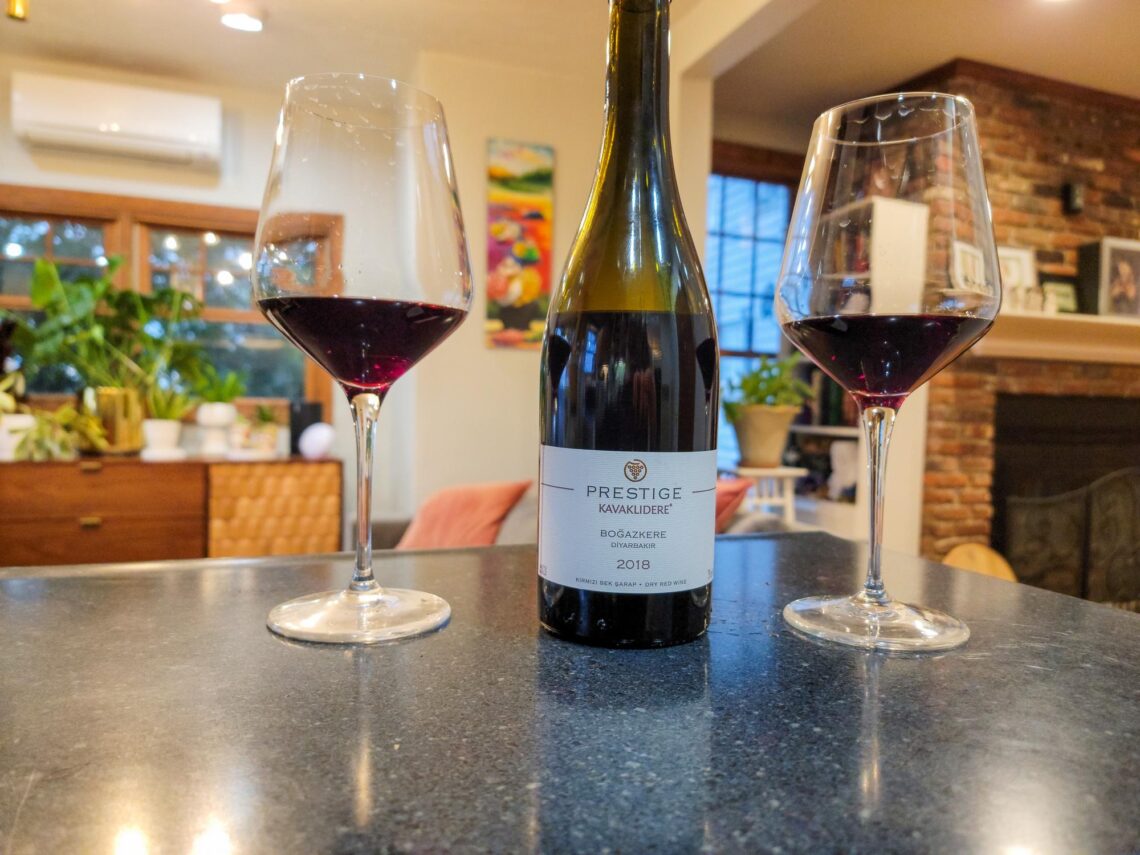
In the ancient, sun-baked landscape of Southeastern Anatolia, Turkey within the historic fertile crescent where viticulture itself was born grows a grape of terrifying, uncompromising power. It is called Boğazkere (pronounced bow-ahz-keh-reh), and its name translates literally to “The Throat Burner.”

For decades, this indigenous titan was the wine world’s best-kept secret, hidden away in mass-market commercial blends to give cheap juices some skeletal structure. But a modern wave of technical winemaking has pulled Boğazkere out of the shadows. Today, it is stepping onto the global stage as an ultra-scalloped, highly collectible expression of rugged luxury—a bottle that commands serious respect, careful investment, and deep culinary pairing.
1. The Anatomy of the Grape: Why It Burns
Boğazkere does not earn its nickname from alcohol burn; it earns it from sheer, unapologetic phenolics.
The grape thrives in the harsh, arid, stone-strewn plateau of Diyarbakır, running along high altitudes where daytime heat gives way to freezing desert nights. To survive this brutal climate, the vine produces small, thick-skinned berries packed with a massive density of seeds.
[Thick Skin + Dense Seeds] ──> [High Anthocyanins & Tannins] ──> [The “Throat Burner” Sensation]
When crushed, these skins release astronomical levels of aggressive, astringent tannins and a sharp, laser-focused natural acidity. Vinified poorly, it dries the mouth out like a fistful of chalk. But when handled with precision—utilizing gentle extraction, gravity-fed facilities, and long-term barrel maturation—those aggressive tannins transform into a spectacular architectural grid. The palate uncoils to reveal deep, brooding layers of black pepper, dark leather, dried figs, tobacco leaf, and eucalyptus, backed by an aging potential that easily matches top-tier Barolo or Madiran Tannat.

2. The Price Tag of Rarity: What it Costs to Collect
Because Turkey’s domestic market faces strict regulatory frameworks, infrastructure taxes, and e-commerce bans, premium single-varietal Boğazkere is a naturally scarce commodity on the international secondary market. It rarely crosses the blocks of massive mainstream auction houses like Christie’s, trading instead through boutique allocations and highly specialized European importers.

Financially, the category breaks down into three distinct tiers:
The Premium Entry Layer ($25 – $40)
This is where the benchmark, internationally decorated single-varietal labels sit. Bottles like the Kavaklıdere Prestige or Heraki Novakula routinely retail between $25 and $40 USD (approximately €25 – €36) upon release. They represent incredible technical value, punching far above their price weight in structural complexity.

The Coastal Luxury Tier ($60 – $80)
When producers take the grape out of its ancestral home and apply modern, coastal viticulture techniques, the price steps up. Exceptional maritime expressions, like the single-varietal Urla Boğazkere, sit comfortably in the $60 to $80 USD range, driven by highly restricted estate production and massive acclaim from competitions like the Decanter World Wine Awards.

The Private Library & Auction Cap ($150 – $1,500+)
While pristine back-vintages from the late 1990s or early 2000s are occasionally traded among elite collector circles for $120 to $160 per bottle, large-format signed magnums or rare estate library selections hit their peak at private Turkish charity galas and diplomatic auctions. In these closed-door environments, ultra-rare lots have been known to net anywhere from $1,500 to $5,000+ for regional agricultural preservation.
3. The Front-Runners: The Best Bottles in the Region
To truly understand how this grape is being translated by modern oenologists, you have to look at the three producers currently redefining the category. They have split the terroir into distinct philosophies:
| Producer | Expression Name | Core Terroir | Structural Profile | Price Guide |
|---|---|---|---|---|
| Kavaklıdere | Prestige Boğazkere | Diyarbakır (Southeastern) | The Purist: Massive, muscular, traditional tannins. Notes of leather, dark dried fruits, and heavy spice. Aged in French oak. | ~$35 USD |
| Heraki | Novakula Old Vine | Çal-Denizli (Central/Aegean) | The Technical Disruptor: High-altitude bush vines. High-tension acidity, graphite, crushed slate, and beautifully managed, fine-grained tannins. | ~$38 USD |
| Urla Şarapçılık | Single-Varietal Boğazkere | Izmir (Aegean Coast) | The Modernist: Maritime limestone soils. Velvety, opulent, and fleshy with ripe bramble fruits, vanilla, and cocoa. | ~$65 USD |
Kavaklıdere “Prestige”
The historic standard-bearer. Sourced directly from the volcanic, red-clay soils of Diyarbakır, this is the most authentic translation of the grape’s ancient roots. It is unyielding in its youth, demanding at least two hours in a decanter to soften its heavy armor, but rewards cellaring for up to 15 years.
Heraki “Novakula”
A stunning, low-intervention project utilizing dry-farmed old bush vines sitting at 900 meters above sea level. Heraki uses seasoned oak foudres rather than aggressive new barrels, allowing the grape’s natural, vibrant acid spine and graphite-minerality to take center stage. It turns the “throat-burner” into a precise, elegant technical masterpiece.
Urla Şarapçılık
An audacious terroir shift. By growing the grape on the coastal Aegean peninsula, the warm maritime air naturally tames the aggressive phenolics, yielding a plush, high-alcohol, incredibly luxurious wine. It trades rustic brawn for a velvety coat of dark chocolate and ripe plum, making it the most immediate, blue-chip style alternative for collectors of elite New World Cabernets.