
Bauxite: The Quiet Commodity Powering the Electric Future
The electric-vehicle revolution is usually presented through the names we know: Tesla, BYD, Volkswagen, Mercedes-Benz, BMW and the growing number of Chinese manufacturers reshaping the global car market.
But behind the battery, motor and software is another industrial story that receives considerably less attention.
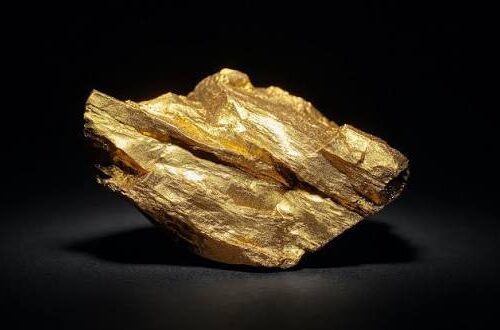
Bauxite.
The reddish-brown ore is not used directly to build an electric vehicle. It is the starting point for alumina, which is then refined into aluminium. And aluminium is becoming increasingly important to the next generation of vehicles, charging networks, electricity grids, solar installations and industrial infrastructure.
As the world electrifies transportation and energy, the bauxite supply chain is becoming a geopolitical story.
And in 2026, much of that story runs through China, Guinea, Indonesia and an increasingly ambitious Africa.
The EV industry is no longer a niche
Electric vehicles have moved well beyond the early-adopter phase.
China remains the world’s dominant EV manufacturing and sales market, while Europe has become another major centre of electrification. At the same time, electric two-wheelers, buses and commercial vehicles are becoming increasingly important in emerging markets.
The latest International Energy Agency Global EV Outlook shows just how quickly electric mobility is spreading beyond conventional passenger cars. In Africa, Uganda has emerged as one of the fastest-growing markets for electric two-wheelers, with sales exceeding 30,000 in 2025.
This is particularly significant because Africa’s EV transition will not necessarily look like Europe’s.
Africa may electrify motorcycles, taxis, buses, delivery vehicles and commercial fleets before private passenger cars become dominant.
Companies such as Spiro are already building electric two-wheeler manufacturing and battery-swapping networks. The IEA previously reported that African electric two-wheeler sales were growing rapidly, while companies such as Spiro were investing in local assembly capacity and charging infrastructure.
The industry may therefore be smaller than China’s today, but it is becoming increasingly difficult to dismiss.
Why aluminium matters to the next generation of cars
The important relationship is:
Bauxite → Alumina → Aluminium → Vehicle.
Aluminium’s greatest advantage is weight.
An EV already carries a substantial amount of mass in its battery pack. Manufacturers therefore have a strong incentive to reduce weight elsewhere without compromising structural integrity or safety.
Aluminium can be used across vehicle structures, body panels, wheels, battery enclosures, heat exchangers, electrical systems and other components.
It is also highly recyclable.
That makes aluminium particularly attractive as manufacturers attempt to improve vehicle efficiency while simultaneously reducing the environmental footprint of production.
The U.S. Geological Survey’s 2026 Mineral Commodity Summaries provides the broader picture of bauxite and aluminium production, resources and international supply.
But the automobile is only one part of the story.
The real aluminium boom could be outside the car
The most overlooked consequence of electrification is that electric vehicles require an enormous expansion of the electricity system.
Every additional EV eventually needs somewhere to charge.
That means more substations, transformers, distribution lines, transmission infrastructure, charging stations and generation capacity.
Aluminium is already fundamental to electrical infrastructure because of its combination of conductivity, relatively low weight and cost.
The International Aluminium Institute has highlighted the importance of aluminium to electricity networks and estimates that demand for aluminium in grids could double over the next 20 years.
That gives bauxite an importance that extends far beyond the automotive industry.
It potentially connects the commodity to:
EVs.
Charging stations.
Solar farms.
Wind farms.
Transmission lines.
Power stations.
Battery storage.
Construction.
The energy transition is therefore creating an enormous physical infrastructure requirement.
China has built the world’s most powerful aluminium ecosystem
China’s importance cannot be overstated.
The country is simultaneously one of the world’s largest aluminium producers, the world’s largest EV market and the centre of much of the global battery and electric-vehicle manufacturing ecosystem.
But China has a problem.
Its domestic bauxite resources are not sufficient to satisfy the scale of its aluminium industry.
That has made imported bauxite strategically important.
And one country has become particularly important to Beijing:
Guinea.
Guinea: China’s bauxite lifeline
Guinea has transformed itself into the world’s most important bauxite exporter.
Reuters reported that Guinea exported approximately 183 million tonnes of bauxite in 2025, while China’s bauxite imports reached 200.5 million tonnes, an increase of 26.4%.
Even more striking is the long-term change.
Chinese imports of Guinean bauxite increased from just 334,000 tonnes in 2015 to approximately 149 million tonnes in 2025. Guinea supplied roughly 74% of China’s bauxite imports by 2025.
That is not simply a mining relationship anymore.
It is a strategic industrial relationship.
Guinea supplies the ore.
China processes enormous quantities of it into alumina and aluminium.
Chinese manufacturers then use those materials across automobiles, batteries, electronics, construction and power infrastructure.
The material may travel thousands of kilometres before returning to global markets as a finished product.
And Guinea is beginning to push back
For years, the conventional African commodity model was relatively simple:
Extract → export → import the finished product.
Guinea increasingly wants to change that.
The country has been pushing mining companies toward domestic refining and greater value addition.
In 2026, Guinea’s state-owned Nimba Mining Company announced plans to market bauxite through monthly tenders while expanding production and pursuing an alumina refinery. Reuters reported that Nimba had already exported more than five million tonnes since its creation and was targeting 10 million tonnes in 2026 and 12 million tonnes of annual capacity by 2027.
That is an important development.
Guinea is beginning to ask a different question:
Why should Africa export the raw material while someone else captures most of the industrial value?
The geopolitical battle is moving downstream
The next stage of the bauxite story is therefore not necessarily about finding more ore.
There is already plenty.
The bigger question is who controls the processing.
Guinea has signed agreements involving new alumina-refining capacity, including a proposed 2-million-tonne-per-year refinery involving Emirates Global Aluminium’s Guinea Alumina Corporation.
If more alumina and eventually aluminium production moves closer to the mines, Guinea could capture considerably more economic value.
That would also give the country greater influence over an industry in which China currently has enormous downstream power.
Indonesia is playing the same game
Guinea isn’t the only country attempting to move up the value chain.
Indonesia is another important example.
Jakarta has been trying to transform itself from a raw-material exporter into a processing and manufacturing centre, particularly in nickel, but increasingly across other minerals as well.
In September 2026, Reuters reported that Indonesia was considering a new commodities exchange designed to give the country greater influence over global pricing for commodities including bauxite, nickel, copper and coal.
Indonesia is also deepening its industrial relationship with China.
In August, Beijing and Jakarta agreed to expand cooperation across minerals, energy and technology, highlighting how closely natural resources are becoming intertwined with geopolitical relationships.
The message is becoming clear:
Countries that control the raw materials increasingly want control over the markets surrounding them.
The problem with calling an EV “green”
There is another uncomfortable part of this story.
An electric vehicle can eliminate tailpipe emissions, but its materials still have to be mined, transported, refined and manufactured.
Aluminium production is particularly electricity intensive.
That means the environmental credentials of an aluminium-intensive EV ultimately depend partly on where the aluminium was produced and how the electricity was generated.
Indonesia demonstrates the problem.
The country is expanding aluminium and alumina production while simultaneously relying heavily on captive fossil-fuel power for parts of its industrial system.
So the world could end up with a paradox:
Electric vehicles powered by clean electricity, built with aluminium produced using carbon-intensive electricity.
That is one reason the aluminium industry is increasingly concerned with low-carbon power.
The Gulf has shown another vulnerability
The geopolitical risk is no longer theoretical.
In 2026, disruption to aluminium production in the Gulf following the Iran conflict forced global markets to look elsewhere for supply.
Reuters reported that China responded by increasing exports of aluminium alloys and semi-finished products, with China’s alloy exports almost doubling during the first half of 2026 and semi-finished exports rising 18%.
The episode demonstrated something important.
The global aluminium supply chain isn’t controlled by one country.
It is an interconnected system involving:
Bauxite miners.
Alumina refineries.
Smelters.
Electricity producers.
Shipping companies.
Fabricators.
Automakers.
Construction companies.
Power-grid operators.
A disruption in one part of the chain can quickly move through the others.
Africa’s opportunity may be bigger than mining
This is where the African story becomes particularly interesting.
Africa possesses enormous mineral resources, but historically much of the continent’s economic participation has stopped at extraction.
Bauxite is an opportunity to change that.
Imagine the supply chain being developed closer to home:
Guinean bauxite → Guinean alumina → African aluminium → African vehicle components → African EV manufacturing.
That would be a completely different economic proposition from simply loading raw bauxite onto a ship.
And Guyana offers an intriguing smaller-scale version of the same argument.
Guyana’s bauxite industry is expanding, while its government is simultaneously investigating critical minerals including gallium. The possibility of extracting additional value from existing mineral resources could eventually give countries with established bauxite industries another reason to invest in domestic processing.
The next battleground: power
Ultimately, the bauxite story becomes an electricity story.
You cannot build a large aluminium industry without enormous quantities of reliable electricity.
And you cannot build an EV economy without electricity either.
This creates a remarkable convergence.
Bauxite feeds aluminium.
Aluminium feeds EVs and grids.
EVs increase electricity demand.
New electricity demand requires more generation and transmission.
Transmission requires aluminium.
The cycle feeds itself.
The IEA’s Global EV Outlook projects continued rapid growth in electric mobility, while the aluminium industry’s own research points to sharply increasing demand for the metal in electricity networks.
The future therefore isn’t simply about producing more cars.
It is about building the physical infrastructure required to support those cars.
2026’s bauxite map
The geopolitical map now looks very different from it did a decade ago.
China wants secure access to bauxite and dominates much of the processing and downstream manufacturing.
Guinea has the world’s most strategically important bauxite-export position and is increasingly demanding domestic processing.
Indonesia is attempting to use resource control to build a broader industrial economy and gain influence over commodity pricing.
Australia remains one of the world’s major bauxite suppliers and an important part of the Western-aligned mineral supply chain.
Africa is increasingly asking whether its mineral wealth should support industrialisation rather than simply exports.
And Europe is attempting to secure industrial supply chains while simultaneously decarbonising its automotive and power sectors.
The result is a commodity market that increasingly looks like geopolitics.
The next generation of cars may begin in a mine
The automotive industry likes to talk about software-defined vehicles, autonomous driving, solid-state batteries and artificial intelligence.
Those technologies will matter.
But none of them eliminate the need for physical materials.
Every vehicle still requires metal.
Every charging station requires infrastructure.
Every power station requires materials.
Every transmission line requires conductors.
Every solar farm requires structural components.
And every aluminium supply chain begins with something far less glamorous than the finished automobile:
bauxite.
That is why the commodity deserves a much closer look in 2026.
The EV revolution may have started with batteries and motors, but its next phase could increasingly be defined by something much more fundamental:
who controls the minerals, who controls the energy required to process them, and who captures the value between the mine and the finished machine.
For Africa, that could be the difference between being the place where the energy transition gets its raw materials—and becoming one of the places where the energy transition is actually built. :::
This version keeps bauxite and aluminium technically distinct, while making the geopolitical connection to EVs, grids and power generation. I also used current 2026 developments—particularly Guinea’s export strategy, China’s dependence on Guinean ore, Indonesia’s commodity ambitions and the recent Gulf aluminium disruption—so the piece reads as a 2026 follow-up, rather than a generic bauxite article.