A difficult Azerbaijan Grand Prix left Lando Norris with another painful points loss, while Lewis Hamilton salvaged sixth for Ferrari after fighting a different battle of his own.
Baku was supposed to be another opportunity for McLaren to keep the pressure on Scuderia Ferrari and the championship fight.
Instead, the streets of Azerbaijan exposed the weaknesses of the McLaren package, and for Lando Norris, the weekend ended with another retirement and more lost points.
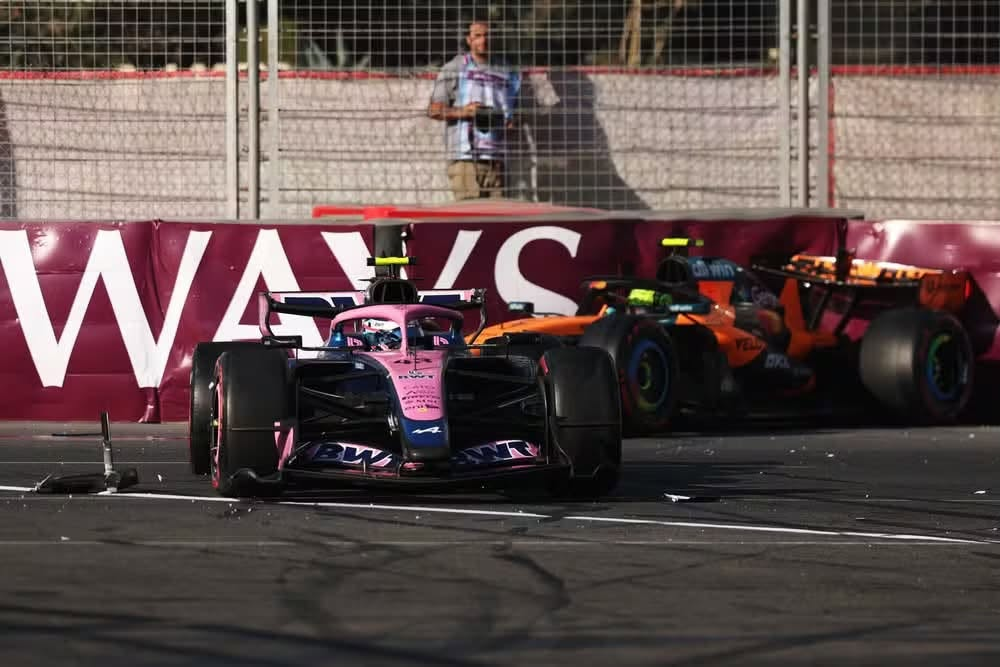
The reigning World Champion arrived in Baku having recently rediscovered winning form, but the long straights of the Baku City Circuit immediately presented a problem. Norris said after qualifying that McLaren had been dealing with straight-line-speed issues throughout the weekend, and those difficulties followed him into Saturday’s race.
By the end of the afternoon, Norris was out of the race.
Norris was fighting the straights before the crash
Norris started fifth after a qualifying session in which he locked up while pushing for a place on the front row.
The race initially offered an opportunity to recover.
He gained a position at the start, but the Red Bulls soon came back past. Hamilton then joined the fight, and after Norris locked up and ran deep, the Ferrari driver was able to get through. Norris subsequently lost further positions to Pierre Gasly and Kimi Antonelli.
It was not simply a matter of the McLaren lacking pace everywhere.
The problem was particularly visible on Baku’s straights.
Norris himself described the situation bluntly after the race, saying he had been struggling heavily with straight-line speed and had seen other cars come past him quickly.
McLaren Team Principal Andrea Stella was even more direct about the underlying issue, pointing to too much drag, insufficient top speed on the straights and a lack of cornering pace as fundamental limitations of the package around Baku.
That combination left Norris defending rather than attacking.
And then came the restart.
A crash that Norris never really had a chance to avoid
After Alex Albon’s crash brought out the first Safety Car, the field bunched together.
When racing resumed, Franco Colapinto locked up approaching Turn 1 and collided with his Alpine team mate Pierre Gasly. Gasly was then forced into Norris, sending all three cars off the circuit.
For Norris, the championship consequences were immediate.
The McLaren was damaged beyond repair and his race was over.
Colapinto accepted responsibility for the incident, explaining that he locked up with cold tyres and cold brakes and lost control of the car. He also apologised to Norris and McLaren.
Norris could only watch the championship points disappear.
It was his first retirement since Monaco and ended a run of eight consecutive rounds in the points.
One place ahead, Hamilton had a different problem
Lewis Hamilton finished sixth for Ferrari, one position ahead of the Mercedes he had spent much of the race fighting.
But Hamilton’s struggle was not simply about Ferrari being unable to produce the necessary pace.
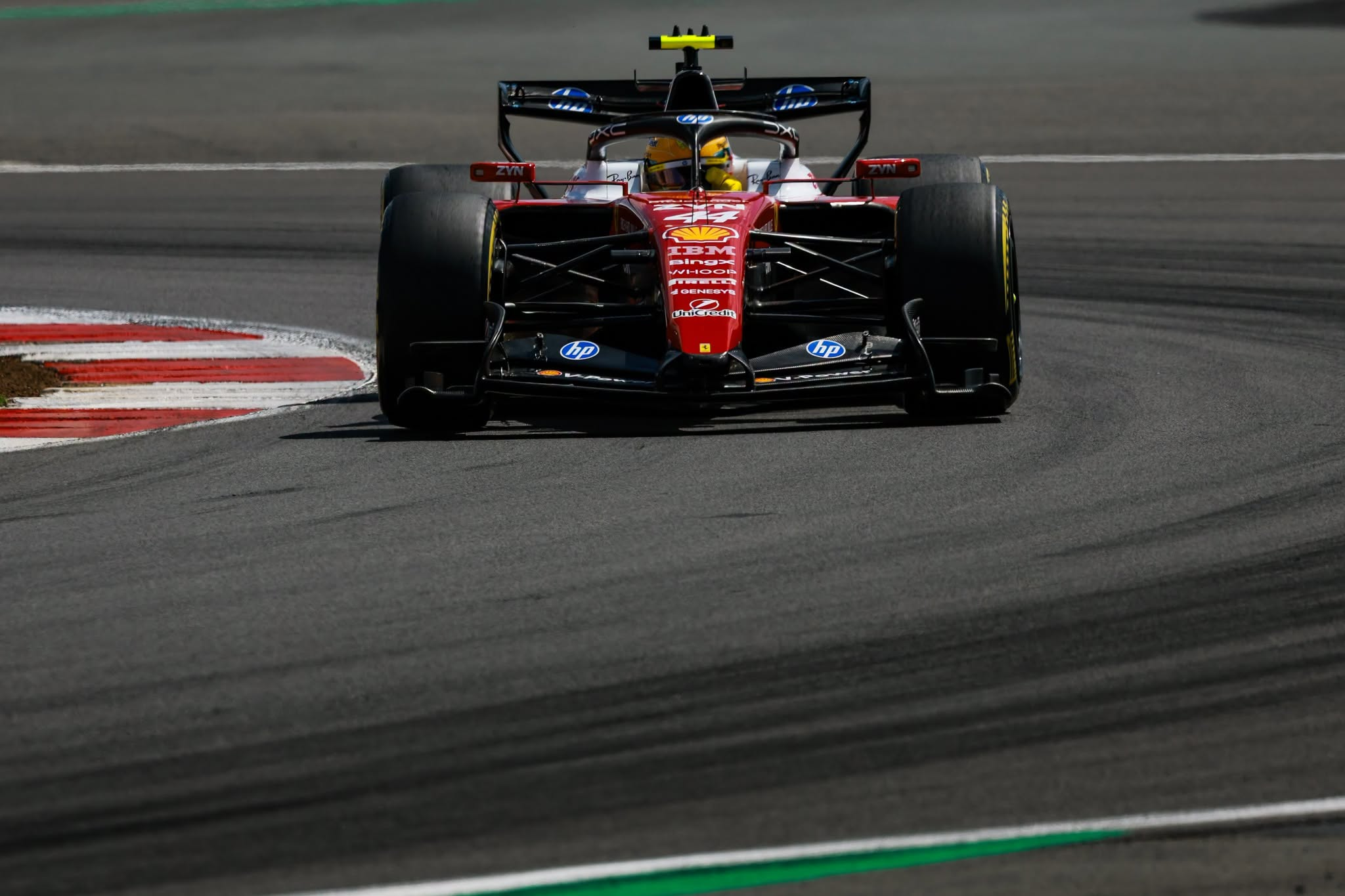
The seven-time World Champion pointed instead to the tyres.
Hamilton explained that Ferrari struggled to get the tyres consistently into their correct operating window, making it difficult to extract the performance available from the car. The team will now analyse the data, particularly its energy management, before heading to Malaysia.
That problem became particularly significant during the latter part of the race.
Hamilton had been able to fight Norris earlier, but when Kimi Antonelli closed in during the final stages, the Ferrari driver could not keep the Mercedes behind. Antonelli eventually passed him with eight laps remaining.
Hamilton brought the Ferrari home sixth.
It was not the result Scuderia would have wanted, but in a race that eliminated six drivers, Ferrari at least escaped Baku with both cars classified inside the top six.
Charles Leclerc finished fourth.
Bottas and Alonso: two very different retirements
Further back, Valtteri Bottas and Fernando Alonso were given little opportunity to turn their Baku weekends into points.
Bottas’ Cadillac had spent much of the race fighting around the midfield, with Sergio Perez providing one of the principal battles.
But on the final lap, everything unravelled.
Bottas locked up into Turn 1 and went wide. He subsequently described the car’s systems as becoming confused after the additional distance, before suffering a major incident at Turn 15. When he hit the brakes, he reported that only the front brakes were working and that the rear was no longer harvesting as expected.
His verdict on the weekend?
“A bit of a strange one.”
For Cadillac, the disappointment was tempered by the fact that the team had spent much of the race fighting other cars — something Team Principal Marcin Budkowski described as an encouraging sign despite Bottas failing to see the chequered flag.
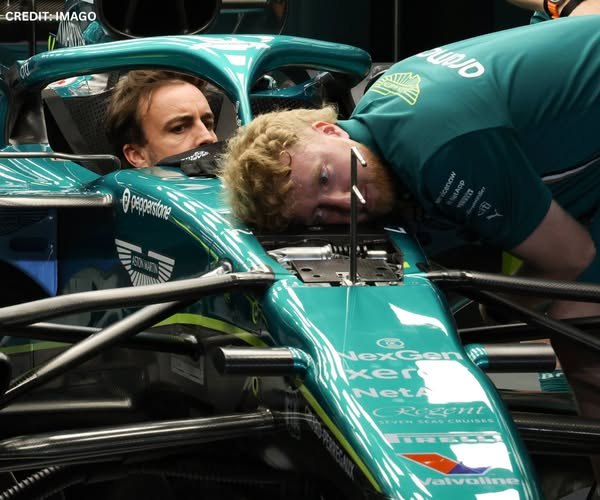
Alonso’s afternoon ended earlier.
The Aston Martin driver reported losing significant time on the straights, with the team suspecting a power-unit-related problem. Alonso was brought into the pits and retired on Lap 20. Aston Martin subsequently said it would analyse the issue before the next race.
For Alonso, Baku had effectively confirmed what the team had expected before arriving: it was never going to be a particularly strong weekend for Aston Martin.
McLaren leaves Baku empty-handed
Perhaps the biggest story for McLaren is not simply Norris’ retirement.
It is that the team left Azerbaijan with zero points.
Oscar Piastri had been running near the front for much of the race before a lock-up after the second Safety Car dropped him down the order. He eventually finished 14th.
Norris didn’t finish at all.
The result is particularly painful because McLaren had arrived in Baku with genuine momentum. Norris had won in Hungary and the Netherlands, and the team had been putting pressure on the championship leaders.
Baku interrupted that momentum.
McLaren now has to understand whether the circuit exposed a problem unique to the MCL40 or whether the lack of top speed points toward a broader performance concern.
Stella described Baku as a circuit with unusual characteristics and said the team still believes the upgrades introduced this weekend worked as intended. But the track demanded more from the car than the improvements could provide.
Ferrari survives the chaos
For Scuderia Ferrari, the weekend was hardly perfect.
But Baku was a race of survival.
Leclerc finished fourth.
Hamilton finished sixth.
Norris finished with nothing.
And with the McLaren pair scoring zero points, Ferrari leaves Azerbaijan having limited the damage while its championship rival leaves wondering what might have been.
The gap between the two outfits has consequently become a more important part of the story heading into the next race.
But Baku also offered a warning.
The McLaren was not simply beaten by Ferrari on Saturday.
It was exposed by a circuit that demanded low drag, strong straight-line efficiency, confidence under heavy braking and tyres that could be brought into their operating window.
For Norris, the weekend had begun with a fight for performance and ended with a crash that wasn’t of his making.
For Hamilton, the battle was more subtle: finding the performance within a Ferrari whose tyres were refusing to consistently cooperate.
For Bottas, Baku was simply strange.
And for Alonso, the straights ultimately told the story.
Now the paddock heads toward Malaysia.
Sepang will ask an entirely different set of questions.
And for McLaren, the answers need to come quickly.