The battle of the drive trains in 2026 isn’t just about horsepower; it is a war between mechanical clockwork and solid-state physics.
While the Gemera utilizes a complex, watch-like hybridization, its competitors are doubling down on pure electric torque and independent wheel control. Here is the technical breakdown of how these four power plants stack up at the drive train level.
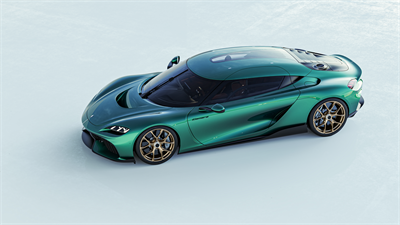
1. Koenigsegg Gemera: The Mechanical Hybrid (LSTT + Dark Matter)


The Gemera’s drive train is the most complex ever put into a road car. It’s an “all-of-the-above” engineering strategy.
- The Transmission: The Light Speed Tourbillon Transmission (LSTT). Unlike a traditional dual-clutch, this has nine clutches and nine gears. Because it doesn’t have a flywheel or a traditional reverse gear (the electric motor handles reversing), it can shift between any gear combination in two milliseconds. It is “Pinkies Down” luxury: it feels like a single-speed EV but retains the mechanical soul of a V8.
- The Motor: The Dark Matter Raxial Flux Motor. At just 39kg (86 lbs), it produces 800 hp. Koenigsegg chose a 6-phase layout, which is essentially the automotive equivalent of a 12-cylinder engine for electric motors offering smoother power delivery and higher thermal efficiency than the standard 3-phase motors found in most EVs.
2. BYD Yangwang U9: The Quad-Motor “e4” Platform
BYD is attacking the problem with independent digital control.


- The Drive Train: Four independent motors (Quad-Motor). This allows for Real-Time Vectoring at a level a mechanical car cannot match. Since each wheel is controlled by its own computer, the car can perform “tank turns” and balance itself on three wheels if a tire blows out.
- Technical Edge: It operates on a 1200V ultra-high voltage platform, which allows for sustained track performance without the thermal “derating” (power loss) that typically plagues EVs after a few hot laps.
3. Tesla: The Tri-Motor Plaid / SpaceX Package
Tesla’s drive train philosophy is about brute force efficiency and unconventional thrust.

- The Motors: Carbon-sleeved rotors. By wrapping the motor rotors in carbon fiber, Tesla allows them to spin at much higher RPMs without expanding from centrifugal force. This is how the Model S Plaid and the Roadster maintain a flat torque curve all the way to their top speeds.
- The “SpaceX” Factor: The Roadster’s optional drive train includes Cold Gas Thrusters. This isn’t just a gimmick; it uses compressed air to provide external force for cornering and braking, effectively cheating the laws of friction that limit every other car on this list.
4. Rolls-Royce Spectre: The Silent Dual-Motor
Rolls-Royce has the simplest drive train, but for a specific reason: imperceptibility.

- The Setup: A Dual-Motor AWD system. It avoids the complexity of Koenigsegg’s gears and the aggression of BYD’s vectoring.
- Philosophy: The drive train is tuned to mimic the “waftability” of their old V12 engines. It uses a heavily damped throttle map to ensure that even under full acceleration, the passengers don’t feel a “jerk.” It’s the ultimate expression of silent, effortless torque, prioritizing the cabin’s isolation over raw telemetry data.
Drive Train Comparison Matrix
| Feature | Koenigsegg Gemera | BYD Yangwang U9 | Tesla Roadster (SpX) | Rolls-Royce Spectre |
|---|---|---|---|---|
| Primary System | Hybrid (V8 + Raxial) | Quad-Motor EV | Tri-Motor EV + Thrusters | Dual-Motor EV |
| Transmission | 9-Speed LSTT | Independent Direct | Single-Speed Fixed | Single-Speed Fixed |
| Torque Control | Mechanical Clutches | Digital Independent | Carbon-Sleeved Digital | Dual-Motor Synchronized |
| Reverse Method | Electric Only | Motor Reversal | Motor Reversal | Motor Reversal |
| Weight Priority | Power Density (39kg motor) | Stability/Safety | Raw Acceleration | Sound/Vibration Isolation |
The Verdict
If you want the pinnacle of mechanical engineering, the Gemera’s LSTT is the clear winner it is a masterpiece of watchmaking applied to a 2,300 hp engine. If you want the future of digital control, the BYD e4 platform is arguably more advanced in how it manages individual wheel physics. Tesla remains the king of pure performance efficiency, while Rolls-Royce is the only one using a drive train to achieve absolute silence.
Does this technical breakdown of the gearboxes and motor phases help with your article, or should we look at the specific battery chemistry (800V vs 1200V) powering these systems?