There’s a specific kind of silence in Woking right now the kind that usually precedes a riot. McLaren didn’t just win the Constructors’ Championship; they reclaimed a throne. But while the trophies are being polished, the landscape is shifting. We’re seeing the rise of “straight electric powerhouses” like the U9, which, despite its origins, just dropped a 7-minute hammer at the Schleife. You can’t ignore that.
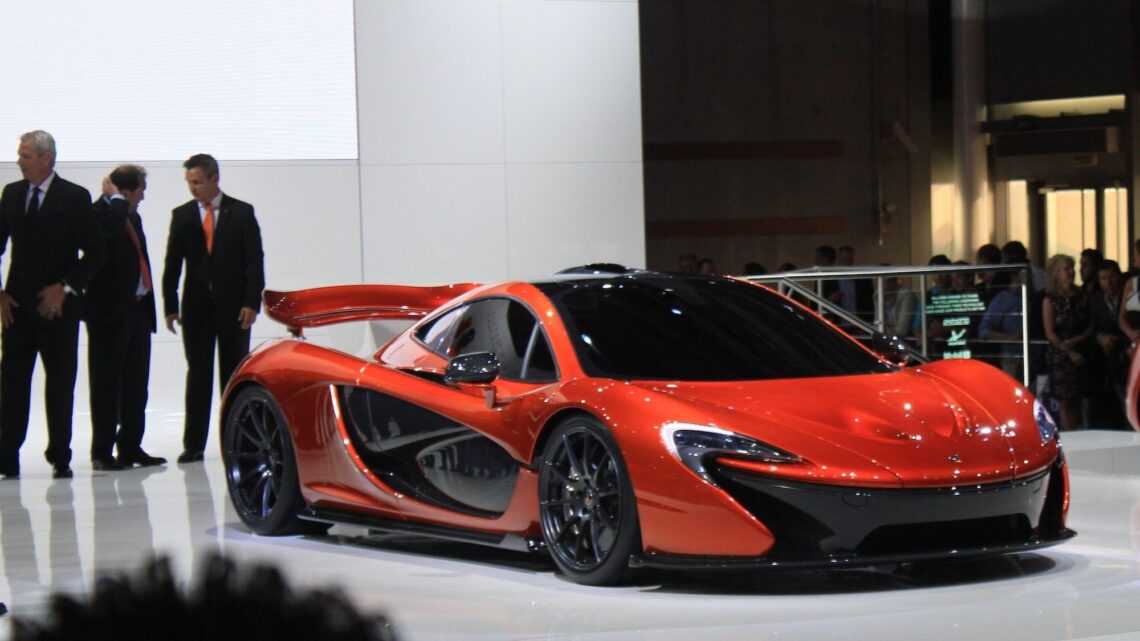
To the south, the Italians are waking up. Ferrari is plotting with the all-electric LUCE, and Lamborghini is throwing weight around with the Fenomeno. The industry is moving toward a silent, sterile future, but McLaren has a legacy to protect: the P1. The “Widow Maker.” The car that made Clarkson lose his mind and redefined what a hypercar looked like before the industry got “compact” and safe.
Here is the argument: In a boardroom somewhere, a triad has formed between NVIDIA, WEC, and Formula 1. They aren’t just talking shop; they are building the successor.
The Silicon Shadow: NVIDIA’s Neural Blueprint
The partnership with NVIDIA is the most potent “what if” in the industry. Imagine a boardroom where the conversation isn’t about marketing, but about the Digital Twin. By leveraging NVIDIA’s Omniverse, McLaren could theoretically simulate every millisecond of a car’s life before a single bolt is turned.

We’re talking about “Pinkies Down” intelligence where high-fidelity simulations of airflow and thermal dynamics allow for a design that looks like an alien artifact but performs with grounded, mechanical precision. If this theory holds, NVIDIA isn’t just providing tech; they are providing the “brain” that allows a P1 successor to manage the sheer violence of a hybrid system without feeling like a sanitized, electronic appliance. It’s the thought of a car that is “born” in a supercomputer to conquer the physical world.
The 2026 Blueprint: 50/50 Violence
Then there’s the technical elephant in the room: the 2026 Formula 1 power unit regulations. The move to a 50/50 split half internal combustion, half electric recovery isn’t just a rule change; it’s a gift to the engineers tasked with replacing the “Widow Maker.”

The argument is simple: why would McLaren ignore the most expensive R&D project in their history? By theoretically porting the DPLOY strategies and MGU-K energy mapping directly from the F1 grid to a road-legal chassis, they create a machine that respects the heritage Clarkson loved while answering the threat of the U9.

- The Theory: A high-revving ICE core for the soul, paired with an electric punch that fills the torque gaps with such ferocity it makes “straight electric” powerhouses look one-dimensional.
- The Hybrid Love: It wouldn’t kill the passion; it would weaponize it. Using GT3 road data to refine the aero and F1 energy logic to refine the punch, the successor could be the first car to truly bridge the gap between “track-only tech” and “road-going riot.”
The Benchmark: 0 to “Widow Maker”
To move forward, we have to acknowledge the alien in the room. The original P1 was a design anomaly shrink-wrapped carbon that looked like nothing before or after. While the newer lineup is technically brilliant, they lack that “unhinged” silhouette that defined the P1.
| Feature | The P1 Legacy Specs |
| Powertrain | 3.8L Twin-Turbo V8 + Electric Motor |
| Combined Output | 903 bhp |
| Torque | 722 lb-ft |
| 0-100 km/h | 2.8 Seconds |
| Top Speed | 350 km/h (217 mph) |
| Status | The “Widow Maker” |
The Boardroom Gamble
The design philosophy of the successor can’t just be “evolutionary.” The P1 was something never before seen and something quite frankly, we never saww again.