For many of us, before we could recite Formula 1 technical regulations or debate the aero-efficiency of a Ferrari 499P, there was the Rover. Specifically, the Rover 75.


In the late ’90s and early 2000s, it stood as a defiant, chrome-trimmed middle finger to the cold, clinical German dominance of the era. It wasn’t trying to be a “driving machine”; it was trying to be a drawing room on wheels. But history wasn’t kind, and the brand vanished, leaving us to wonder: what if Rover hadn’t just survived, but evolved?
The Rover 75 was a product of a strange marriage between British heritage and BMW engineering. It featured elliptical dials, piping on the leather seats, and a silhouette that felt like a hug from a very wealthy grandfather.

It was “Pinkies Down” luxury before the term existed sophisticated and architectural without the “look-at-me” pretension of the modern supercar era. It had a specific kind of soul that disappeared when the Longbridge factory gates closed for the last time.
- The Build: A stiff chassis (partially thanks to BMW’s R&D) that offered a “magic carpet” ride.
- The Aesthetic: Heavy use of chrome and wood, but with a streamlined, classic “three-box” sedan shape.
- The Tragedy: It was a car born into a company that was falling apart, overshadowed by corporate drama and a lack of investment.
The 2026 Revival: The “Grand Convertible” Concept
If Rover were alive today, it wouldn’t be competing with the entry-level hatchbacks. It would be a boutique, technical powerhouse a British alternative to the Bentley Continental GT or the Rolls-Royce Dawn, but with a sharper, more modern edge.

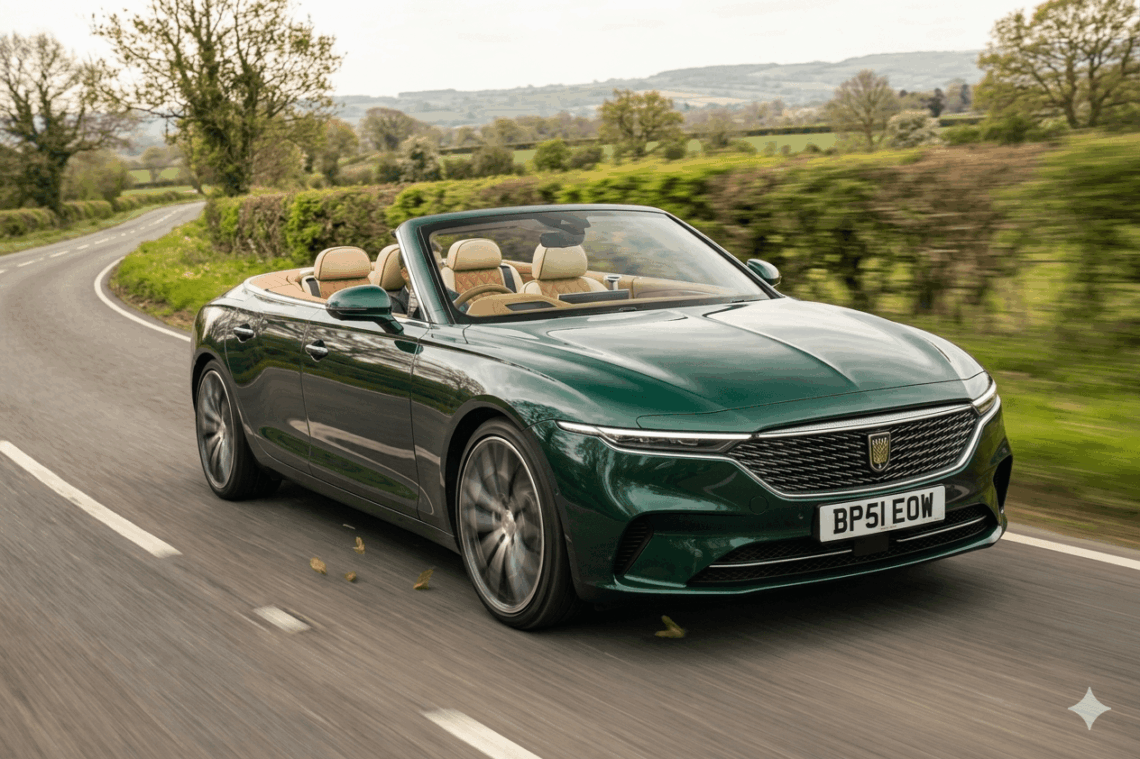
Imagine a 2026 Rover Grand Convertible that takes that original “retro-classic” DNA and stretches it into a long-wheelbase masterpiece.
1. The Design Language
The “frowning” headlights of the original are gone, replaced by modern LED reworks slim, aggressive horizontal strips that cut into a wide, Audi S4-inspired front bumper. The chrome remains, but it’s used tactically: highlighting the 22-inch 32-spoke rims and the “waistline” of the car.

2. The Technical Sophistication
In a world obsessed with 50/50 hybridization and V8 returns, the modern Rover would likely utilize a tri-motor EV setup or a high-performance V8 Hybrid to maintain that effortless torque.
- Chassis: An extended wheelbase for “pinnacle” stability.
- Exterior: A bold two-tone “Midnight Black” over “Candy Red” paint job, nodding to the hot-rod culture while staying firmly in the luxury camp.
Inside the Cabin: Where BMW Meets Mercedes
The interior of a modern Rover wouldn’t be stuck in the past with plastic wood. It would draw from the best of the current “Pinnacle” players:

- The Tech: A floating curved display inspired by the BMW iX, providing a clean, driver-centric cockpit.
- The Elegance: The center console flow and ambient lighting of a Mercedes C-Class, but wrapped in that classic Rover tan-and-cream leather.
- The Philosophy: It’s about “enforced” presence. When this car shows up in the rearview mirror of a BMW, it doesn’t need to flash its lights. The sheer scale and 22-inch stance say everything that needs to be said.
Why It Matters Today
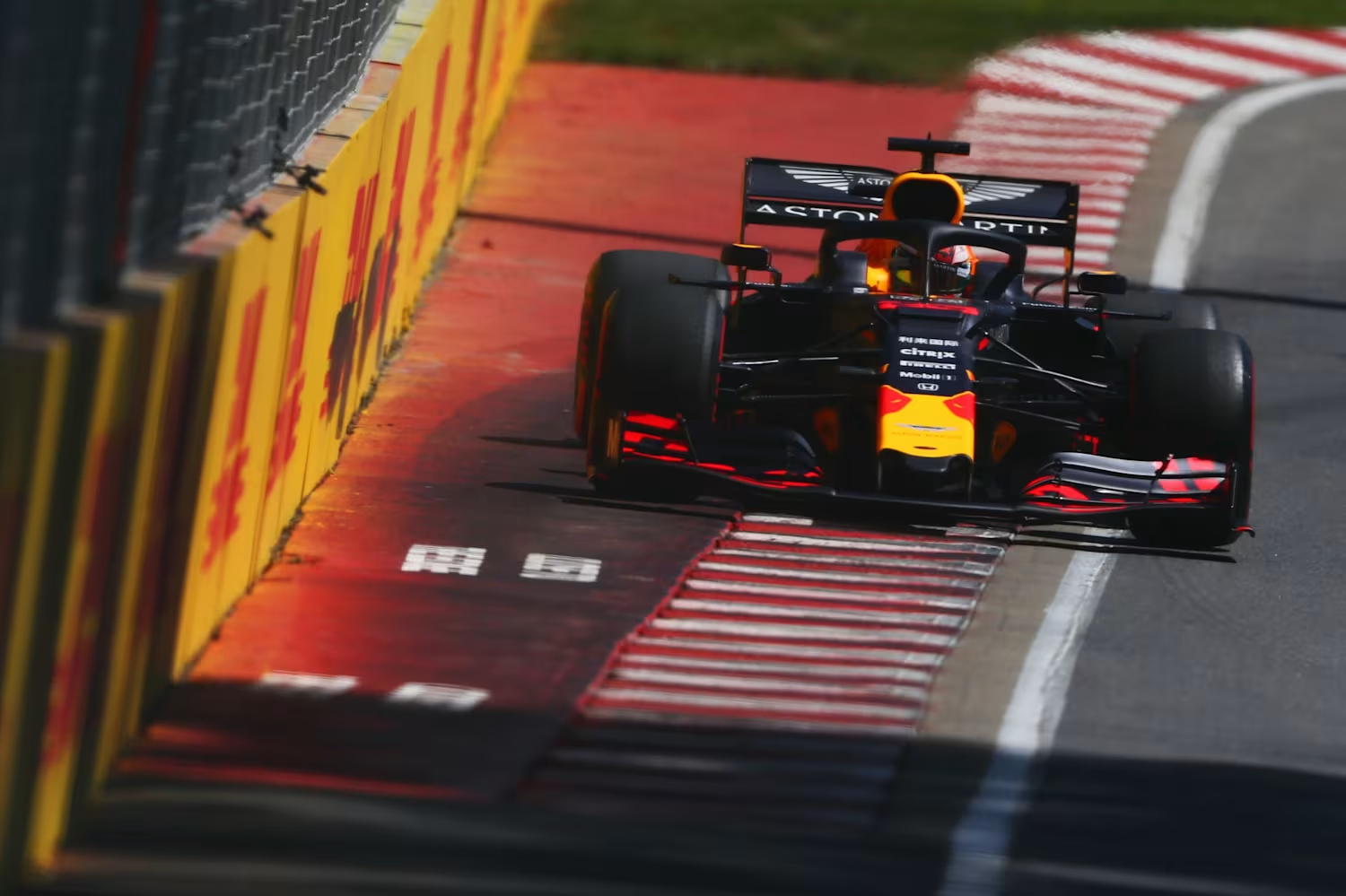
F1 might be where the “super-secret tech” lives, and WEC might be where “real racing” is currently thriving, but Rover represented something different: Character.

A modern Rover concept proves that you don’t need “crap rules” or “commercial bullshit” to make a statement. You just need a solid concept, a bit of “Pinkies Down” sophistication, and the guts to sit a classic British silhouette on 22s and see who blinks first.
The original Rover wasn’t perfect, but as a concept for 2026? It’s exactly the kind of “dope” comeback the industry needs.
What part of the “modern Rover” vibe appeals to you most is it the raw, aggressive stance on those 22s, or the idea of a luxury cabin that actually feels like a destination?