While many travelers flock to Belgium for its golden fries and intricate lace, true gourmands know that the country’s real treasure is found in a chilled bowl. Belgian ice cream is not merely a dessert; it is a high-fat, high-art form defined by a culture of patience, farmhouse traditions, and an obsessive focus on “mouthfeel.”
The Gold Standard: Fat and Texture
In the world of frozen desserts, fat is the carrier of flavor and the architect of texture. While standard international brands might settle for lower percentages, Belgian ice cream typically starts at a rich 8–10% fat content, with premium catering varieties soaring to 12–16%.
This high butterfat ratio, combined with a dense structure, creates a “paste-like” consistency that coats the palate. It is heavier than Italian gelato but smoother than American hard-pack, striking a perfect balance of decadence.
Iconic Flavors and Pairings
The Belgian ice cream scene is a blend of the classic and the experimental.
- Dame Blanche: This is the crown jewel of Belgian sundaes. It is a masterclass in temperature contrast pristine vanilla ice cream meet a signature warm chocolate fudge. In true Belgian fashion, it is often enjoyed with a Kriek lambic, a sour cherry beer whose acidity cuts through the intense sweetness.

- Speculoos (Belgian Biscuit): This flavor is a national identity in a scoop. It utilizes the iconic spiced shortcrust biscuit, muscovado sugar, and a warm spice mix (cinnamon, nutmeg, cloves) to create a deeply comforting, caramelized profile.

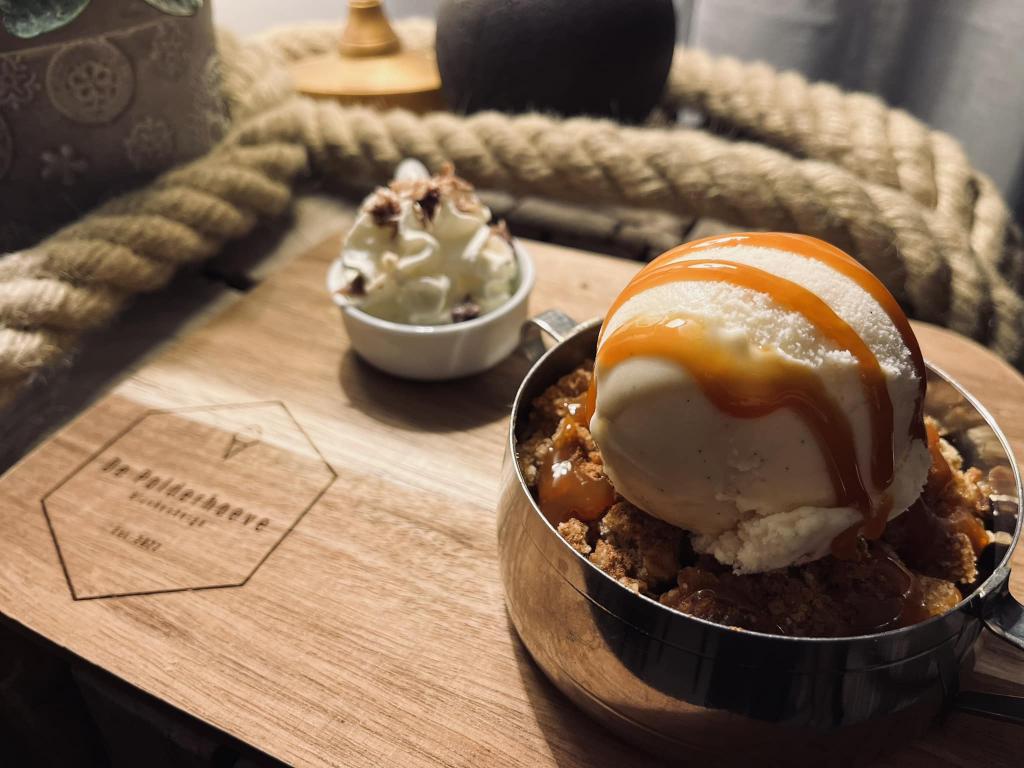
- Hoeve-ijs (Farmhouse Ice Cream): This is the ultimate “slow food” dessert. Produced directly on dairy farms using fresh, non-homogenized milk, it offers a “raw” and authentic flavor profile that industrial processes simply cannot replicate.

- The Modern Infusions: Modern Belgian gelato-makers are increasingly leaning into the country’s love for spirits, creating sophisticated blends like Cookies & Cream Amaretto or sustainable Baileys-infused milk chocolate.

The Science of the “Fine” Texture
The reason Belgian ice cream feels so sophisticated on the tongue isn’t just the ingredients it’s the engineering.
1. The 24-Hour Aging Ritual


Artisans rarely freeze their mixture immediately. Instead, the “mix” is aged for up to 24 hours. During this period, the proteins hydrate and the fats crystallize. This patience is what ensures the final product is stable and has that characteristic “fine” grain.
2. High-Pressure Homogenization
To achieve a uniform silkiness, the mixture is forced through microscopic screens at high pressure. This breaks fat globules down into tiny particles, ensuring that every single spoonful has the exact same density and richness.
3. The Pacojet Revolution
In the high-end catering industry, the Pacojet is the secret weapon. Rather than traditional churning, which incorporates significant air (overrun), the Pacojet “pacotizes” frozen blocks of ingredients into an ultra-homogenous cream. The result is a dense, intense flavor with almost no air, allowing the ingredients to shine with maximum impact.
4. Conching for Chocolate
For chocolate varieties, the process begins long before the dairy is involved. Using the same conching methods pioneered by chocolatiers like Callebaut, the cocoa is ground and heated for hours to develop its “body” and eliminate bitterness, ensuring the chocolate integrates perfectly with the cream.
Conclusion
Whether it’s the rustic charm of Hoeve-ijs or the technological precision of a Pacojet sorbet, Belgian ice cream proves that when you combine high-quality dairy with centuries of culinary expertise, the result is nothing short of legendary. For an ice cream lover, it is a destination real or imagined well worth the journey.