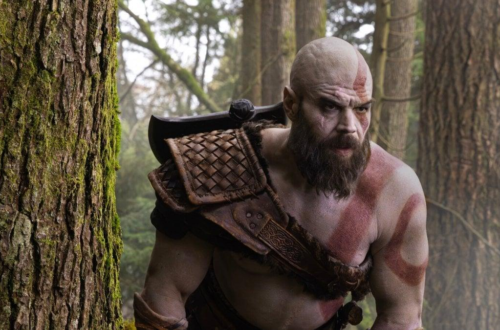
The Snyderverse: Is Bringing Zack Snyder Back DC’s Best Chance of Beating Marvel?
**DLifestyle Magazine | Film & Entertainment**
There is a question that continues to divide superhero fans: should DC return to the Snyderverse, or is it time to finally move forward?
With James Gunn’s vision of the DC Universe facing its own commercial and creative tests, and Marvel continuing to build on almost two decades of interconnected storytelling, the argument is becoming increasingly difficult to ignore.
DC has never suffered from a shortage of superheroes. Superman, Batman, Robin the Boy Wonder, Bane, Hawkman, Hal Jordan and an extraordinary catalogue of characters have been entertaining comic-book readers for generations. Yet translating that popularity into a consistently successful live-action universe has proved considerably more difficult.
Marvel, on the other hand, managed to turn relatively familiar and lesser-known characters into a cinematic phenomenon. And while the story behind how both studios reached this point is somewhat convoluted, the box office tells a rather interesting story.
Two universes, two very different approaches
When *Iron Man* arrived in 2008, Marvel was taking a gamble. Robert Downey Jr. was hardly the obvious choice for a character who would eventually become one of cinema’s most recognisable superheroes. Yet his performance gave Tony Stark something that extended beyond the armour: personality, vulnerability, arrogance and, importantly, humour.
It was a character audiences could return to without needing an encyclopaedia of comic-book history.
Marvel gradually built on that foundation, introducing Captain America, Thor, Black Widow, Hulk and the Guardians of the Galaxy before bringing its heroes together.
The Russo Brothers eventually became central to that success, directing *Captain America: The Winter Soldier*, *Captain America: Civil War*, *Avengers: Infinity War* and *Avengers: Endgame*.
Their films demonstrated how an interconnected universe could work when individual character journeys were allowed to feed into a much larger narrative.
DC took a different route.
Zack Snyder’s *Man of Steel* arrived in 2013, presenting Henry Cavill’s Superman as a more conflicted, almost mythological figure. It was followed by *Batman v Superman: Dawn of Justice* and eventually *Justice League*.
There was ambition, certainly. There was also a visual identity that separated Snyder’s interpretation from the brighter, more humorous approach Marvel had established.
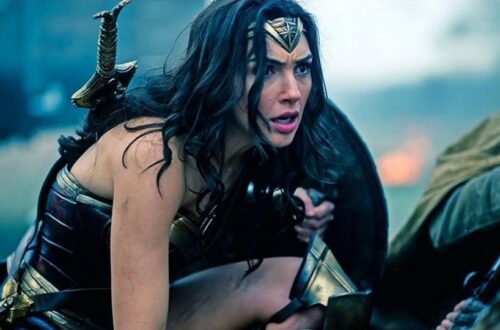
Personally, I take nothing away from the Snyderverse. His films were not necessarily what I would ordinarily associate with my own superhero preferences, with *Wonder Woman* being a notable exception. But there was an unmistakable vision behind them.
The difficulty was getting audiences to embrace that vision as a connected cinematic universe.
The box office doesn’t lie
If there is one area where the comparison becomes particularly uncomfortable for DC, it is theatrical revenue.
Consider the four Marvel films directed by the Russo Brothers.
| Russo Brothers’ Marvel films | Worldwide gross |
|—|—:|
| Captain America: The Winter Soldier | $714 million |
| Captain America: Civil War | $1.15 billion |
| Avengers: Infinity War | $2.05 billion |
| Avengers: Endgame | $2.94 billion |
| **Combined** | **Approximately $6.85 billion** |
Four films. Almost $7 billion in worldwide theatrical revenue.
Now consider the entire DC Extended Universe, which ran from *Man of Steel* in 2013 through *Aquaman and the Lost Kingdom* in 2023.
Its 15 theatrical releases generated approximately $7.21 billion worldwide.
In other words, four films directed by the Russo Brothers generated almost as much box-office revenue as DC’s entire 15-film shared universe.
That is a remarkable comparison, although it is worth remembering that the Russo Brothers were working within Marvel’s wider production system rather than independently creating the franchise.
DC’s biggest DCEU success was *Aquaman*, which generated approximately $1.15 billion. *Wonder Woman* reached around $823 million, while *Batman v Superman* brought in approximately $874 million.
Even *Justice League*, which was supposed to be DC’s answer to Marvel’s Avengers, generated approximately $661 million in its original theatrical release.
For a franchise built around some of the most recognisable fictional characters in the world, those results were disappointing relative to expectations and production costs.
The distinction is worth making: DC has had billion-dollar successes outside the DCEU, including Christopher Nolan’s *The Dark Knight Rises* and Todd Phillips’ *Joker*. The problem was not an inability to sell DC characters. It was the difficulty of sustaining one connected universe.
Was the Snyderverse really the problem?
I am not entirely convinced.
Snyder’s interpretation of Superman, Batman and Wonder Woman was darker, more imposing and, at times, deliberately uncomfortable. It wasn’t necessarily designed to deliver the same experience as Marvel’s films.
But there were problems with the pacing of the wider franchise, the speed at which characters were introduced and the decisions surrounding *Justice League*.
The theatrical release of *Justice League* in 2017 was particularly damaging. The subsequent release of *Zack Snyder’s Justice League* in 2021 offered audiences a substantially different experience, but it arrived on streaming rather than receiving a comparable worldwide theatrical release.
It also reinforced an uncomfortable question: had DC abandoned a promising creative direction before allowing it to reach its intended conclusion?
There are fans who believe the answer is yes. The continuing calls for the Snyderverse to return are evidence that the director’s interpretation still has an audience.
But nostalgia is not a business strategy. Returning to Snyder would require more than restoring a director’s position. It would require a clear narrative plan, an agreed cast strategy and a willingness to commit to a long-term creative direction.
James Gunn’s Superman versus Snyder’s
And now we arrive at the comparison I find most interesting.
James Gunn’s *Superman* introduced David Corenswet as the Man of Steel in 2025, taking a noticeably different approach from Henry Cavill’s portrayal.
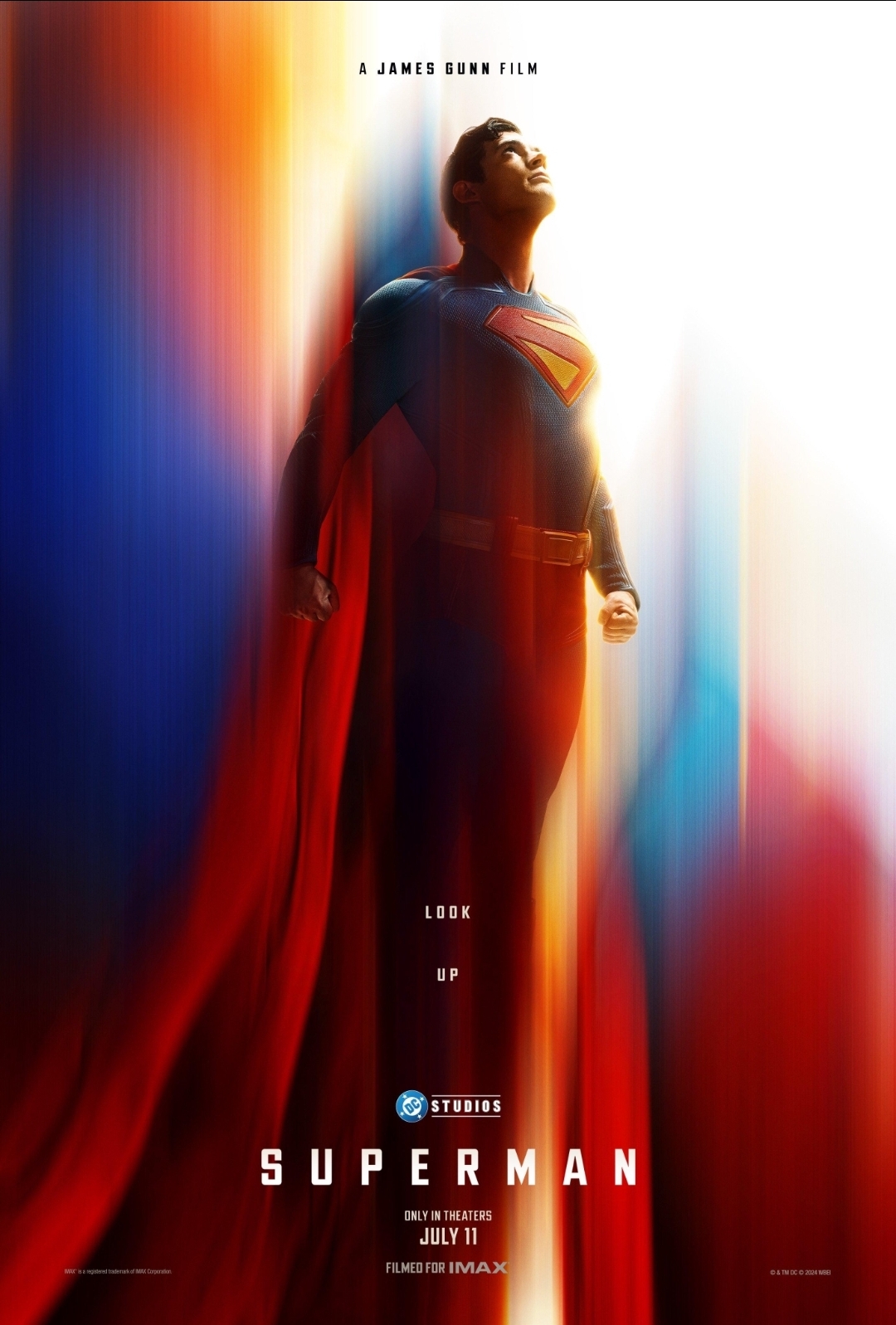
The film generated approximately $619 million worldwide against a reported production budget of $225 million.
It was not a billion-dollar blockbuster, but it gave DC a new starting point and introduced a more colourful, comic-book-inspired world.
What interested me more, however, was the direction of the television side of the new universe.
*Lanterns*, featuring Kyle Chandler as Hal Jordan and Aaron Pierre as John Stewart, took a more grounded approach to the Green Lantern mythology.
Rather than relying entirely on spectacle, the series approached its central characters through a detective story, with a murder investigation and an atmosphere that felt closer to a crime drama than a traditional superhero production.
That is something I found particularly compelling.
In some respects, *Lanterns* felt grittier and oddly more authentic than what the Snyderverse had offered in its later years. It also reminded me that a superhero does not necessarily need to spend two hours saving the planet to make an interesting story.
The series received a strong critical response, with a 92% Rotten Tomatoes critics’ score at the time of writing. Audience reception was more divided, at 67%.
It is not a direct box-office comparison with Gunn’s *Superman*, but creatively it demonstrates something important: DC can still surprise audiences when it allows its characters to occupy different storytelling environments.
And, personally, *Lanterns* has me more invested than I was by Cavill’s most recent Superman outing.
## The next battle: what is still coming?
The superhero business is far from finished. Both studios have substantial projects in development, although DC is now facing a fresh period of uncertainty.
### DC’s upcoming projects
**Man of Tomorrow — July 2027**
James Gunn’s follow-up to *Superman* is expected to bring David Corenswet’s Superman and Nicholas Hoult’s Lex Luthor together against Brainiac. It is an important test of whether the new DC Universe can build momentum beyond its opening film.
**The Batman: Part II — February 2028**
Robert Pattinson is expected to return under Matt Reeves’ direction. Importantly, this remains a separate Elseworlds continuity rather than part of Gunn’s shared universe.
**Dynamic Duo — June 2028**
An animated project centred on Dick Grayson and Jason Todd, exploring two different versions of Robin.
**The Brave and the Bold**
DC’s planned introduction of a different Batman into the shared DC Universe, with the wider Bat-family expected to play an important role. No confirmed release date.
**Swamp Thing and Wonder Woman**
Both have been part of DC’s announced development plans, but neither should be treated as a guaranteed release at this stage.
**The People v. Gorilla Grodd and Creature Commandos**
The television side also has projects in development, including a Gorilla Grodd series and another season of *Creature Commandos*.
There is, however, a significant complication. In November 2026, reports emerged that James Gunn and Peter Safran would be stepping down as DC Studios co-CEOs, with former Marvel executive Jeremy Latcham expected to take over in December.
That does not mean Gunn’s projects have automatically been cancelled. It does mean that DC’s longer-term creative direction is entering another period of transition.
### Marvel isn’t standing still either
Marvel has its own ambitious slate.
**Avengers: Doomsday — December 2026**
Directed by Anthony and Joe Russo, the film brings Robert Downey Jr. back to the Marvel universe, this time as Doctor Doom. It is arguably Marvel’s most important theatrical event since *Endgame*.
**Avengers: Secret Wars — December 2027**
The next major Avengers event, expected to play a central role in the conclusion of the Multiverse Saga.
**Ghost Rider — 2028**
Ryan Gosling is attached to star, with Shawn Levy directing.
**Black Panther 3 — December 2028**
Ryan Coogler returns to direct, with David Jonsson introduced as the new Black Panther.
Marvel is also preparing for its next major X-Men chapter.
The challenge for Marvel is no longer proving that it can produce a successful superhero film. It is convincing audiences that the next chapter deserves the same attention they once gave to the Infinity Saga.
## So, should DC bring back the Snyderverse?
Here is where I find myself taking a slightly different position from some of the more vocal fans.
I don’t believe DC needs to bring back the Snyderverse in its entirety. Nor do I believe it should discard everything that made those films distinctive.
There is room for a darker Batman, a more vulnerable Superman and a Wonder Woman who can command the screen without needing to be surrounded by an ensemble cast.
What DC needs is consistency, not necessarily a particular director.
Marvel’s greatest achievement was not simply hiring the Russo Brothers. It was building a production structure in which the audience could become emotionally invested in characters over an extended period.
DC has the characters. It has the mythology. It has decades of source material. What it needs is the confidence to let its stories develop without constantly changing direction.
And if *Lanterns* is any indication, there may be a more interesting future for DC than simply trying to recreate *Avengers: Endgame*.
## The final question: James Gunn’s Superman or Zack Snyder’s?
My answer?
**James Gunn’s Superman.**
Not because Snyder failed to understand the character, and certainly not because his contribution should be dismissed. But Gunn’s interpretation feels like an opportunity to rediscover what makes Superman such an enduring character in the first place.
He doesn’t have to be a god struggling to understand humanity, nor does he need to be a walking symbol of destruction and rebirth.
Sometimes Superman can simply be a good man trying to do the right thing.
And perhaps that is precisely what DC needs right now.
Besides, Gunn managed to give us a Superman who can make audiences believe in the character again without needing the beard.
The Snyderverse may have its loyal following, and perhaps it deserves a proper conclusion in some form. But if DC wants to build something that can stand alongside Marvel for another twenty years, I would rather see it build on the direction Gunn has established than spend another decade looking backwards.
**The cape is not the problem. The storytelling is.**
Editorial verification: The financial comparison uses worldwide theatrical grosses, not studio profits. The four Russo-directed MCU films total approximately $6.85 billion, compared with approximately $7.21 billion for the entire DCEU. boxofficewatch.com +1
The Lanterns reception figures and its grounded detective-drama approach are supported by its reviews. Rotten Tomatoes +1 The upcoming slate and November leadership changes are also reflected in the latest reporting. Disney Movies +3
Suggested featured image: A split composition of Henry Cavill’s Superman in Snyder’s darker cinematic world and David Corenswet’s Superman in Gunn’s brighter DC Universe, with the Justice League and DC insignia subtly incorporated.
SEO slug: `snyderverse-return-james-gunn-superman-dc-universe`
Meta description: Is the Snyderverse DC’s best chance of competing with Marvel? We compare box-office performances, the Russo Brothers, James Gunn’s Superman and DC’s future.
Tags: DC Universe, Snyderverse, Zack Snyder, James Gunn, Marvel, Russo Brothers, Superman, Lanterns, Justice League, Box Office.
I can also keep track of the DC leadership transition and upcoming Marvel and DC releases, updating the article when significant developments are confirmed.