BYD Strikes Back: Dutch Court Orders Jaguar Land Rover to Destroy Evidence in Defender Copycat Dispute
Jaguar Land Rover went looking for evidence. Instead, it has found itself on the receiving end of a legal setback.
What began as an investigation into whether China’s BYD had borrowed too heavily from the design and engineering of the Land Rover Defender has developed into a complicated intellectual property dispute, with a Dutch court now ordering JLR to return or destroy information obtained during raids on two BYD offices.
The ruling, delivered on November 11, 2026, represents an important development in a confrontation involving one of Britain’s most recognisable automotive brands and one of China’s most influential vehicle manufacturers.
But there is a catch: BYD has won the battle over the evidence seizure, not necessarily the larger dispute over the Defender.
And that distinction could prove crucial as the two manufacturers prepare for an increasingly competitive European SUV market.
### The raids that started the confrontation
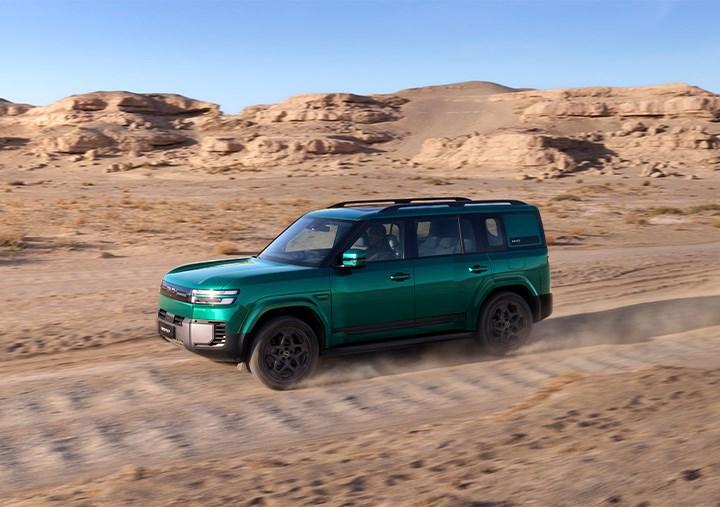
The dispute centres on BYD’s Fangchengbao Ti7, a large SUV whose upright proportions, squared-off bodywork and rugged appearance have drawn comparisons with the modern Land Rover Defender.
Jaguar Land Rover reportedly suspected that BYD had gone beyond drawing inspiration from an established off-road design. Its allegations included the possibility that Defender technology had been reverse-engineered during the development of the Chinese vehicle.
In August 2026, court-authorised bailiffs entered two BYD offices in the Netherlands, located in Schiedam and Hoofddorp, to secure material that JLR believed could support its allegations.

The information reportedly included technical documents, development records, financial information and material relating to the Ti7’s development and launch.
For JLR, preserving this information was intended to help establish whether protected elements of the Defender had been unlawfully reproduced.
For BYD, however, the operation raised questions about the scope of the evidence collection and whether JLR had been granted access to information extending beyond what was reasonably necessary.
BYD subsequently challenged the seizure.
The Hague court sides with BYD over the evidence
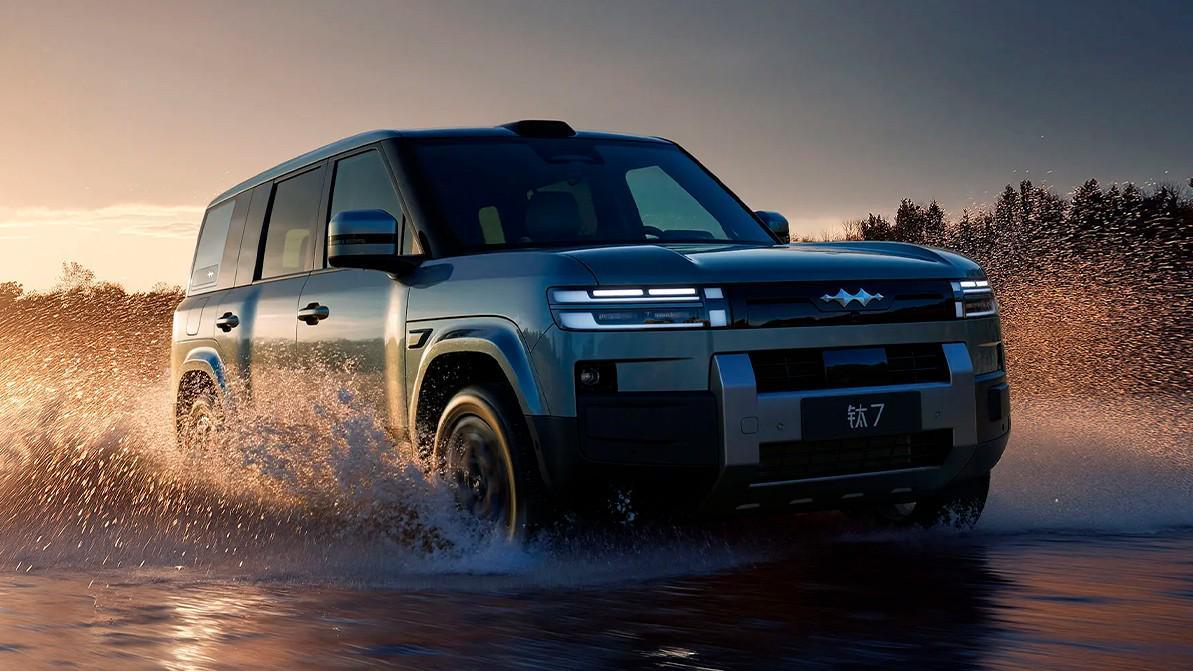
On November 11, the District Court of The Hague ruled that the evidence seizure should be lifted.
The judge concluded that JLR did not need the seized documents to demonstrate whether the Ti7 infringed the Defender’s protected design rights. The vehicles themselves could be examined and compared without requiring access to BYD’s internal business records.
The court also questioned the necessity of retaining financial documents to establish potential damages, noting that BYD had not sold the Ti7 in the European Union.
The resulting order was substantial.
JLR was instructed to have the seized information destroyed, with independent confirmation of its destruction supplied to BYD. It was also ordered to stop enforcement measures based on the original evidence-seizure authorisation.
Failure to comply carries a penalty of €50,000 per hour, capped at €500,000.
There is an unusual detail in the judgment: despite BYD succeeding in its challenge to the seizure, the court ordered BYD to pay €25,376.57 in legal costs. This should not be confused with the outcome of the evidence dispute itself. NuActueel +1
The decision is significant because it limits the evidence JLR can retain through this particular procedure. It does not, however, prevent the British manufacturer from pursuing its underlying intellectual property claims.
BYD responds: A defence of its development process
BYD has also addressed the ruling.
In a statement reported by Chinese media on November 12, the manufacturer maintained that its overseas intellectual property enforcement and defence efforts should respect the relationship between the scope of evidence collection, the product’s market and the requirements of the case.
The company reiterated its commitment to independent, forward development and said it would protect its legitimate brand rights while complying with intellectual property regulations in different markets.
That response is important because BYD is not simply defending the appearance of one SUV. It is defending the integrity of its product development process at a time when Chinese manufacturers are expanding into markets traditionally dominated by European and Japanese brands. cj.sina.com.cn

Two legal battles remain
The November 11 decision does not close the intellectual property dispute. JLR has pursued two separate legal routes concerning the Ti7.
The first, in The Hague, concerns the alleged infringement of JLR’s European design rights covering the Defender.
The second, in Rotterdam, concerns copyright infringement and what Dutch proceedings describe as slavish imitation — the alleged reproduction of another company’s protected work.
These are important distinctions. A design-rights claim, a copyright claim and an allegation of imitation are not interchangeable. Each requires its own legal assessment.
Neither proceeding has established that BYD unlawfully copied the Defender. Equally, the latest ruling does not establish that the Ti7 is free of infringement. GlobalChinaEV +1
### The Defender’s history of legal battles
This is not unfamiliar territory for Jaguar Land Rover.
In 2019, JLR secured a victory against Jiangling Motor Corporation in China over the Landwind X7, a vehicle whose styling closely resembled the Range Rover Evoque.
The Chinese court ordered Jiangling to stop producing the vehicle and awarded JLR compensation.
That victory demonstrated that JLR was prepared to defend its designs internationally, even when confronting manufacturers operating in one of the world’s largest automotive markets.
But the BYD case presents a different challenge.
BYD is a substantially larger international competitor, with an expanding portfolio of electric and hybrid vehicles and growing ambitions in Europe.
The Ti7 dispute therefore carries implications beyond one particular SUV. It raises questions about how established manufacturers protect their designs as competition from Chinese automotive companies intensifies. The Guardian +1
The commercial question: Can the Ti7 challenge the Defender?
While the lawyers argue over intellectual property, the commercial proposition behind the Ti7 remains interesting.
The seven-seat plug-in hybrid SUV is already established in China under BYD’s Fangchengbao brand, having entered the market in September 2025.
Its proposed British arrival in January 2027, at a reported starting price of £47,995, puts it considerably below the seven-seat Defender 110, quoted at £68,465.
That is a difference of £20,470.
For buyers considering a large, upright SUV with modern technology and family-friendly accommodation, the price difference is difficult to ignore.
But the Defender has something that cannot be measured through specifications alone: decades of heritage, an established off-road reputation and a distinctive identity that JLR has invested heavily in preserving.
Whether the Ti7 can win over buyers in that segment will ultimately depend on more than its appearance or price. The Guardian +1
### The battle is far from over
The latest Dutch ruling has given BYD an important procedural victory, but it has not answered the question that started this confrontation.
Did BYD develop the Ti7 independently, drawing on the established design language of rugged SUVs, or did its development cross the legal boundaries protecting another manufacturer’s intellectual property?
That is what the remaining proceedings must establish.
For Jaguar Land Rover, the challenge is protecting a vehicle that has become central to its identity without allowing its legal strategy to become a distraction from the competitive realities of the market.
For BYD, the challenge is equally significant. Its international expansion depends not only on delivering competitive vehicles but also on establishing confidence in its engineering, design and development practices.
There is a certain irony in the timing. JLR’s attempt to secure evidence from its Chinese rival has now become a story about the limits of evidence collection, the protection of commercial information and the difficulties of enforcing intellectual property across international markets.
The Defender may have inspired an entire category of vehicles, but inspiration and infringement are two very different things.
And until the courts decide where the Ti7 stands, this particular automotive rivalry is nowhere near finished.
Editorial sources:
* [Dutch court judgment – November 11, 2026](https://nuactueel.nl/uitspraak/rbdha-2026-33114?utm_source=chatgpt.com)
* [ANP – Dutch court overturns JLR evidence seizure](https://www.transport-online.nl/144628/jaguar-mag-geen-beslag-leggen-op-documenten-byd-in-na-aapzaak/?utm_source=chatgpt.com)
* [GlobalChinaEV – Detailed breakdown of BYD’s court victory](https://www.globalchinaev.com/post/byd-wins-a-round-as-hague-court-orders-jlr-to-destroy-seized-ti7-files?utm_source=chatgpt.com)
* [The Guardian – Original reporting on the office raids](https://www.theguardian.com/business/2026/nov/08/chinese-carmaker-byd-offices-raided-netherlands-land-rover-copycat-claim?utm_source=chatgpt.com)
* [BYD response reported by Chinese media](https://cj.sina.com.cn/articles/view/1887344341/707e96d502001xvhi?utm_source=chatgpt.com)
Fact-checking note: The €500,000 maximum penalty is important: it is not an unlimited €50,000-per-hour liability. Also, BYD was ordered to pay the stated legal costs despite succeeding in having the evidence seizure lifted. The underlying infringement allegations remain unresolved.