FIA’s Third ADUO Assessment: No New Engine Upgrades Granted as Ferrari, Mercedes and Honda Face the Next Development Challenge
The FIA has completed its third assessment of Formula 1’s Additional Development and Upgrade Opportunities programme for 2026. Despite changes in the relative performance of the manufacturers, no additional engine homologations have been awarded, leaving the existing development allowances unchanged.
The 2026 Formula 1 regulations were supposed to introduce a new era of competitive balance, but as the season has progressed, one question has continued to dominate the technical conversation: who actually has the strongest combustion engine?
The Fédération Internationale de l’Automobile (FIA) has now released the results of its third Additional Development and Upgrade Opportunities (ADUO) assessment, providing another indication of where the manufacturers stand.
The announcement, dated November 10, 2026, confirms that the governing body has completed its third analysis period, covering races 12 to 18 of the championship.
The conclusion, however, is not quite what some manufacturers might have hoped for.
Although the relative performance gaps between the power-unit manufacturers have evolved, the FIA has confirmed that no additional homologations will be granted following this third assessment.
For Ferrari, Mercedes, Audi and Honda, this means the development allowances previously established remain unchanged.
But what exactly does this mean for the manufacturers, and more importantly, does it tell us anything about the direction of the 2027 engine battle?
Understanding ADUO: Formula 1’s development safety net
ADUO stands for Additional Development and Upgrade Opportunities.
Introduced as part of the 2026 technical regulations, the system was designed to prevent manufacturers that fall significantly behind in combustion-engine performance from remaining trapped within the limitations of the original homologation process.
Under the new regulations, the FIA measures the performance of each manufacturer’s internal combustion engine against the best-performing ICE.
The system establishes two important thresholds.
– 2% to 4% behind: The manufacturer becomes eligible for one additional power-unit homologation upgrade in the current season and another in the following season.
– 4% or more behind: The manufacturer becomes eligible for two additional homologation upgrades in the current season and another two in the following season.
These additional development opportunities are accompanied by increased cost-cap allowances and additional dynamometer testing opportunities.
It is important to understand that ADUO is not a balance-of-performance system. The FIA is not reducing the performance of the leading manufacturer or artificially increasing the power of a struggling competitor.
Instead, it is allowing manufacturers that fall behind to invest additional resources into correcting their weaknesses.
The distinction is significant. A manufacturer still has to develop a competitive engine; ADUO simply gives it additional opportunities to do so.
What did the third assessment reveal?
According to the FIA, the third assessment covered races 12 to 18, with the review concluding after the United States Grand Prix.
The governing body confirmed that relative performance gaps between manufacturers had evolved during the assessment period.
However, those changes were insufficient to trigger any additional homologation allowances.
In its announcement, the FIA stated:
‘For the third period, the relative performance gaps to the leading ICE evolved, but these changes did not result in any additional homologations being granted to the Power Unit Manufacturers.’
The FIA has also declined to publish individual performance measurements, citing the confidential nature of the information and the intellectual property of the manufacturers.
Consequently, we know that the performance gaps have changed, but we do not know precisely which manufacturers gained or lost ground, or by how much.
That is an important distinction when interpreting the announcement.
The latest assessment does not establish a new engine-performance ranking, nor does it mean that manufacturers have stopped developing their power units.
It simply confirms that no additional ADUO entitlement has been triggered.
Ferrari, Mercedes, Audi and Honda: Where do they stand?
To understand the significance of this announcement, we need to revisit the results of the first assessment period.
The FIA originally established the following development allowances:
Manufacturer| Initial performance assessment| Additional homologations
Mercedes| 2–4% behind| 1 in 2026 + 1 in 2027
Ferrari| More than 4% behind| 2 in 2026 + 2 in 2027
Audi| More than 4% behind| 2 in 2026 + 2 in 2027
Honda| More than 4% behind| 2 in 2026 + 2 in 2027
Red Bull-Ford was identified in reporting on the original assessment as the combustion-engine benchmark.
The second assessment produced no additional homologations, and the third has now reached the same conclusion.
This means Ferrari, Audi and Honda retain their two additional homologations for each of the respective seasons, while Mercedes retains its one additional homologation for 2026 and another for 2027.
These allowances are particularly important because manufacturers cannot simply make unrestricted changes to their homologated power units under the new regulations.
The additional homologations provide an opportunity to address weaknesses that might otherwise remain difficult to correct.
Ferrari: An opportunity that cannot be wasted
For Ferrari, the ADUO announcement is particularly relevant.
The Scuderia entered the 2026 regulations with considerable expectations, but the transition to the new power-unit architecture has introduced several engineering challenges.
The relationship between combustion power, electrical deployment, energy recovery and thermal management has become increasingly important.
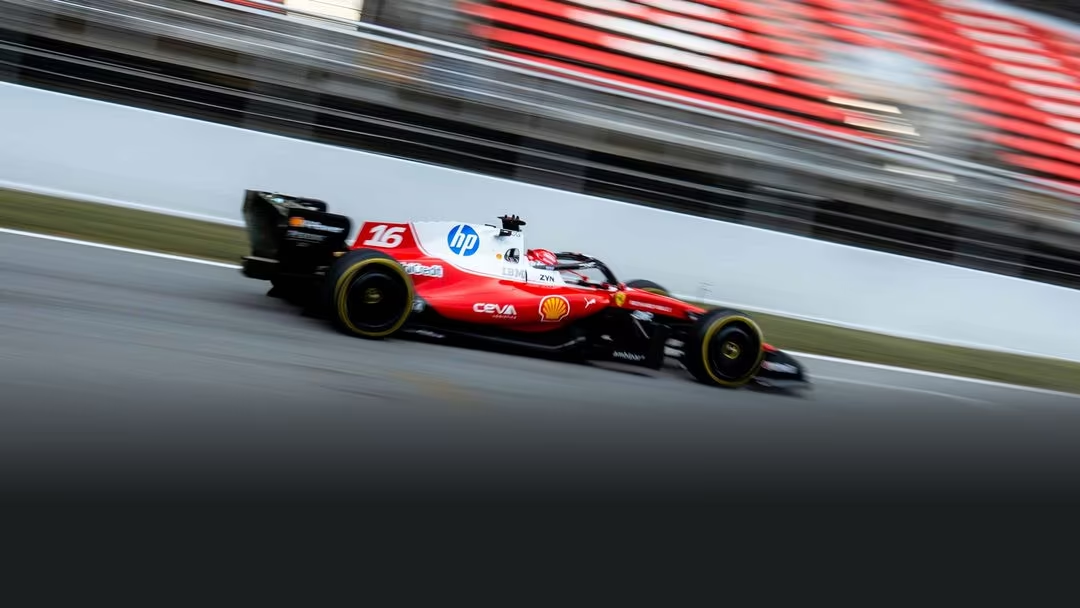
Ferrari’s initial assessment placed its internal combustion engine more than 4% behind the leading benchmark, making it eligible for two additional homologations in both 2026 and 2027.
That allowance provides Maranello with valuable development flexibility.
However, there is a difference between receiving additional development opportunities and successfully translating them into performance.
Ferrari must identify where its greatest weaknesses lie, determine which components can benefit from the available upgrades and ensure that improvements to the combustion engine do not create additional complications elsewhere in the power unit.
The timing is equally important.
With the 2027 season approaching, the development decisions made now could have consequences beyond the remaining races of 2026.
Ferrari cannot afford to treat its additional homologations as opportunities that can be used without a clear technical direction.
The objective should be to close the gap to the leading ICE while maintaining reliability and improving the overall efficiency of the power unit.
Mercedes: A different position despite competitive results
Mercedes presents an interesting contrast.
Despite being among the leading competitors in the championship, its internal combustion engine was initially assessed as being between 2% and 4% behind the benchmark.
That qualified the German manufacturer for one additional homologation in 2026 and another in 2027.
This is an important reminder that the FIA’s ADUO assessment does not measure the complete competitive performance of a Formula 1 car.
The overall power unit includes an electrical component, energy recovery systems and associated management strategies.
A manufacturer can therefore have a highly competitive package even if its combustion engine does not lead the FIA’s specific performance index.
Mercedes has demonstrated that overall competitiveness depends on much more than the combustion engine alone.
Its challenge will be to maintain that advantage while continuing to close the gap in the areas where development remains available.
Red Bull-Ford: The benchmark under pressure
One of the more interesting developments surrounding ADUO has been the position of Red Bull-Ford Powertrains.
For a manufacturer entering Formula 1 with its own power-unit programme, becoming the benchmark in combustion-engine performance is a considerable achievement.
Red Bull’s engine partnership with Ford was one of the most ambitious projects associated with the 2026 regulations.
Its initial assessment reportedly placed the new power unit ahead of its competitors in the internal combustion engine category.
That does not mean Red Bull has an advantage in every aspect of the power unit.
The electrical system, energy deployment, reliability, cooling and integration with the chassis all contribute to the final performance of the car.
Nevertheless, the FIA’s initial assessment established an important reference point for the other manufacturers.
The latest announcement does not confirm that Red Bull has extended its advantage. It only confirms that changes in the performance gaps have not triggered additional development allowances.
What does this mean for 2027?
Perhaps the most important aspect of the announcement is what it means for the next championship.
The 2026 season is not simply a transition year. It is the foundation upon which manufacturers will develop their power units for the remainder of this regulatory cycle.
Ferrari, Audi and Honda retain two additional homologation opportunities for 2027, while Mercedes retains one.
These opportunities could prove particularly valuable as manufacturers refine their combustion engines and improve the relationship between electrical power and internal combustion performance.
However, there is a limitation worth remembering.
ADUO does not guarantee that a manufacturer will close the performance gap. Nor does it guarantee that every available upgrade will deliver the expected improvement.
Engineering development is rarely that straightforward.
An improvement in one area can create new demands elsewhere, particularly when manufacturers are working with tightly integrated hybrid systems.
The manufacturers must also consider reliability, energy recovery, thermal efficiency and the demands of the circuits on the calendar.
The teams that succeed will be those capable of turning their available development resources into a more efficient and competitive complete package.
The next chapter of the engine battle
The FIA’s third ADUO announcement is not a dramatic reshuffling of Formula 1’s engine hierarchy.
No additional homologations have been granted, and the development allowances established during the first assessment remain in place.
But the announcement does reinforce something important about the 2026 regulations.
Formula 1 has created a system that allows struggling manufacturers additional opportunities to catch up without directly penalising those already performing well.
For Ferrari, the opportunity remains considerable. For Mercedes, the challenge is to protect its competitive position while developing its combustion engine. Audi and Honda have their own development opportunities to exploit, while Red Bull-Ford must continue defending the position established in the original assessment.
The question now is not simply who has the strongest engine today.
It is who can make the most of the development opportunities available before the 2027 season begins.
Because in this generation of Formula 1, the difference between winning and losing may not be decided by the engine that started the regulations, but by the manufacturer that understands how to develop it most effectively.