
The EV Battery Question: How Long Will It Last, What Can Go Wrong, and What Does Replacement Really Cost?
Electric vehicles promise lower routine maintenance and fewer moving parts, but one question continues to trouble prospective buyers: what happens when the battery starts to fail? From hybrid battery degradation to expensive electric-vehicle repairs, here is what drivers need to know before buying—or keeping—an electrified car.
By DLifestyle Magazine | Automotive
The battery question is not going away
Electric vehicles have moved from the margins of the automotive industry into showrooms, company fleets and family driveways. Hybrids have also become a familiar choice for drivers who want better fuel economy without committing entirely to charging infrastructure.
Yet the technology has introduced a different kind of ownership anxiety. With a conventional petrol car, drivers understand that batteries, alternators, starters and engines can eventually require replacement. With an EV, the high-voltage traction battery can be one of the vehicle’s most expensive components.
Does that mean electric-car owners should expect a costly battery replacement after a few years?
The evidence suggests otherwise.
The US Environmental Protection Agency says traction-battery replacements caused by failure have been uncommon, particularly in vehicles produced since 2016. The lifespan of an individual battery depends on its chemistry, thermal management, charging habits, climate and how the vehicle is used.
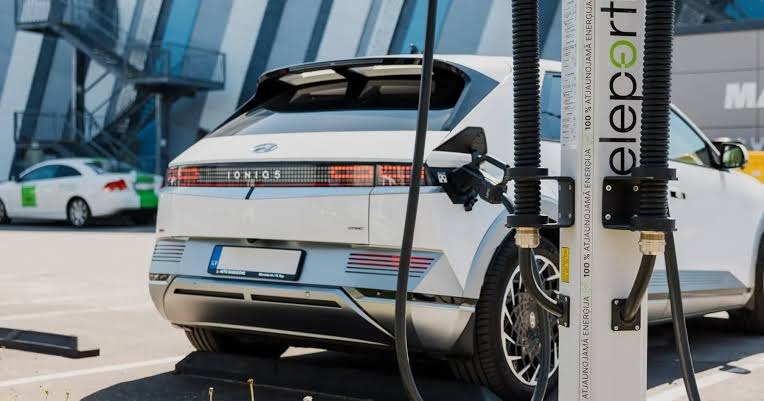
The more useful question is not simply how long a battery lasts. It is how much capacity it retains, what symptoms indicate a genuine fault, and whether a repair can restore the vehicle without replacing the entire pack.
How long does a hybrid battery last?
The answer depends partly on which type of hybrid you own.
A conventional hybrid, such as a Toyota Prius, uses a high-voltage battery alongside a petrol engine. It generally cannot travel long distances on electricity alone, and its battery is managed to operate within a controlled range of charge.
A plug-in hybrid, or PHEV, has a larger rechargeable battery that allows it to cover a greater distance on electricity. Because its battery performs a different role, its usage patterns and potential degradation can differ from those of a conventional hybrid.
As a broad guide, modern hybrid traction batteries can last approximately 8–15 years, with many capable of covering 100,000–200,000 miles or more. These are indicative ranges, not a guarantee that a particular battery will last for a specified period. SEAT gives a similar general lifespan range of eight to 15 years for hybrid batteries.
A battery can also remain functional well beyond the point at which its original performance begins to decline.
What causes a hybrid battery to deteriorate?
Several factors contribute to battery ageing:
– Heat: High temperatures can accelerate chemical degradation, particularly when a battery’s cooling system is not working correctly.
– Age: Battery chemistry changes over time, even when the vehicle is well maintained.
– Usage: Heavy use, demanding driving conditions and repeated high-temperature operation can influence battery health.
– Cooling-system problems: Blocked cooling ducts, dirty filters or failing fans can affect temperature management.
– Individual cell deterioration: A battery pack contains multiple cells or modules. A weakness in one part can affect the performance of the overall system.
The result is not necessarily sudden failure. Drivers may first notice that the petrol engine runs more frequently, fuel economy declines, the battery-charge indicator fluctuates unusually or a hybrid-system warning appears.
Those symptoms warrant investigation, but none proves by itself that the complete battery needs replacing.
A mechanic must establish whether the problem lies with the battery cells, cooling system, sensors, wiring, control electronics or another component.
How long does a fully electric car battery last?
An all-electric vehicle relies on a high-voltage battery to power its electric motor. That battery is generally much larger than the traction battery in a conventional hybrid.
For many modern EVs, 10–15 years is a reasonable planning horizon, although some packs may last longer and others may develop faults sooner. Edmunds cites research suggesting that modern batteries can provide 12–15 years of service in moderate climates, with shorter projected lifespans in particularly harsh temperature conditions. Actual outcomes vary by model and usage.
Battery degradation is a gradual reduction in the amount of energy the pack can store and deliver. It is not automatically a mechanical failure.
Imagine a car that originally offered a real-world range of 300 miles. If its usable battery capacity eventually falls to 80% of its original level, the same driving conditions might produce a range closer to 240 miles. Actual range will also depend on temperature, speed, terrain, tyres, heating or air-conditioning use and driving style.
The car may remain perfectly usable, even though it no longer travels as far on a full charge.
What about the eight-year battery warranty?
Many manufacturers offer high-voltage battery warranties lasting around eight years or 100,000 miles, while a number of European-market models have coverage of eight years or 160,000 kilometres. Some vehicles have different terms.
Hyundai Europe, for example, states that its high-voltage batteries are covered for eight years or 160,000 kilometres, with coverage for certain battery-electric vehicles intended to restore battery state of health to at least 70% of its original level. Exact conditions depend on the vehicle and applicable warranty.
That 70% figure is important, but it should not be mistaken for a universal rule covering every manufacturer or every hybrid. Warranty terms differ in their treatment of capacity loss, component defects, mileage and replacement procedures.
Before buying a used EV, request the actual warranty documentation and establish whether the battery remains covered. Also ask for a battery-health report rather than relying solely on the dashboard’s estimated range.
What does it cost to replace a hybrid battery?
Hybrid-battery replacement costs vary considerably with the vehicle, battery chemistry, availability of parts and whether the repair uses a new, remanufactured or refurbished unit.
As a broad US guide, drivers may encounter bills of approximately $2,000–$8,000 or more for a hybrid traction-battery replacement, including labour in many cases. Some models fall outside that range, and a dealer quote may be considerably higher or lower depending on the vehicle and repair required.
For a specific example, AAA’s automotive guidance says a plug-in Toyota Prius battery replacement can cost up to approximately $7,500. That is an example rather than a universal Prius price; the model year and battery configuration matter.
The good news is that a hybrid battery does not always need to be replaced as a complete assembly.
A specialist may be able to identify and replace failed modules, repair a cooling fault, address a sensor problem or resolve an electrical connection issue. Whether module-level repair is possible depends on the battery design, the nature of the failure and the availability of suitable parts.
Drivers should be cautious about very cheap battery replacements. A low quote may involve a used pack with an uncertain history, limited warranty or little information about the health of its individual modules.
Ask what is being replaced, how the battery was tested and what warranty comes with the repair.
What does it cost to replace a fully electric car battery?
This is where repair bills can become substantial.
According to Edmunds’ June 2026 analysis, an EV battery replacement can cost from a few thousand dollars to more than $25,000. The size of the pack, the vehicle’s construction, parts availability and labour all influence the final figure.
AAA gives a broad estimate of
approximately $5,000–$20,000 or more for a complete EV battery pack, depending on the vehicle. It also cites examples ranging from about $4,500 for a smaller Nissan Leaf battery to as much as $18,000 for a Tesla Model 3 pack. These figures are illustrative, not guaranteed current quotations for every model year.
The following table provides a broad guide to the potential scale of the expense.
Repair or replacement| Indicative US cost| What to know
Hybrid traction battery| $2,000–$8,000+| Model, parts availability and repair method matter.
Smaller EV battery pack| Around $4,000–$10,000+| Smaller packs can cost less, but the model and condition matter.
Larger EV battery pack| Around $10,000–$25,000+| Large-capacity packs and complex installations can be expensive.
Individual EV battery module| Around $1,000–$5,000+| Only possible on some packs; diagnosis and labour are additional considerations.
EV battery installation labour| Around $1,000–$4,000| Varies with the vehicle, shop rates and installation complexity.
These are broad estimates drawn from published cost guidance, not fixed prices or a quote for any particular car. A complete replacement may cost more, and some battery designs make module-level repairs difficult or uneconomical.
Why can the same repair cost so much more on one car?
Three factors make a substantial difference.
First, battery size. A large battery designed to deliver long range generally contains more materials and costs more to manufacture than a small pack.
Second, vehicle construction. Some battery packs are designed so that modules can be serviced separately. Others use highly integrated structures, making a complete repair more labour-intensive or less practical.
Third, parts and labour. A battery may be available only through a manufacturer or specialist supplier. The work also requires high-voltage safety procedures, specialist equipment and, in some cases, software configuration.
For owners in Europe, the same considerations apply, but the final bill will be quoted in local currency and may be affected by VAT, import costs, parts availability and local labour rates. A US price should not simply be converted into euros or pounds and treated as a reliable local quotation.
The most common EV problems mechanics diagnose
Battery replacement attracts headlines, but it is only one part of electric-vehicle maintenance.
EVs have fewer moving parts than conventional petrol cars and do not require engine oil changes, spark plugs or exhaust-system servicing. Nevertheless, their high-voltage electrical systems, charging hardware, cooling systems, tyres and suspension still require attention.
Here are some of the faults that owners and repair technicians may encounter.
1. The 12-volt battery has failed
This is one of the most easily misunderstood EV problems.
An electric car has a high-voltage traction battery, but it also usually has a separate low-voltage battery. The latter powers systems such as vehicle computers, lights and other electrical equipment.
If the 12-volt battery becomes weak, the vehicle may refuse to start, display multiple warning messages or fail to unlock or enter its normal ready-to-drive state.
The owner may assume the expensive traction battery has failed when the actual problem is the much smaller low-voltage battery.
The US National Highway Traffic Safety Administration explains the distinction between the high-voltage traction battery and the low-voltage battery, as well as the role of the DC-DC converter in replenishing the low-voltage system.
The lesson: have the 12-volt battery and its charging system tested before authorising an expensive high-voltage repair.
2. Charging problems
A car that charges slowly, refuses to charge or repeatedly interrupts charging may have a problem with its charging port, cable, charging station, onboard charger, software or battery-management system.
Not every charging fault originates in the vehicle. A faulty public charger, damaged cable or incompatible charging setup can create similar symptoms.
A competent technician should establish whether the fault follows the car or the charging equipment before recommending parts.
3. Battery cooling and thermal-management faults
EV batteries operate most effectively within a controlled temperature range. Depending on the vehicle, the system may use liquid cooling, refrigerant-based thermal management, fans or a combination of methods.
A failed pump, leaking coolant circuit, obstructed airflow or faulty temperature sensor can affect charging, power delivery and battery temperature.
The car may reduce performance or limit charging to protect its components.
These faults should not be ignored, because the thermal-management system helps protect battery life as well as immediate vehicle operation.
4. Inverter, motor and power-electronics faults
The traction battery supplies direct current, while the electric motor in many EVs uses alternating current. An inverter manages this conversion.
Faults in the inverter, electric motor, control electronics or related wiring can produce warning lights, reduced power, unusual noises or a vehicle that will not drive.
The symptoms can resemble battery failure, which is why a proper diagnostic assessment matters before any major component is replaced.
5. Battery-management-system and sensor faults
The battery-management system monitors battery operation, including cell voltages and temperatures. It helps the vehicle control charging and discharging safely.
A faulty sensor, damaged connection, software issue or imbalance between cells can trigger warning messages or limit performance.
In some cases, the battery itself may still be serviceable. The technician needs to identify the underlying cause rather than interpreting every high-voltage warning as evidence of a failed pack.
6. Tyres, suspension and brakes
EVs are often heavier than comparable petrol cars because of their battery packs. Their instant torque can also put additional demands on tyres.
Incorrect tyre pressures, poor alignment, aggressive acceleration and unsuitable tyres can contribute to uneven wear.
Regenerative braking can reduce reliance on conventional friction brakes, but brake components still require inspection. Infrequent use may also allow corrosion to develop on brake discs in some driving conditions.
Suspension joints, wheel bearings, steering components and tyres remain ordinary wear items, even on a vehicle with a modern electric drivetrain.
7. Software and electronic faults
Modern EVs rely on numerous electronic control units and software systems. Updates can improve charging, energy management and vehicle functionality, but faults can sometimes require specialist diagnosis or manufacturer intervention.
A dashboard warning is not a diagnosis in itself. Drivers should ask the repairer to explain the fault codes, the tests performed and why the proposed repair addresses the underlying problem.
Can an EV battery be repaired instead of replaced?
In some cases, yes.
A battery pack contains multiple cells or modules, depending on its design. A specialist may be able to isolate a faulty section, replace a defective component, repair a connection or resolve a problem with the cooling or monitoring system.
This can be considerably less expensive than replacing the entire pack.
However, not every battery can be repaired economically. Damage from a serious collision, fire, flooding or internal cell failure may make repair unsafe or impractical. Some packs are difficult to open or service because of their construction.
Bosch Car Service, for example, describes EV and hybrid diagnostic and repair services, including cases where individual battery modules may be repaired instead of replacing the complete assembly.
A responsible workshop should explain the options available for the specific vehicle, including the risks and warranty implications of using a repaired, refurbished or replacement battery.
Where can owners find reliable EV and hybrid mechanics?
Finding a mechanic is not simply a matter of choosing the nearest garage. High-voltage work requires specific training, suitable protective equipment, diagnostic tools and access to the relevant technical information.
The following are useful starting points for owners in Europe and the United States. They are established service networks or specialist resources—not a guarantee that every branch can perform every type of battery repair.
Europe: specialist repair and diagnostic options
1. Bosch Car Service
Bosch Car Service provides EV and hybrid maintenance and diagnostic services through participating workshops. Its network is a practical starting point for owners who want to find a workshop with experience in electrified vehicles.
The important detail is to confirm the individual garage’s capabilities. Routine EV servicing does not automatically mean that a branch can open and repair a high-voltage battery pack.
Find services through the official “Bosch Car Service website” (https://www.boschcarservice.com/).
2. LKQ Electriq — United Kingdom
LKQ Electriq specialises in EV battery and high-voltage component repairs. Its published services include Tesla battery repairs, BMW and Mini high-voltage battery work, and electric-drive-unit repairs.
It also states that its repairs are carried out by IMI Level 4-certified technicians. That makes it a particularly relevant starting point for UK owners seeking specialist work rather than a routine service. Vehicle eligibility and the availability of individual repairs should be confirmed directly.
Visit “LKQ Electriq” (https://lkqelectriq.co.uk/).
3. Authorised manufacturer repairers
For vehicles still under warranty, or those with complex software and battery-management faults, the manufacturer’s authorised repair network is often the first place to ask.
An authorised workshop may have access to vehicle-specific diagnostic procedures, technical service information and warranty decisions that an independent garage cannot provide.
That does not mean a dealer is always the cheapest option. Once the warranty position is clear, owners can compare the dealer’s proposal with an independent specialist capable of performing the same work safely.
United States: EV repair specialists and directories
1. Earthling Automotive — California
Earthling Automotive is a specialist EV and hybrid repair business in the San Francisco Bay Area. It is a useful starting point for owners seeking independent expertise in electrified vehicles rather than relying exclusively on a general repair shop.
Before booking, confirm that the business currently services the vehicle’s make, model and specific fault, particularly if high-voltage battery work is required.
Find the business through its “official website” (https://earthlingautomotive.com/).
2. The Electrified Garage — United States
The Electrified Garage is an independent EV service business associated with electric-vehicle repair and Tesla expertise. Its published service information is a starting point for owners seeking an alternative to a manufacturer service centre.
As with any independent workshop, confirm current locations, the vehicle models accepted and whether the requested repair is performed at that particular facility.
Visit “The Electrified Garage” (https://www.electrifiedgarage.com/).
3. EV Repair Directory — United States
For owners outside the areas served by a named specialist, the “EV Repair Directory” (https://evrepairdirectory.com/) lists independent repair businesses and categorises services such as EV diagnostics, battery replacement, hybrid repair and maintenance.
Use it to build a shortlist, then verify the shop’s qualifications, experience with your vehicle and current ability to perform the work. A directory listing is a starting point, not a substitute for checking credentials and customer protections.
4. AAA Approved Auto Repair
AAA’s repair-facility locator can help owners identify participating repair shops across North America. However, AAA approval alone does not establish that a particular facility can perform internal high-voltage battery repairs.
Ask whether the specific location has trained EV technicians, suitable equipment and experience with the fault in question.
Use the “AAA Approved Auto Repair locator” (https://www.aaa.com/autorepair/).
What makes a mechanic genuinely qualified?
Before handing over an EV or hybrid, ask these questions:
– Does the workshop have technicians trained for high-voltage vehicle systems?
– Does it work on my exact make, model and model year?
– Can it perform a battery state-of-health assessment?
– Can it diagnose individual modules, or does it only replace complete packs?
– Does it have access to the necessary manufacturer diagnostic tools and technical information?
– Will it provide a written estimate separating parts, labour and diagnostic charges?
– Is the replacement battery new, remanufactured, refurbished or used?
– What warranty covers the parts and labour?
– If the battery is replaced, will the workshop complete the necessary software configuration and post-repair tests?
In the US, owners can also ask whether the relevant technician holds an appropriate qualification, such as ASE’s Light Duty Hybrid/Electric Vehicle Specialist certification, where applicable. In the UK, IMI electric-vehicle qualifications can help establish a technician’s training level. Credentials should be matched to the work being performed.
The US National Highway Traffic Safety Administration warns that high-voltage systems require specialist training and equipment; attempting such work without suitable qualifications can cause severe injury or death.
Five ways to protect your battery investment
There is no maintenance routine that guarantees a battery will never fail, but sensible habits can help reduce avoidable stress.
1. Follow the manufacturer’s charging recommendations. Many EVs allow owners to set a daily charging limit. Use the limit recommended for the particular battery and vehicle rather than assuming every car should always be charged to 100% or always stopped at 80%.
2. Avoid leaving the vehicle at extreme charge levels for long periods when the manufacturer advises against it. In particular, follow the vehicle’s guidance on prolonged storage at a high state of charge.
3. Keep the cooling system maintained. Observe the manufacturer’s service schedule and investigate battery-temperature or cooling-system warnings promptly.
4. Obtain a battery-health report when buying used. A state-of-health assessment can help establish how much capacity remains. Ask how the figure was measured and whether the report includes any limitations.
5. Investigate warning messages early. A charging fault or cooling problem may be much easier to resolve before it causes additional damage.
If an EV has been submerged in floodwater or has suffered serious battery-area damage in a collision, do not treat it like an ordinary breakdown. Follow emergency guidance, keep clear of potentially damaged high-voltage components and contact the manufacturer or a qualified recovery service. The NHTSA warns that flood exposure and physical battery damage can create electrical and fire hazards.
Is a used EV still worth buying?
A used EV can make financial sense, but buyers should evaluate the battery as carefully as they would inspect an engine, transmission or structural damage on a conventional car.
The most important questions are straightforward:
– What is the battery’s measured state of health?
– How much real-world range does the vehicle deliver in the conditions in which it will be used?
– Is the battery still covered by the manufacturer’s warranty?
– Has the vehicle suffered collision or flood damage?
– Are there outstanding recalls or unresolved battery-management warnings?
– Is a competent repair specialist available locally?
A vehicle with some battery degradation may still be an excellent purchase if its remaining range suits the owner’s needs and its price reflects its condition.
Conversely, a low purchase price may be less attractive if the battery has a serious fault, the warranty has expired and specialist repair options are limited.
The verdict: the battery is expensive, but replacement is not inevitable
The EV market is maturing, and the cost of ownership is becoming easier to assess. Battery replacement remains one of the largest potential expenses, but the evidence does not support the assumption that every electric car will need a new traction battery after only a few years.
Hybrid batteries often last many years. Modern EV batteries can also remain in service for a decade or longer, although capacity gradually declines and individual failures remain possible.
When a warning appears, the right response is diagnosis—not an immediate decision to replace the entire pack.
A failing 12-volt battery, charging fault, cooling problem or sensor issue can sometimes produce symptoms that appear far more serious than the underlying fault. Where a high-voltage battery really is damaged, a specialist may be able to repair individual components rather than replace the complete assembly.
For owners in Europe and the United States, specialist repair networks and qualified independent workshops provide alternatives to relying exclusively on dealerships. The key is to verify the workshop’s capabilities before authorising work.
The smartest EV purchase is not necessarily the car with the longest advertised range. It is the one whose battery health, warranty, repairability and local service support make sense for the way its owner intends to use it.