A design shaped by speed
The newly presented Roadster adopts a dramatic, low-slung silhouette, with a compact cabin, sculpted bodywork and an emphasis on aerodynamic efficiency. The exterior is intended to communicate speed even at a standstill, with a broad stance and a rear design that looks considerably more aggressive than that of an ordinary electric saloon.
The car’s proportions are central to its identity. Unlike Tesla’s more familiar SUVs and four-door models, the Roadster is designed around the experience of driving a sports car. Its low roofline, tight cabin and performance-oriented bodywork distinguish it from the practical electric vehicles that established Tesla as a major manufacturer.
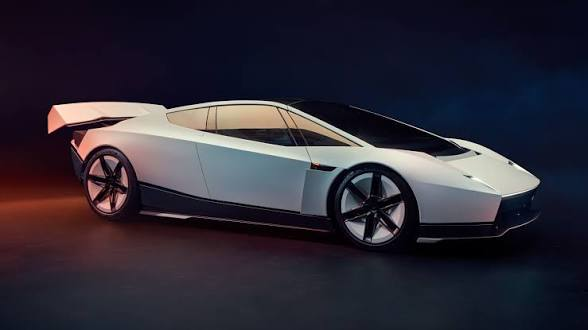
The latest presentation also shows a more developed design than the concept originally displayed in 2017. However, the final production specification may still change before customer deliveries begin.
### The specifications: Numbers that challenge the supercar establishment
The Roadster’s headline figures are remarkable, even without considering its experimental technology.
0–60 mph
### Under 1.6 sec
Performance version, claimed
Top speed
### 230+ mph
Announced target
Driving range
### 300+ miles
Claimed per charge
Seating
### Two seats
Performance configuration
Figures announced around the October 15, 2026 unveiling. Performance and range remain manufacturer claims pending production-car verification.
### Acceleration: Beyond the traditional benchmark
Tesla’s Performance configuration is claimed to accelerate from zero to 60 mph in under 1.6 seconds. That is an extraordinary target for a road-focused sports car, placing the Roadster among the most ambitious electric performance vehicles announced to date.
The significance is not simply the number itself. Electric motors can deliver torque rapidly, allowing an electric car to accelerate without the gear changes and engine-speed build-up associated with many combustion-powered vehicles.
However, achieving a headline acceleration time consistently requires more than powerful motors. Battery output, tire grip, vehicle weight, traction management and the ability to control heat all influence performance.
The production Roadster will need to demonstrate that its acceleration figures are repeatable, rather than achievable only under highly specific conditions.
### Top speed: A different challenge altogether
Tesla has announced a top speed exceeding 230 mph for the new Roadster’s most extreme configuration.
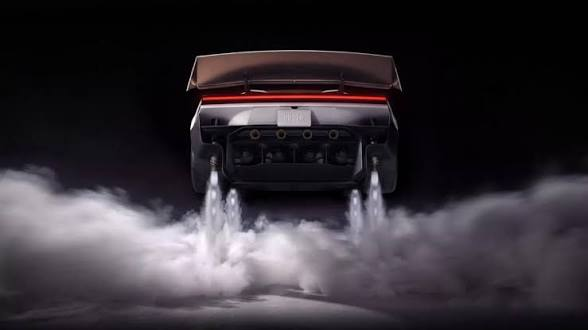
At these speeds, the engineering priorities differ substantially from those involved in launching a car off the line. Aerodynamic drag rises sharply, while stability, tire capability, cooling and high-speed control become increasingly important.
A car that accelerates exceptionally quickly is not automatically a car that can sustain extreme speeds. The Roadster’s final production performance will depend on how successfully Tesla balances aerodynamic efficiency, downforce and stability.
### Range: Performance without sacrificing distance
Tesla has also announced a driving range exceeding 300 miles on a charge.
This figure is particularly relevant because it positions the Roadster as more than a short-distance performance machine. Its intended role combines supercar acceleration with the possibility of longer journeys.
There is, however, an important difference between the latest announcement and the original 2017 concept. Tesla initially claimed a range of 620 miles. The newer figure of more than 300 miles represents a substantial reduction from that earlier target.
The final result will depend on the production battery, vehicle weight, tires, aerodynamic configuration and testing cycle. High-speed driving, in particular, can reduce an electric vehicle’s range significantly.
### Three configurations, three different priorities
Tesla has presented three configurations that place different emphasis on performance and usability.
| Version | Intended character | Announced acceleration |
| ———– | ————————————— | —————————- |
| Performance | Road-focused sports car | Under 1.6 seconds to 60 mph |
| Thrust | More extreme performance specification | Under 0.9 seconds to 60 mph |
| Rocket | Experimental, single-seat configuration | Under 0.59 seconds to 60 mph |
These are Tesla’s announced targets for the respective versions, not independently verified test results. The Thrust and Rocket configurations incorporate additional experimental hardware, so their claims should not be confused with the conventional road-focused Performance model.
For buyers interested primarily in driving, the Performance version is arguably the most significant. It represents Tesla’s attempt to deliver extreme electric acceleration in a car intended for road use, without making the more unusual experimental equipment the defining feature.
### The price and production question
One of the biggest unanswered questions concerns the final purchase price.
Reuters reported that Tesla had not specified a definitive price at the October 15 unveiling. The company’s reservation page listed a $50,000 deposit for the Performance version and $250,000 for the Thrust version. Those deposits should not be mistaken for the vehicles’ final prices.
Production is currently targeted for 2028, despite the second-generation Roadster having been unveiled initially in 2017 with an original delivery target of 2020.
That history makes the production timeline a critical part of the story. Tesla has shown the ambition, but the commercial success of the Roadster will ultimately depend on whether it can manufacture the car, meet its announced specifications and deliver it to customers.
### Conclusion: A sports car that must deliver more than a headline
The latest Tesla Roadster is an ambitious attempt to redefine the electric sports car through acceleration, top speed and range. Its design places it firmly within the world of high-performance motoring, while its announced figures suggest that Tesla intends to compete at the very top of the market.
Yet the most interesting aspect of the Roadster is the combination of its objectives. Tesla is not simply chasing a faster launch time. It is attempting to combine exceptional acceleration with a top speed above 230 mph and a driving range exceeding 300 miles.
Those ambitions demand careful engineering across the entire vehicle, from battery performance and thermal management to tires, aerodynamics and chassis control.
The Roadster’s development history also provides a reason for caution. The figures are impressive, but they remain manufacturer claims until a production car can demonstrate them under clearly defined conditions.
For Tesla, the Roadster is an opportunity to prove that the electric supercar can be more than a technological spectacle. It must become a complete performance automobile—one that is as convincing on the road as it is on a specification sheet.
If Tesla delivers on its latest promises, the Roadster could become one of the defining electric sports cars of its generation. The next milestone is no longer another extraordinary claim. It is production.
### DLifestyle Magazine editorial package
SEO title: 2026 Tesla Roadster: Specs, Acceleration, Range and Top Speed
SEO slug: `2026-tesla-roadster-specs-performance-range`
Meta description: Elon Musk’s new Tesla Roadster promises extreme acceleration, a top speed above 230 mph and more than 300 miles of range. Explore its specifications, design and production plans.
Tags: Tesla Roadster, Tesla 2026, Elon Musk, electric supercar, EV performance, electric sports cars, automotive engineering, Tesla specifications.
Featured image concept: A clean, low-angle three-quarter view of the white Roadster against a dark studio backdrop, with the bodywork, wheels and rear aerodynamics highlighted. Keep the emphasis on the production car rather than its experimental demonstration.