Ferrari’s New Mercedes Hire: Can Jasper van Schaick Help Solve the SF-26’s Power-Unit Problem?
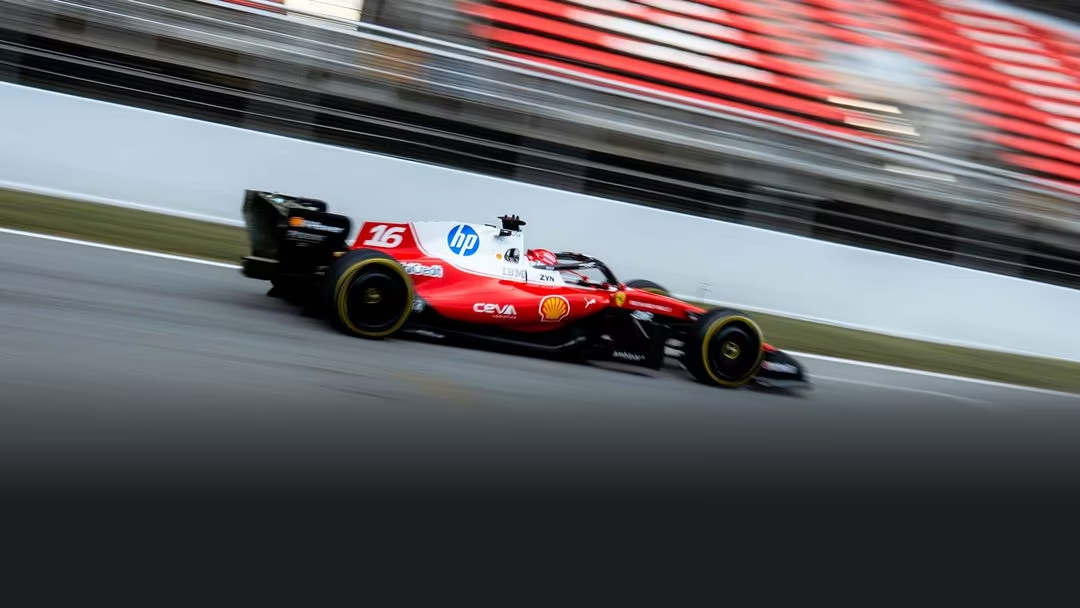
After nearly eight years at Mercedes-AMG High Performance Powertrains, Jasper van Schaick has joined Scuderia Ferrari. His appointment brings experience in power-unit engineering into a chassis department that must find a better balance between the SF-26’s aerodynamic strengths and its performance on the straights. Could his expertise prove valuable as Ferrari prepares for 2027?
Ferrari’s latest technical recruitment is particularly interesting because of where its new engineer has come from and, more importantly, what he has spent much of his career doing.
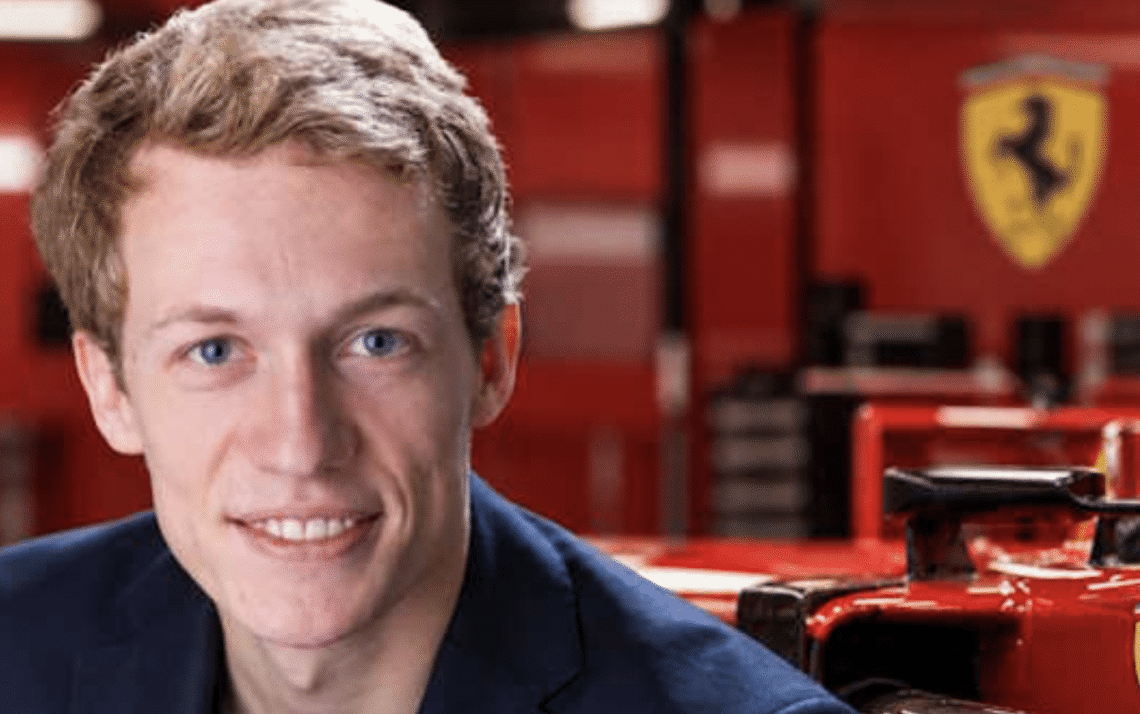
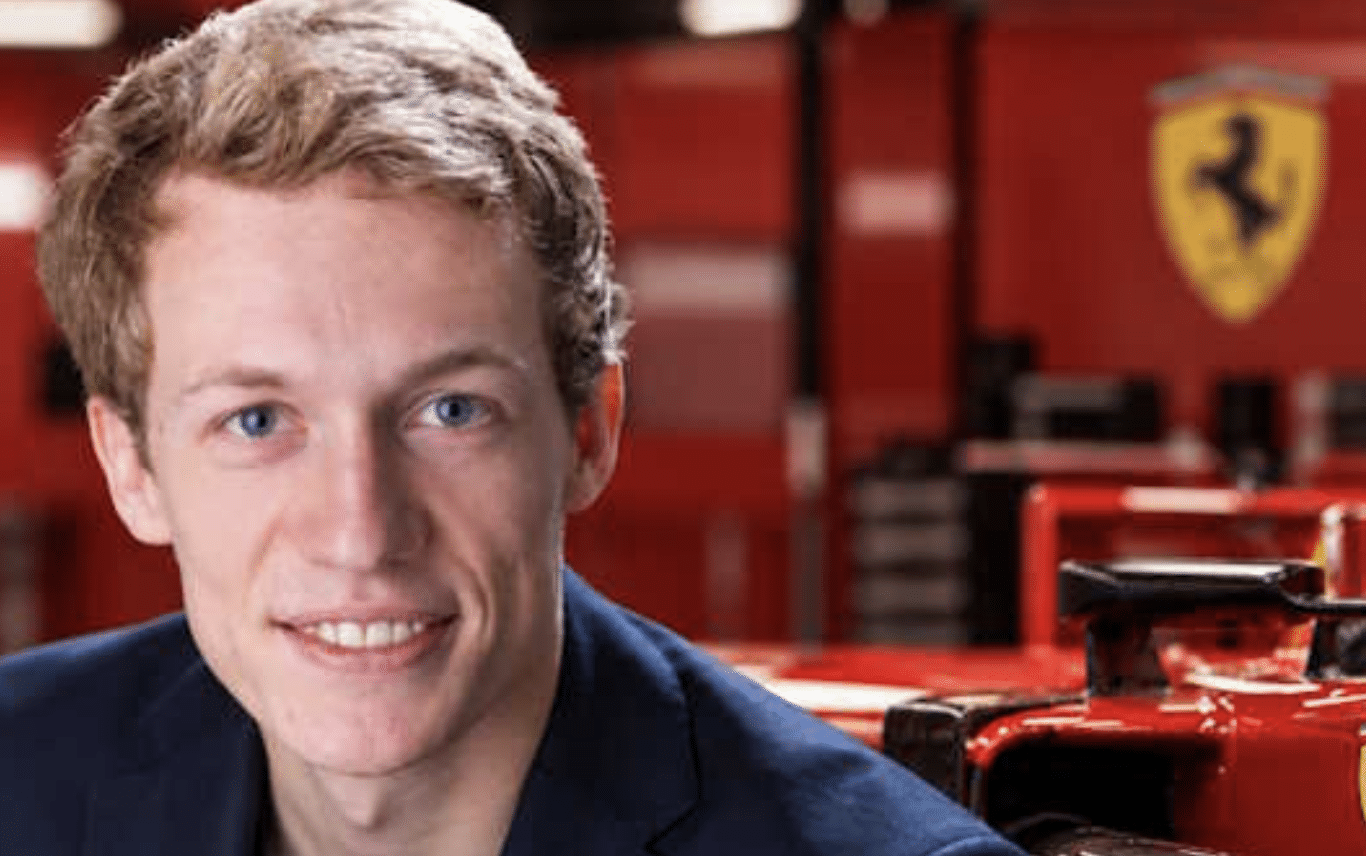
Jasper van Schaick joined Scuderia Ferrari in October 2026 as a Chassis Vehicle System Specialist, following almost eight years with Mercedes-AMG High Performance Powertrains, the division responsible for developing Mercedes’ Formula 1 power units.
This is not simply a case of Ferrari recruiting another engineer from a rival team. Van Schaick’s experience sits at the intersection of two areas that are increasingly inseparable in modern Formula 1: power-unit engineering and the integration of those systems into the car’s overall design.
For a Ferrari team looking to strengthen its competitive position heading into 2027, that combination could prove valuable.
Nearly Eight Years Inside Mercedes’ Power-Unit Operation
Van Schaick joined Mercedes-AMG High Performance Powertrains in 2018, during the manufacturer’s period of sustained success in Formula 1.
Based in Brixworth, England, Mercedes HPP develops the power units used by the Mercedes works team and its customers. Its responsibilities extend beyond the internal combustion engine to the complex hybrid systems that must work together to deliver performance and efficiency.
Van Schaick initially worked as a mechanical engineer, a position he held from 2018 until 2024.
During those six years, his work involved the design of Formula 1 power-unit systems and collaboration with engineers responsible for the chassis. That experience would have exposed him to the engineering considerations involved in making the power unit function as part of the complete car, rather than as an isolated component.
In September 2024, he moved into a concept engineering position at Mercedes HPP. In that role, he worked on developing new concepts and technical ideas for the power unit while continuing to collaborate with chassis engineers.
He remained with Mercedes until 2026, before joining Ferrari in October.
His career at Mercedes therefore covered two distinct but complementary areas: mechanical engineering within the power-unit organisation, followed by concept development.
That background is relevant because modern Formula 1 performance depends on more than producing power. Engineers must also consider how the power unit is packaged, cooled, connected to other systems and integrated into the car’s design.
Sources: “Crash.net” (https://www.crash.net/f1/news/1107926/1/lewis-hamilton-reunited-title-winning-mercedes-engineer-poached-ferrari) and “PlanetF1” (https://www.planetf1.com/news/lewis-hamilton-mercedes-engineer-ferrari).
Why Ferrari Needs This Kind of Expertise
The SF-26 presents Ferrari with a complicated engineering challenge.
The car has shown aerodynamic and chassis strengths, but those advantages do not automatically translate into the fastest overall package. A car can perform impressively through corners and still surrender valuable time on the straights.
That is where the relationship between the chassis and power unit becomes important.
Under the 2026 regulations, the interaction between the internal combustion engine, electrical systems, energy recovery and deployment, cooling requirements and aerodynamic efficiency is central to performance.
A power unit cannot be assessed solely by its peak output. Its installation influences the car’s dimensions, cooling openings, weight distribution and the space available for aerodynamic development.
Likewise, aerodynamic decisions can affect how much cooling the car receives and how effectively the power unit can operate under demanding conditions.
Ferrari therefore needs to approach its performance deficit as a whole-car engineering problem, even where the power unit is identified as an area requiring improvement.
Van Schaick’s experience could help Ferrari examine that relationship from a different perspective. Having worked inside Mercedes’ power-unit organisation, he brings knowledge of how a rival manufacturer approaches the systems and integration challenges involved.
However, there is an important distinction: his appointment does not establish that Ferrari has recruited him to redesign its engine or that he has responsibility for the power unit itself.
His announced position is within the chassis department.
Where Will His Expertise Be Applied?
The most direct application of van Schaick’s experience is likely to be in vehicle systems and the integration of mechanical and power-unit-related components with the chassis.
That could involve engineering work on the interfaces between the power unit and the rest of the car, evaluating packaging constraints, and helping the relevant departments coordinate their design decisions.
These areas can influence performance even when an engineer is not directly responsible for developing the engine’s combustion system or electrical hardware.
Consider the challenge Ferrari faces when balancing cooling requirements against aerodynamic efficiency. The power unit and its associated systems require appropriate thermal management, but larger cooling openings can increase aerodynamic drag. The engineers must find a compromise that allows the car to operate reliably without unnecessarily sacrificing performance.
Similar compromises affect component placement, weight distribution and the physical integration of the car’s systems.
Van Schaick’s background across mechanical engineering and concept development could be useful in evaluating such problems.
It would be premature, however, to attribute specific responsibilities to him without a published job description or confirmation from Ferrari. The team’s announcement of his position does not identify a particular subsystem, project or performance target.
What can be established is that Ferrari has added an engineer with substantial experience inside a leading power-unit organisation to its chassis operation.
Can He Help Ferrari’s 2027 Car?
The timing of the appointment raises a natural question: how much influence can van Schaick have on Ferrari’s next car?
The answer depends on the work assigned to him, the stage of development of the 2027 project and the technical changes Ferrari decides to pursue.
Formula 1 development programmes overlap. Work on the current car can inform the next generation, while decisions for a future car may already be under consideration long before its first track appearance.
Van Schaick’s contribution could therefore extend beyond solving immediate integration issues on the SF-26. His experience may also be useful when Ferrari evaluates the packaging and systems architecture of its 2027 challenger.
But a new hire does not automatically produce an immediate performance gain. Engineering concepts must be evaluated, developed, manufactured, integrated and tested. Some changes can be implemented relatively quickly; others require much longer development cycles.
Ferrari will also need its chassis, aerodynamic and power-unit departments to work together. One engineer, however experienced, cannot independently resolve every limitation of a Formula 1 car.
There is also no confirmed evidence that van Schaick has been given a mandate to lead Ferrari’s 2027 power-unit development. His position is a chassis-systems role, and any direct responsibility for engine development would need to be established separately.
A Reunion With Lewis Hamilton
Van Schaick’s arrival also reunites him with Lewis Hamilton, who moved from Mercedes to Ferrari in 2025.
The Dutch engineer’s years at Mercedes overlapped with Hamilton’s championship-winning campaigns in 2018, 2019 and 2020. Hamilton knows the organisation in which van Schaick developed his engineering experience, although that overlap should not be taken as evidence that van Schaick personally worked on Hamilton’s individual car or contributed directly to those championships.
Their professional paths have now crossed again at Maranello, where Hamilton and Charles Leclerc are competing in a Ferrari project that needs to turn its technical potential into consistent results.
Familiarity with Mercedes’ engineering environment could offer useful context, but Ferrari’s challenge is not simply to copy a rival’s solutions. It must understand which ideas are transferable, which are specific to Mercedes’ design philosophy and which suit the characteristics of its own car.
That process requires careful engineering rather than assumptions based on an employee’s former employer.
Ferrari’s 2027 Challenge Is Bigger Than One Appointment
Van Schaick’s recruitment is a useful addition to Ferrari’s technical story, but its significance should be kept in perspective.
The Scuderia’s challenge is to make the complete car competitive. Aerodynamic efficiency, chassis balance, mechanical grip, power-unit output, electrical-energy deployment and reliability must all work together.
If the SF-26’s cornering performance is already a strength, Ferrari must identify where it can make the greatest gains without undermining what the car does well.
That could involve power-unit development, improvements to energy management, better integration between the engine and chassis, or a combination of several measures. The exact solution will depend on the data and engineering assessments available to Ferrari.
Van Schaick’s background makes him relevant to that effort because he understands both mechanical power-unit systems and the process of developing new concepts within an engine organisation.
Whether his contribution produces a measurable improvement in 2027 remains to be seen.
For now, the most meaningful conclusion is straightforward: Ferrari has recruited someone who spent nearly eight years inside Mercedes’ power-unit operation and has placed him in a role concerned with the vehicle systems that connect the power unit to the car.
It is not a guarantee of more horsepower, nor confirmation of a secret engine-development appointment.
It is, however, a recruitment that makes engineering sense for a team seeking to improve the relationship between its chassis and power unit.
Ferrari does not simply need a car that corners well. It needs a car that can carry that performance down the straight as well. The real test of this appointment will be whether van Schaick’s experience helps Maranello bring those two demands closer together.