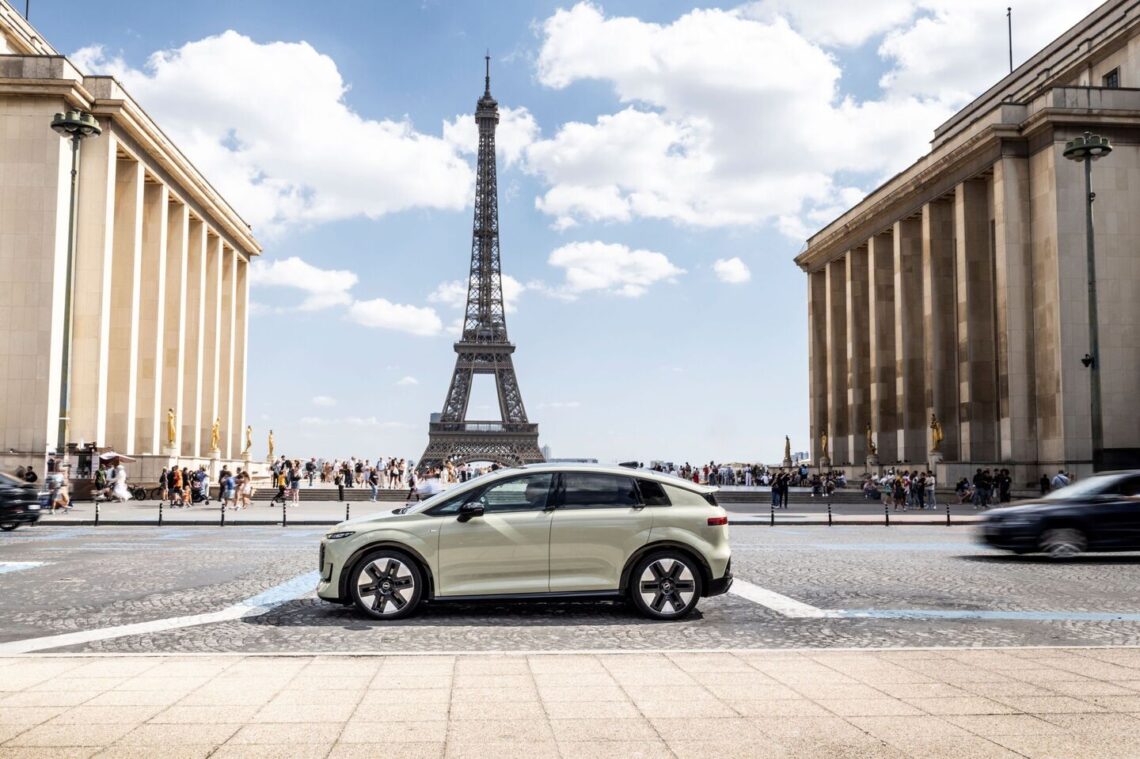
There is something rather significant happening at Audi’s Ingolstadt headquarters. The company has officially begun production of the new A2 e-tron, an all-electric compact designed not simply to add another EV to Audi’s portfolio, but to demonstrate a different way of developing and building cars.
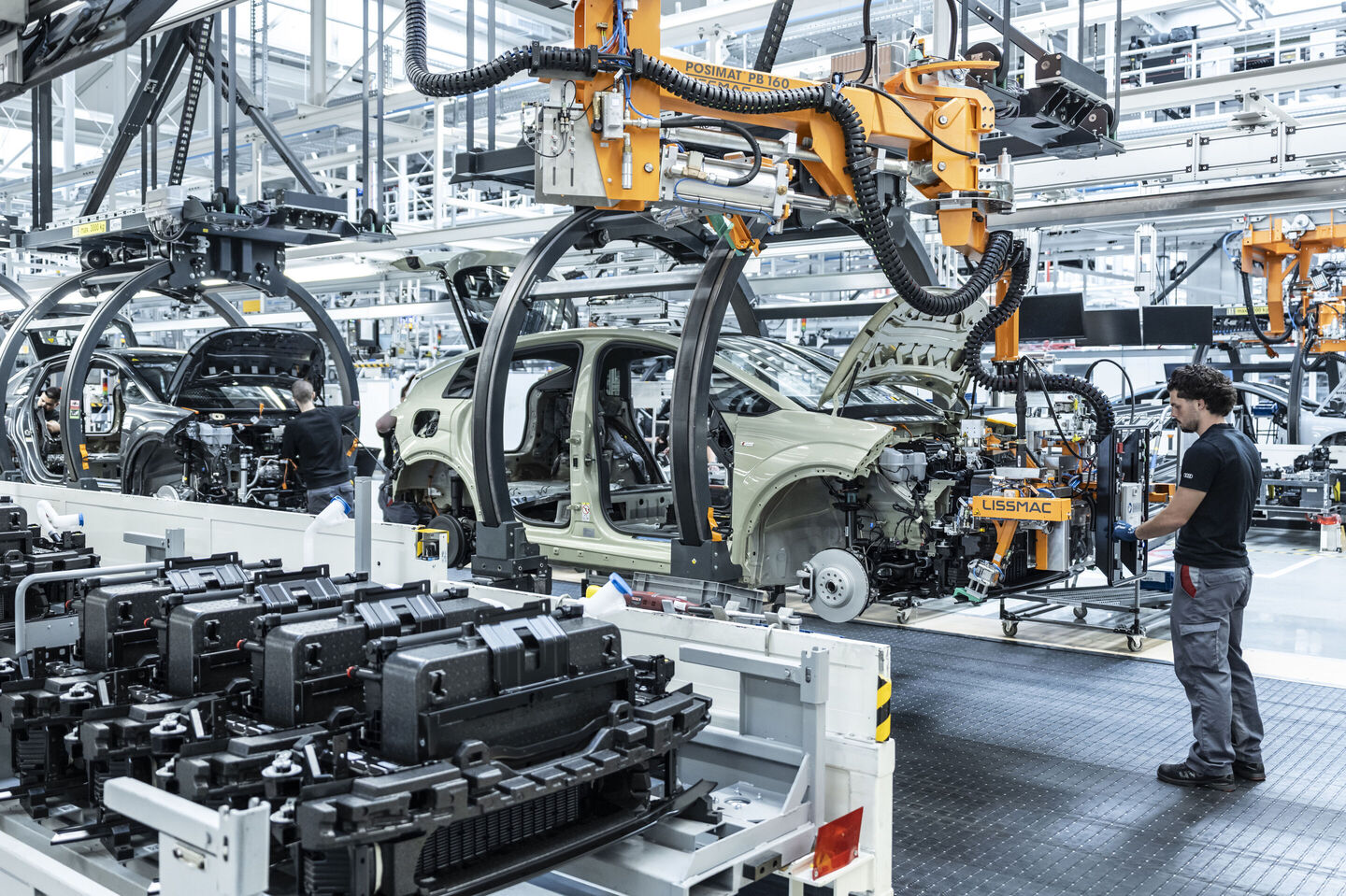
The first A2 e-tron models have now rolled off the production line in Ingolstadt, marking another step in Audi’s push toward faster development, simpler manufacturing and greater efficiency. According to Audi, the project reached production readiness 21 months sooner than previous vehicle projects.
That figure may ultimately be just as important as anything happening underneath the A2 e-tron itself.
A different approach to building an Audi
Audi says the A2 e-tron represents a significant change in the way it approaches vehicle production.
Rather than increasing complexity through a growing number of variants and components, the company has reduced the number of production-relevant parts used for the model. That has knock-on effects throughout the factory, from logistics and storage to the way components reach the assembly line.
The Ingolstadt plant is also introducing Audi’s “string-of-pearls” production principle for the first time. Customer orders are sequenced six days before assembly begins, allowing the required components to be produced and delivered in the appropriate order.
The objective is straightforward: reduce unnecessary storage and sequencing areas while making the movement of parts through the factory more efficient.
It is manufacturing designed around the car before the car even reaches the assembly line.
The A2 returns with an electric identity
The original Audi A2 became something of an automotive curiosity because of its focus on lightweight construction and efficiency. The new A2 e-tron takes that philosophy into the electric era.
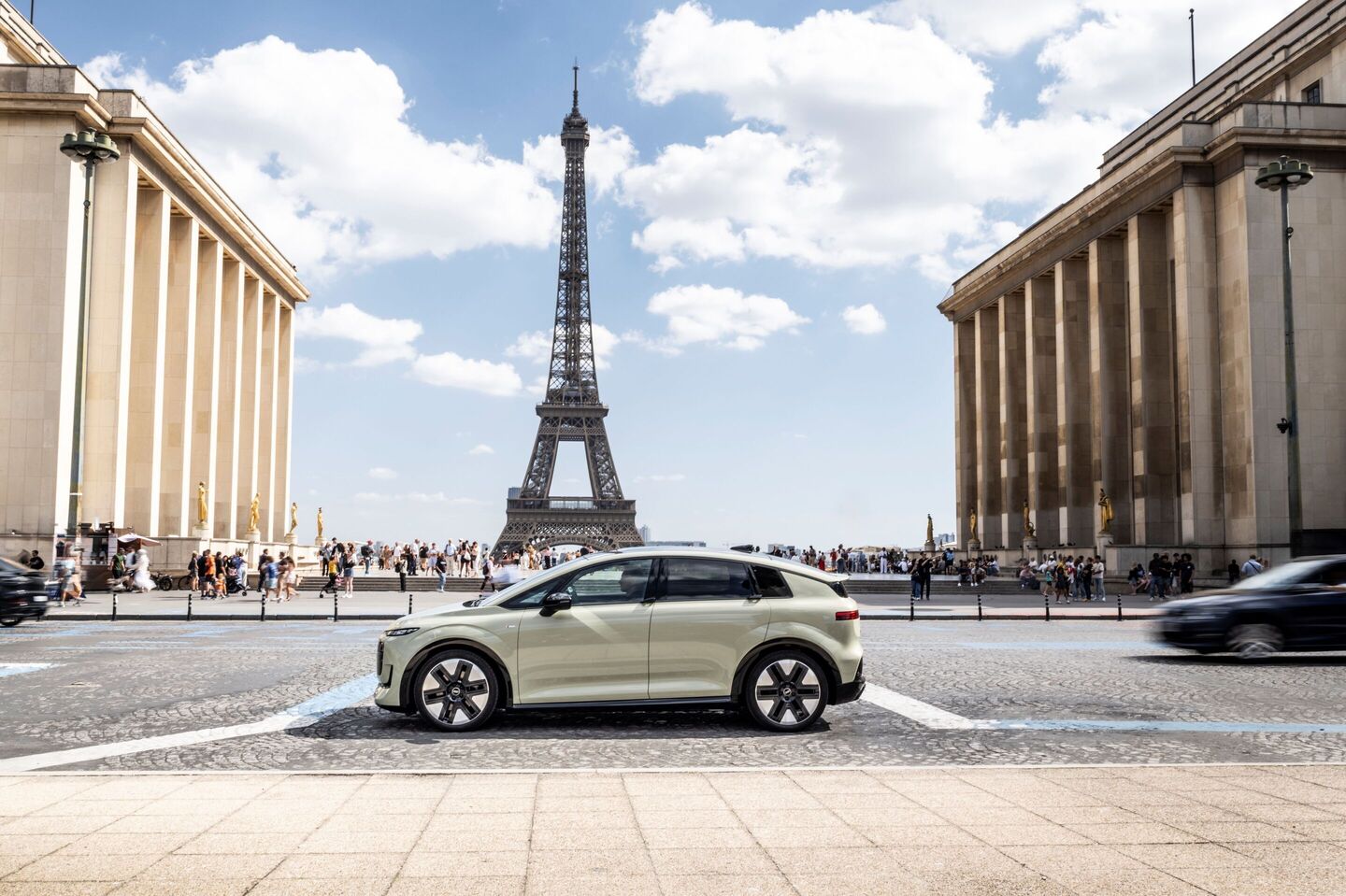
Audi previously described the new model as the most efficient production Audi it has ever built. In its 140-kW configuration with the optional efficiency package, preliminary WLTP figures put energy consumption at 12.8 kWh per 100 kilometers. Audi has also quoted a range of up to 646 kilometers, depending on specification, with a drag coefficient of 0.24.
The numbers underline what Audi is trying to accomplish: rather than relying exclusively on a larger battery to deliver more range, the A2 e-tron is designed around using energy efficiently.
That makes the car particularly relevant to Audi’s European strategy, where compact dimensions, efficiency and everyday usability are central considerations.
Old robots, new technology
One of the more interesting aspects of the A2 e-tron’s production story is that Audi isn’t simply building an entirely new factory around it.
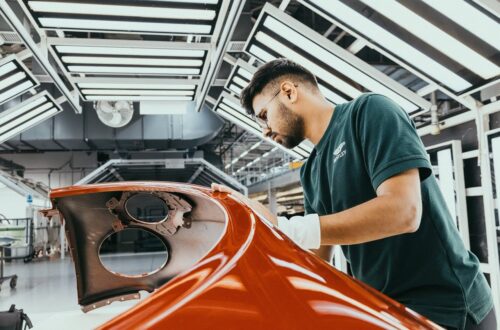
More than 1,200 production components are being reused or repurposed, including robot welding guns and approximately 250 robots that have already been used to manufacture other Audi models.
The A2 e-tron bodies are also produced alongside those of the Audi A3, something made possible by the flexible layout of the existing facilities.
For Audi, that means the transition toward electric production does not necessarily require abandoning everything that already exists. Instead, existing industrial infrastructure can be adapted to new products.
Automation takes another step forward
The production line itself is becoming increasingly automated.
Audi is introducing fully automated wheel installation for the A2 e-tron at Ingolstadt. Automated robotic stations are also replacing previous semi-automated bolting stations used during front- and rear-axle preassembly.
Then there is “bin picking.”
Using cameras, image processing and robotic control, the system can identify components inside containers and pick them up automatically. Audi says the technology can even handle smaller sheet-metal components directly from disordered containers.
It is a relatively simple concept with a potentially significant consequence: robots don’t necessarily need every component presented to them in a perfectly organized arrangement.
Audi is putting AI inside the factory too
The A2 e-tron production process also provides a glimpse into Audi’s increasingly connected manufacturing environment.
The company is using its Edge Cloud 4 Production industrial cloud to connect elements of the assembly process. Audi says its Universal Test System and operator-guidance functions can be centrally controlled through the cloud, eliminating more than 450 industrial PCs from the assembly process.
Artificial intelligence is also being introduced through knowledge assistants designed to help employees access information.
A Supply Chain Chatbot can assist workers in finding expert knowledge, processes and documentation, while a maintenance system can help technicians with fault analysis and potential solutions.
The interesting part is that Audi isn’t presenting AI as a replacement for the workforce. Instead, the company is positioning it as another tool for employees working inside an increasingly digital factory.
People remain part of the equation
For all the talk about robots, cloud computing and artificial intelligence, Audi says the human workforce remains central to the A2 e-tron’s production launch.
Employees received training through a combination of hands-on instruction and virtual qualification programs, including digital assembly training.
The goal is to ensure that workers are prepared for the technologies being introduced while building the expertise required for electric-vehicle manufacturing.
That may be one of the more important elements of the A2 e-tron story.
The transformation of an automotive factory isn’t simply about replacing mechanical processes with software. It is also about teaching the people who operate, maintain and develop those factories how to work with the new systems.
A small Audi with a much bigger job
The A2 e-tron arrives at an important moment for Audi.
The company is attempting to make electric mobility more accessible while simultaneously addressing one of the biggest challenges facing traditional European manufacturers: how to build sophisticated vehicles efficiently and competitively in Europe.
Audi says the A2 e-tron was developed specifically for European customers and is being manufactured in Ingolstadt. Its production process combines reduced complexity, greater automation, digital networking and the continued use of existing equipment.
In that sense, the A2 e-tron isn’t only a new compact EV.
It is also a demonstration project for how Audi wants to build cars in the future.
And perhaps that is the most interesting thing about it. The A2 name once represented Audi’s willingness to challenge conventional thinking about efficiency. More than two decades later, Audi is attempting to bring that philosophy back—this time with electric propulsion, connected manufacturing and artificial intelligence sitting alongside it.
The first A2 e-trons are now being built in Ingolstadt.
The experiment has officially moved from the drawing board to the production line.