
When music becomes a platform, where does the responsibility of the artist begin—and where does it end?
There are moments when the music industry stops being about music.
This is one of them.
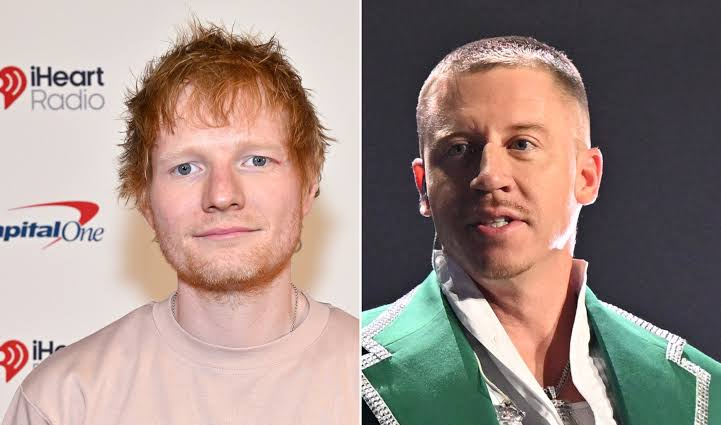
Ed Sheeran’s North American Loop Tour has become the center of a debate over politics, Palestine, freedom of expression and the enormous influence that comes with standing in front of a stadium full of people.
At the center of it is Macklemore, who was removed from the remaining dates of Sheeran’s tour after making pro-Palestinian comments during his performances at MetLife Stadium in New Jersey.
But the story is bigger than one rapper being removed from a tour.
It raises a difficult question:
What happens when an artist’s platform becomes more powerful than the performance itself?
Why Was Macklemore Removed?
Macklemore had been scheduled as a supporting act on Sheeran’s North American tour.
During his September 4 and 5 performances at MetLife Stadium, he spoke publicly in support of Palestinians, including saying “Free Palestine.” He also performed Hind’s Hall, his protest song addressing the war in Gaza.
Following those appearances, venues involved with subsequent tour dates communicated that they would not host shows featuring Macklemore.
One of those venues was Gillette Stadium, owned by Robert Kraft, who subsequently confirmed that he opposed Macklemore appearing there. Kraft said his objection related to what he described as Macklemore’s broader history of antisemitic rhetoric and imagery, while also saying his position was not intended to diminish the suffering of Palestinian civilians.
The tour promoter, Messina Touring Group, ultimately removed Macklemore from the remaining dates.
And that’s where Ed Sheeran entered the conversation.
Sheeran Says It Wasn’t His Decision
Sheeran subsequently addressed the controversy directly.
His explanation was that the decision to remove Macklemore was made by the promoter and venues, not by him.
According to Sheeran, venues threatened to withdraw upcoming shows if Macklemore remained on the bill. He said he spent the week attempting to find a solution and bring the different sides together, but ultimately the venues and promoter made the decision.
Sheeran also made something else clear.
He said he is deeply troubled by the Israel-Palestine conflict and the suffering associated with it, but he has chosen not to use his professional platform to publicly advocate for one political position.
That distinction is important.
Macklemore and Sheeran aren’t necessarily disagreeing about whether human suffering matters.
They are taking different approaches to how an artist should use a public platform.
“A Place of Safety”
This is where Sheeran’s comments become particularly interesting.
He explained that he wants his fame and performances to provide a place of “safety and sanctuary”, while keeping conversations open rather than closing them.
That philosophy helps explain why he has avoided making his concerts political forums. He said audiences come from different backgrounds and cultures and don’t necessarily attend his shows expecting political advocacy.
And I understand the argument.
There is something powerful about a concert being one of the few places where people can simply stand together, listen to music and temporarily put everything else aside.
But there is another side to that equation.
When you have tens of thousands of people listening to you, silence is also a choice.
And for artists like Macklemore, using that enormous audience to talk about a humanitarian crisis is part of what they believe their responsibility should be.
Neither approach removes the underlying problem.
The platform is enormous.
And whatever is said from it can travel much further than the stadium.
This Is Where We Need to Be Careful
This is the part of the story that I find most important.
We live in an era where a sentence spoken on a stage can be recorded, clipped, reposted and viewed by millions of people within hours.
Artists aren’t simply speaking to the people standing in front of them anymore.
They’re speaking to social media.
To television.
To newspapers.
To people on the other side of the world.
And sometimes to people who will hear only a 15-second clip without ever hearing the surrounding context.
That makes the responsibility of public speech considerably more complicated.
The Middle East is already one of the most politically and emotionally charged subjects on the planet. The conflict between Israel and Palestinians has produced enormous suffering, competing historical narratives and intense disagreement over language, responsibility and political action.
That is precisely why what public figures say deserves careful consideration.
Not because people should be afraid to speak.
But because millions of people are listening.
And That’s Where Gas Prices Become Interesting
It might seem strange to move from Macklemore and Ed Sheeran to gasoline.
But there is a connection.
We can comfortably talk about gas prices.
We can talk about oil.
We can talk about supply chains, shipping routes, fuel costs, inflation and what happens to the price at the pump when geopolitical tensions disrupt energy markets.
Those conversations feel “safe.”
But behind those numbers are real geopolitical conflicts, governments, military decisions, shipping lanes and people whose lives are directly affected by those events.
The further away the conversation gets from the people involved, the easier it becomes to discuss the economics without discussing the human consequences.
And perhaps that is something worth remembering.
Behind the price of energy are people.
Behind the headlines are people.
Behind the political arguments are people.
And behind every enormous platform are people listening.
The Fallout
The Macklemore controversy has already had consequences beyond his own removal.
Following his departure, several other artists announced that they would no longer participate in the tour.
Those included Finneas, Lukas Graham, Aaron Rowe and Beoga, with the artists expressing different forms of solidarity with Macklemore and concern about the circumstances surrounding his removal.
That means the issue has now become part of the tour itself.
What began with a supporting act making political remarks has developed into a much larger conversation about artistic independence, venue ownership, promoters, commercial relationships and the boundaries of political expression.
The Question Nobody Can Easily Answer
Should artists use their platforms to speak about war?
Some clearly believe they should.
Others believe music should provide an escape from politics.
Some audiences expect artists to speak.
Others expect them not to.
And perhaps that’s the uncomfortable reality.
There is no universal agreement about what an artist’s platform is supposed to be.
Macklemore has chosen to use his.
Sheeran has chosen to use his differently.
The important thing is understanding that those choices have consequences.
Macklemore’s comments contributed to venues objecting to his participation.
Sheeran’s decision to continue the tour without him has drawn criticism from other artists.
And the debate itself has become larger than either musician.
Words Carry Weight
This isn’t an argument that artists should stop talking.
Quite the opposite.
It’s an argument that we should recognize the power of what happens when they do.
A stadium can hold tens of thousands of people.
A phone can reach millions more.
A sentence can become a headline.
A headline can become a political argument.
And a political argument can travel far beyond the person who originally said it.
That is why Sheeran’s point about maintaining a space for safety and dialogue deserves to be considered alongside Macklemore’s decision to speak openly about Palestine.
They represent two very different ideas about what a public platform should accomplish.
One emphasizes sanctuary and keeping conversations open.
The other emphasizes using visibility to draw attention to suffering that might otherwise be ignored.
The audience gets to decide how they interpret those choices.
But one thing is difficult to dispute:
When millions are listening, words matter.
And in a world where wars are unfolding while we discuss everything from gasoline prices to concert tickets, perhaps the safest assumption is not that difficult subjects should never be discussed.
It’s that when we discuss them, we should understand the weight of what we’re saying.