The first session at the new Madring was supposed to give Aston Martin another opportunity to show that the pieces are finally coming together. Instead, FP1 left more questions than answers.
There is something almost poetic about Aston Martin arriving in Madrid.
A new circuit.
A new chapter of the Spanish Grand Prix.
A car shaped during one of the biggest technical transitions Formula 1 has seen in years.
And, standing at the centre of it all, Adrian Newey.
But after the first 60 minutes of running at the Madring, Aston Martin still looks like a team searching for the answer.
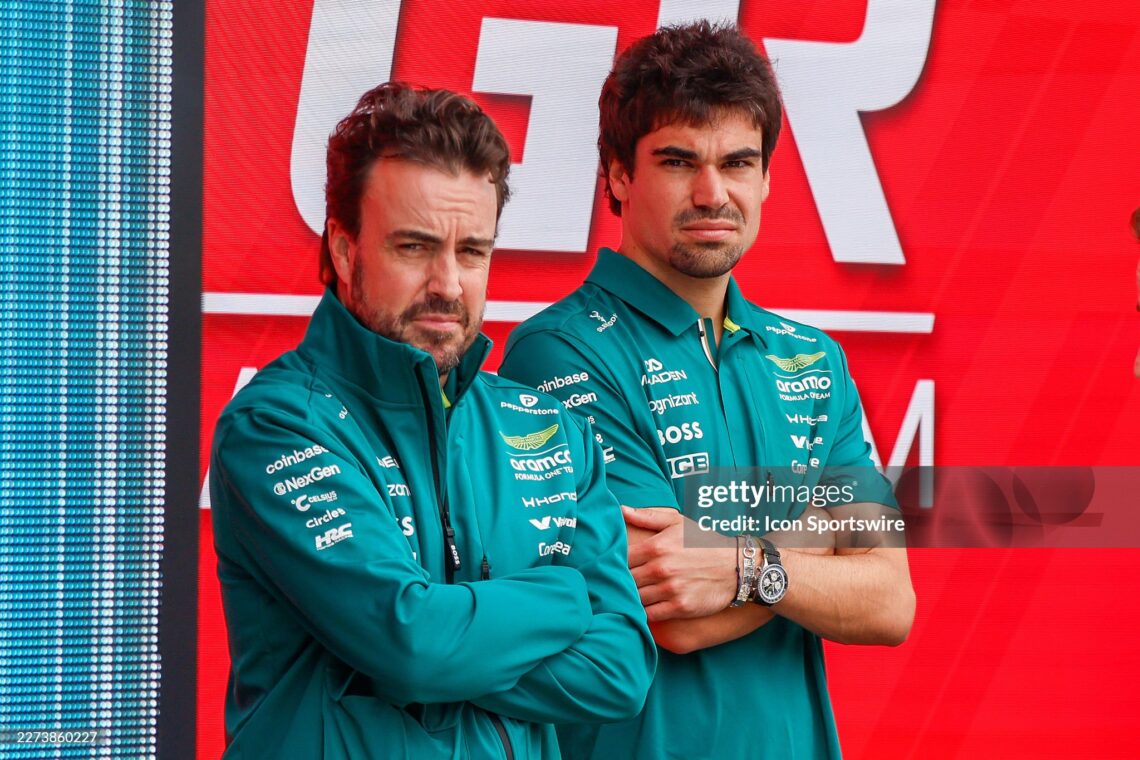
Fernando Alonso finished FP1 in 15th, while Lance Stroll ended the session roughly seven-tenths behind his teammate. The more immediate concern, however, wasn’t simply the position on the timing screen. Alonso also brushed the wall as drivers began learning a circuit that offers very little forgiveness.
For a team that desperately needs evidence of progress, it wasn’t the opening statement many were hoping for.
Madrid Was Always Going to Be Different
The Madring is unlike anything Formula 1 has raced on before.
Built around Madrid’s IFEMA exhibition centre and the surrounding roads, the circuit combines fast sections, elevation changes, blind corners and the heavily banked Turn 12 known as La Monumental. Drivers arrived having done most of their preparation in simulators rather than through traditional track running.
That matters.
FP1 is therefore not simply a conventional practice session.
Every team is learning the circuit.
Every driver is searching for braking references.
Every engineer is trying to understand tyre behaviour.
And every setup decision has been made with incomplete information.
So Aston Martin’s 15th place should not yet be treated as a verdict.
But it should be treated as a warning.
Mercedes Sets the Standard
At the front, George Russell immediately established Mercedes as the benchmark of the opening session.
Russell’s 1:34.077 put him 0.286 seconds ahead of teammate Kimi Antonelli. Charles Leclerc was third for Ferrari, with Lewis Hamilton fourth, while Max Verstappen and Lando Norris completed the top six.
That is significant for Aston Martin because this is precisely the group it needs to begin closing.
Instead, Alonso was more than a second away from Russell’s benchmark.
That doesn’t mean Aston Martin is a second slower in genuine race performance. Fuel loads, tyre programmes and run plans can completely distort an FP1 classification.
But it does mean the team hasn’t yet produced the obvious headline:
Newey’s Aston Martin has arrived.
Alonso Still Has to Carry the Story
And then there is Fernando Alonso.
At 45, Alonso remains one of the most experienced drivers on the grid, but his future beyond 2026 remains uncertain.
That makes every race increasingly important.
Alonso has indicated that his decision about continuing into 2027 isn’t simply about whether Aston Martin can produce a faster car. He is also watching how the future regulations shape the driving experience and whether the new generation of Formula 1 machinery is something he still wants to compete with.
That creates an uncomfortable situation for Aston Martin.
The team isn’t simply trying to build a championship-winning car.
It is also trying to convince one of the greatest drivers of his generation that the project is worth waiting for.
And Madrid was supposed to be another opportunity to make that argument.
Newey’s Aston Martin Has Not Failed
It is important not to make the mistake of blaming Adrian Newey for what is currently appearing on the timing screen.
A Formula 1 team is not transformed simply because one of the greatest aerodynamic designers in history walks through the door.
Aston Martin’s 2026 project involves a new Honda works power-unit relationship, a new generation of regulations, changes throughout the technical organisation and a car designed within an entirely different aerodynamic philosophy. The AMR26 is a much larger project than one man’s arrival.
Newey’s job is to create the foundation.
The stopwatch is asking how quickly that foundation can become a winning structure.
The Aston Martin Question
The real question after FP1 isn’t:
“Why is Alonso only 15th?”
It is:
“When does Aston Martin start looking like the team everyone expected it to become?”
Because expectations have changed.
Before Newey, Aston Martin could be described as an ambitious midfield team trying to reach the front.
With Newey, Honda and Lawrence Stroll’s long-term investment, the standard is different.
Second-best is no longer enough.
A podium is no longer the ultimate dream.
The project was built around the possibility of eventually fighting Ferrari, Mercedes, Red Bull and McLaren.
That is why a P15 in FP1 attracts attention that it might not have two years ago.
And Yet, This Is Only FP1
There is still plenty of time to change the story.
FP2 should provide a much clearer picture of Aston Martin’s long-run pace, tyre management and balance. The team can also learn from Alonso’s wall brush and begin refining the car around the unique demands of the Madring.
Qualifying will be particularly important.
Drivers have already warned that overtaking could be difficult around the new circuit, making track position extremely valuable.
If that proves correct, Aston Martin cannot afford to hide in the midfield.
It needs to find performance quickly.
Madrid Could Become a Test of Patience
For Alonso, this may be another weekend of patience.
For Newey, it is another chapter in a much longer project.
For Aston Martin, however, the clock is becoming increasingly visible.
The team has invested heavily in the future.
Honda is now part of that future.
Newey is part of that future.
Alonso has been part of that vision.
And yet Formula 1 ultimately remains brutally simple.
The stopwatch doesn’t care about the plan.
It doesn’t care how much money was invested.
It doesn’t care who designed the car.
It doesn’t care how impressive the new headquarters are.
It only cares about the lap time.
After FP1 in Madrid, Aston Martin hasn’t delivered that lap time yet.
But perhaps the most important thing is that there are still two practice sessions, qualifying and a Grand Prix between this first impression and the final judgement.
The Madring has only just opened its doors.
Now Aston Martin has to show us what is really inside the AMR26.
Aston Martin’s Newey Revolution Still Has Something to Prove in Madrid
The first session at the new Madring was supposed to give Aston Martin another opportunity to show that the pieces are finally coming together. Instead, FP1 left more questions than answers.
There is something almost poetic about Aston Martin arriving in Madrid.
A new circuit.
A new chapter of the Spanish Grand Prix.
A car shaped during one of the biggest technical transitions Formula 1 has seen in years.
And, standing at the centre of it all, Adrian Newey.
But after the first 60 minutes of running at the Madring, Aston Martin still looks like a team searching for the answer.
Fernando Alonso finished FP1 in 15th, while Lance Stroll ended the session roughly seven-tenths behind his teammate. The more immediate concern, however, wasn’t simply the position on the timing screen. Alonso also brushed the wall as drivers began learning a circuit that offers very little forgiveness.
For a team that desperately needs evidence of progress, it wasn’t the opening statement many were hoping for.
Madrid Was Always Going to Be Different
The Madring is unlike anything Formula 1 has raced on before.
Built around Madrid’s IFEMA exhibition centre and the surrounding roads, the circuit combines fast sections, elevation changes, blind corners and the heavily banked Turn 12 known as La Monumental. Drivers arrived having done most of their preparation in simulators rather than through traditional track running.
That matters.
FP1 is therefore not simply a conventional practice session.
Every team is learning the circuit.
Every driver is searching for braking references.
Every engineer is trying to understand tyre behaviour.
And every setup decision has been made with incomplete information.
So Aston Martin’s 15th place should not yet be treated as a verdict.
But it should be treated as a warning.
Mercedes Sets the Standard
At the front, George Russell immediately established Mercedes as the benchmark of the opening session.
Russell’s 1:34.077 put him 0.286 seconds ahead of teammate Kimi Antonelli. Charles Leclerc was third for Ferrari, with Lewis Hamilton fourth, while Max Verstappen and Lando Norris completed the top six.
That is significant for Aston Martin because this is precisely the group it needs to begin closing.
Instead, Alonso was more than a second away from Russell’s benchmark.
That doesn’t mean Aston Martin is a second slower in genuine race performance. Fuel loads, tyre programmes and run plans can completely distort an FP1 classification.
But it does mean the team hasn’t yet produced the obvious headline:
Newey’s Aston Martin has arrived.
Alonso Still Has to Carry the Story
And then there is Fernando Alonso.
At 45, Alonso remains one of the most experienced drivers on the grid, but his future beyond 2026 remains uncertain.
That makes every race increasingly important.
Alonso has indicated that his decision about continuing into 2027 isn’t simply about whether Aston Martin can produce a faster car. He is also watching how the future regulations shape the driving experience and whether the new generation of Formula 1 machinery is something he still wants to compete with.
That creates an uncomfortable situation for Aston Martin.
The team isn’t simply trying to build a championship-winning car.
It is also trying to convince one of the greatest drivers of his generation that the project is worth waiting for.
And Madrid was supposed to be another opportunity to make that argument.
Newey’s Aston Martin Has Not Failed
It is important not to make the mistake of blaming Adrian Newey for what is currently appearing on the timing screen.
A Formula 1 team is not transformed simply because one of the greatest aerodynamic designers in history walks through the door.
Aston Martin’s 2026 project involves a new Honda works power-unit relationship, a new generation of regulations, changes throughout the technical organisation and a car designed within an entirely different aerodynamic philosophy. The AMR26 is a much larger project than one man’s arrival.
Newey’s job is to create the foundation.
The stopwatch is asking how quickly that foundation can become a winning structure.
The Aston Martin Question
The real question after FP1 isn’t:
“Why is Alonso only 15th?”
It is:
“When does Aston Martin start looking like the team everyone expected it to become?”
Because expectations have changed.
Before Newey, Aston Martin could be described as an ambitious midfield team trying to reach the front.
With Newey, Honda and Lawrence Stroll’s long-term investment, the standard is different.
Second-best is no longer enough.
A podium is no longer the ultimate dream.
The project was built around the possibility of eventually fighting Ferrari, Mercedes, Red Bull and McLaren.
That is why a P15 in FP1 attracts attention that it might not have two years ago.
And Yet, This Is Only FP1
There is still plenty of time to change the story.
FP2 should provide a much clearer picture of Aston Martin’s long-run pace, tyre management and balance. The team can also learn from Alonso’s wall brush and begin refining the car around the unique demands of the Madring.
Qualifying will be particularly important.
Drivers have already warned that overtaking could be difficult around the new circuit, making track position extremely valuable.
If that proves correct, Aston Martin cannot afford to hide in the midfield.
It needs to find performance quickly.
Madrid Could Become a Test of Patience
For Alonso, this may be another weekend of patience.
For Newey, it is another chapter in a much longer project.
For Aston Martin, however, the clock is becoming increasingly visible.
The team has invested heavily in the future.
Honda is now part of that future.
Newey is part of that future.
Alonso has been part of that vision.
And yet Formula 1 ultimately remains brutally simple.
The stopwatch doesn’t care about the plan.
It doesn’t care how much money was invested.
It doesn’t care who designed the car.
It doesn’t care how impressive the new headquarters are.
It only cares about the lap time.
After FP1 in Madrid, Aston Martin hasn’t delivered that lap time yet.
But perhaps the most important thing is that there are still two practice sessions, qualifying and a Grand Prix between this first impression and the final judgement.
The Madring has only just opened its doors.
Now Aston Martin has to show us what is really inside the AMR26.