Formula 1 leaves Monza with a championship that looks increasingly like Mercedes’ to lose, but the next stop could change the conversation.
Madrid’s new Madring arrives this weekend as one of the great unknowns of the 2026 season. Unlike Monza, where every team understands the demands of the circuit before arriving, Madrid offers almost no historical reference. The drivers have simulator laps, limited filming experience and mountains of computer-generated data — but none of that quite replaces the first time a Formula 1 car attacks a real corner at 300 km/h.
And behind the championship battle sits an even bigger story: Ferrari is already looking beyond 2026.
The Championship Landscape
After 13 rounds, Mercedes has established a commanding position at the top.
| Position | Driver | Team | Points |
|---|---|---|---|
| 1 | Kimi Antonelli | Mercedes | 267 |
| 2 | George Russell | Mercedes | 201 |
| 3 | Lewis Hamilton | Ferrari | 191 |
| 4 | Lando Norris | McLaren | 171 |
| 5 | Charles Leclerc | Ferrari | 155 |
| 6 | Max Verstappen | Red Bull | 127 |
| 7 | Oscar Piastri | McLaren | 116 |
Mercedes has 468 points, Ferrari 346, McLaren 287 and Red Bull 204. Aston Martin, meanwhile, sits tenth with just three points. (Formula 1® – The Official F1® Website)
The difference between Antonelli and Russell is now 66 points. Hamilton is 76 behind the championship leader, while Norris is 96 points adrift.
That makes the Madring particularly important for Ferrari. The Scuderia does not necessarily need to win the championship this year to prove that the Vasseur project is working — but it needs to continue closing the performance gap.
Monza complicated that mission.
Antonelli started from 19th after Mercedes elected to take an engine-related grid penalty and somehow won his home race, beating Russell and Verstappen. Hamilton finished sixth, while Charles Leclerc crashed out. (Reuters)
Ferrari also leaves Monza dealing with something that matters beyond the points: Hamilton and Leclerc’s collision.
The two have since cleared the air, but Ferrari still has no formal written rules of engagement between its drivers. Hamilton has acknowledged that this is something the team needs to improve. (Reuters)
For Vasseur, this is no longer simply about making the fastest car.
It is about building a team capable of using it.
Welcome to the Madring
Madrid is Formula 1’s great experiment this weekend.
The circuit is approximately 5.4 kilometres long with 22 corners, with the most spectacular being Turn 12 — La Monumental — a long, heavily banked section with banking reaching approximately 24 percent. The track combines purpose-built sections around IFEMA with public-road-style sections around Valdebebas. (Reuters)
There are two enormous questions.
Who has the best car?
And perhaps more importantly:
Who actually understands the circuit?
Most of the grid has experienced Madring primarily through simulators. Ferrari’s Hamilton and Leclerc have completed a filming day, but both have played down how much competitive information can really be extracted from that experience because of the limited speed and conditions involved. (Reuters)
That makes Friday’s first practice session more important than usual.
The first real laps will tell the engineers whether the simulation models were correct.
Max Verstappen’s Simulator Versus Reality
This is where Max Verstappen becomes particularly interesting.
Verstappen is perhaps the clearest modern example of the relationship between simulator racing and real-world driving. His involvement in sim racing is not simply recreational. He has spent years treating virtual racing as a serious competitive discipline, and the same skills — braking references, throttle management, racing lines, tyre management, spatial awareness and rapid adaptation — transfer remarkably well.
But Madring presents the ultimate test of that philosophy.
A simulator can reproduce the circuit layout.
It can reproduce elevation.
It can reproduce grip levels and even vehicle behaviour.
What it cannot perfectly reproduce is the psychological commitment required when a real Formula 1 car approaches a blind, banked corner with a wall waiting beyond the exit.
That is why Verstappen’s first real laps will be fascinating.
The simulation tells him where the track is.
The real circuit tells him whether he was brave enough.
The Upgrade War
The interesting thing about Madring is that upgrades may not behave the way they did at Monza.
Monza rewarded efficiency, low drag and straight-line performance. Madrid is far more complicated.
The teams need enough aerodynamic load for the technical sections, stability under braking and confidence through the banked Monumental — but too much drag could compromise the straights.
Mercedes therefore arrives as the benchmark.
Ferrari has already demonstrated that its SF-26 possesses one of the strongest aerodynamic platforms in the field, while the team has continued developing the car deep into 2026. Vasseur has explicitly said Ferrari intends to keep pushing with upgrades until the end of the season. (Autosport)
That could make Ferrari more dangerous in Madrid than it was at Monza.
The question is whether the Ferrari power unit can give the chassis enough performance on the straights.
That remains one of the team’s biggest weaknesses.
Aston Martin: The Chassis Is Finally Talking
Aston Martin is perhaps the most interesting team outside the championship fight.
The AMR26 started the season in trouble. The car was overweight, Honda’s new power unit suffered drivability and vibration problems, and the team struggled to translate its enormous technical investment into points.
But the picture has changed.
The major aerodynamic package introduced around the Hungarian period produced meaningful progress. Aston’s technical leadership now believes the team’s aerodynamic development for 2026 is essentially finished. Instead, the immediate objective is weight reduction. (Diario AS)
That matters.
In a modern Formula 1 car, reducing weight isn’t glamorous, but it can be worth genuine lap time. Aston expects its weight-saving programme to have a larger effect from Azerbaijan onward.
For Madrid, therefore, Aston is not bringing some magical final aerodynamic package.
It is bringing something arguably more important:
a better understanding of the AMR26.
The problem remains Honda.
At Monza, Alonso’s Aston Martin was badly exposed on the straights. The chassis has shown signs of improvement, but the power deficit remains difficult to hide on circuits that demand sustained high-speed performance. (Diario AS)
Honda is already working on combustion and drivability improvements while Aston Martin concentrates heavily on 2027.
And that brings us to the real Aston Martin story.
Adrian Newey’s first Aston Martin project is no longer just about rescuing 2026.
It is about building the car that Aston believes can finally exploit the Honda works partnership properly.
Ferrari’s 2027 Project Has Already Begun
Ferrari’s 2027 story is arguably more important than anything it does in Madrid.
The 2026 power-unit regulations have exposed a significant performance gap between Ferrari and Mercedes. Ferrari was granted additional development opportunities under the FIA’s ADUO system, but Vasseur has acknowledged that those upgrades were never expected to erase the deficit immediately. (Reuters)
The important sentence from Vasseur is simple:
Ferrari will have a new engine in 2027.
The objective is to close the gap as quickly as possible.
This is not a minor evolution. Ferrari’s current power unit has effectively become the foundation on which the team must build its next generation.
The 2026 regulations already place far greater emphasis on electrical power, with the MGU-K increased to 350 kW and the MGU-H removed. The combustion/electrical balance is dramatically different from the previous generation. (Wikipedia)
Ferrari now has a year of real-world data.
It knows where Mercedes is stronger.
It knows where its own architecture is losing performance.
And it knows that ADUO can only do so much.
The 2027 engine is therefore not simply another Ferrari engine.
It is Ferrari’s answer to the first year of the new regulations.
Vasseur’s 2027 Ferrari
Fred Vasseur’s position at Ferrari has become considerably stronger.
The early turbulence surrounding his future has faded, while Ferrari’s internal development process has become more stable. His approach has been to change the culture at Maranello: less reaction to outside noise, more engineering development, more willingness to experiment and, crucially, a longer-term view.
Vasseur has also confirmed that Lewis Hamilton will remain with Ferrari for 2027. (Sky Sport)
That means Ferrari is effectively building its next championship attempt around the same core:
Vasseur.
Hamilton.
Leclerc.
A new Ferrari power unit.
And the lessons of the SF-26.
That is a considerably more coherent project than Ferrari had entering 2025.
The question is whether it is enough.
Ferrari’s Other Championship: WEC
While the Formula 1 team fights Mercedes, Ferrari’s endurance programme has its own championship battle.
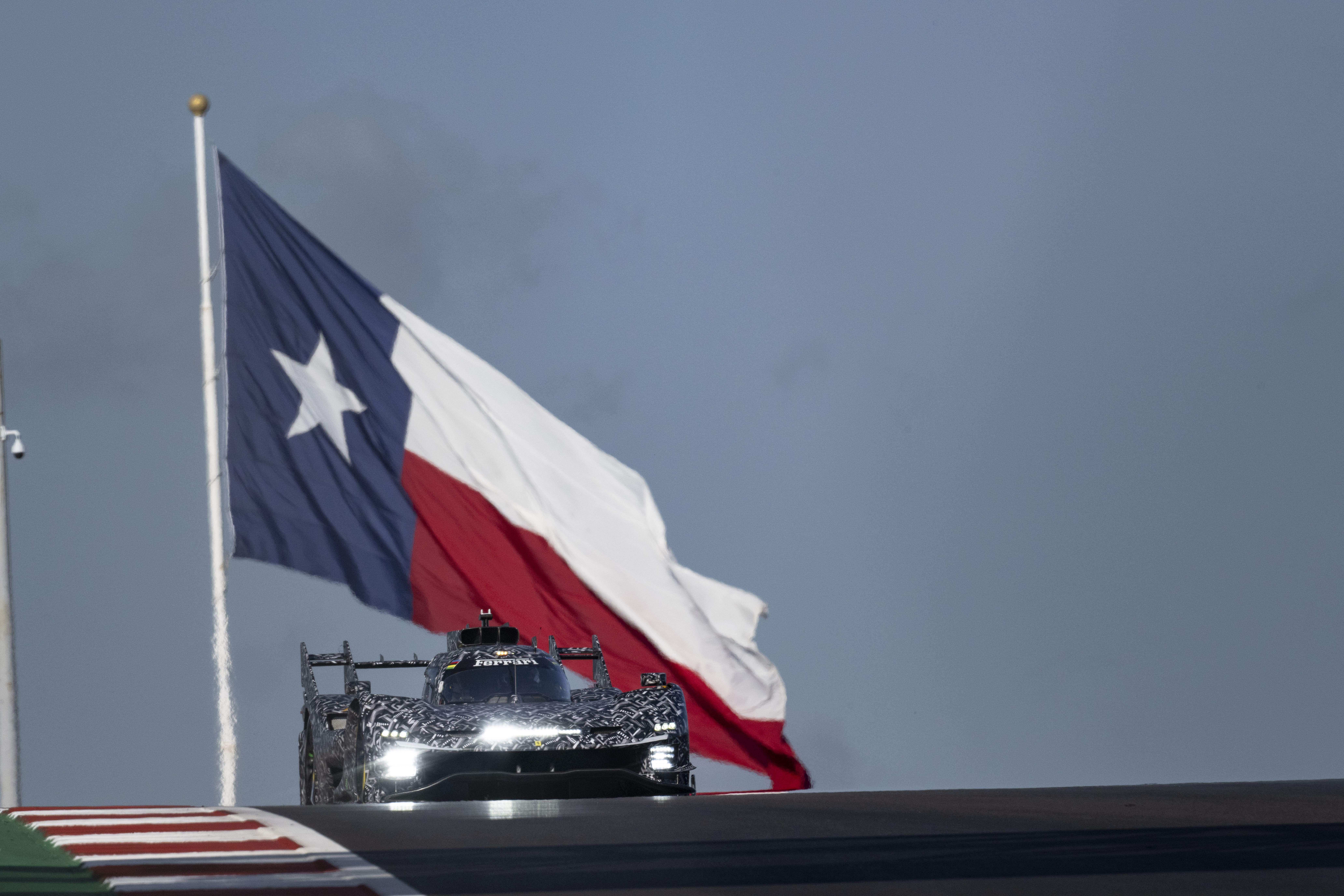
Ferrari’s 499P returned to winning form at Lone Star Le Mans at Circuit of the Americas, with the #50 Ferrari taking victory after the #7 Toyota retired late in the race. The result blew the Hypercar manufacturers’ championship wide open. (FIAWEC)
After Austin, the manufacturers’ standings are:
- Toyota — 140
- BMW — 131
- Ferrari — 114
- Cadillac — 80
- Alpine — 66
- Aston Martin — 52
Ferrari is therefore only 26 points from Toyota.
And there are still three races remaining.
The next is Fuji, from September 25–27.
After that comes Barcelona in October and Monza in November. (FIAWEC)
Ferrari’s WEC programme therefore enters the final stretch with something very familiar to its Formula 1 operation:
a championship within reach, but no room for wasted points.
And Then There Is the Sea
The racing calendar does not end with four wheels.
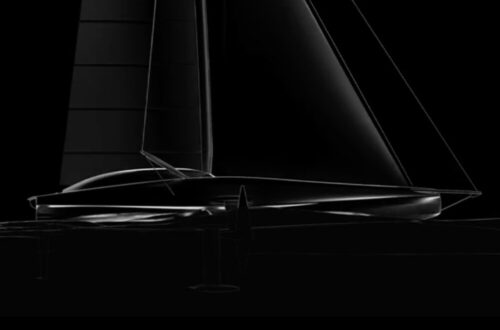
On September 24, attention turns to Naples for the second Preliminary Regatta of the 38th America’s Cup cycle.
And this is where our previous story involving Athena Pathway and Luna Rossa returns.
The Naples Preliminary Regatta runs from September 24–27, with official practice racing beginning on September 24. The fleet racing begins September 25, followed by further racing over the weekend and a final match race between the top two boats. (38th America’s Cup)
The two teams arrive with very different momentum.
Luna Rossa’s Women & Youth team made a strong impression during the Sardinia preliminary event, while Athena Pathway produced one of the standout moments of the regatta by taking a memorable race victory. (38th America’s Cup)
Luna Rossa also won the Sardinia match-race final, beating Emirates Team New Zealand in front of its home crowd. (Emirates Team New Zealand)
Now Naples changes the equation.
The delay-card system used in Sardinia has been removed, meaning technical problems will carry an even greater consequence. (38th America’s Cup)
For Athena Pathway and Luna Rossa, September 24 is therefore more than another date on the calendar.
It is another test of whether the technology, sailors and strategy developed in Sardinia can survive when the pressure increases.
The Bigger Picture
Formula 1 is entering Madrid with one championship story and three future stories.
Mercedes is trying to finish the job.
Ferrari is trying to prevent the championship from disappearing over the horizon.
McLaren is waiting for another opportunity.
Red Bull is still trying to find a way back into the fight.
Aston Martin is quietly building toward the project that could define its future.
And Ferrari, perhaps more than anyone else, is already racing two seasons at once.
There is the Ferrari that exists today — Hamilton, Leclerc, the SF-26 and 346 points.
And then there is the Ferrari being designed behind closed doors for 2027.
That Ferrari will have a new engine.
Vasseur will still be at the centre of the operation.
Hamilton is expected to remain alongside Leclerc.
And every lesson learned from 2026 — from Mercedes’ electrical advantage to Ferrari’s power deficit, from driver management to development strategy — will eventually find its way into that car.
But first comes Madrid.
The Madring has no history.
No established setup.
No proven tyre strategy.
No reliable benchmark.
Everyone has a simulator lap.
Nobody has raced there.
That makes Sunday potentially one of the most revealing races of the entire 2026 season.
Because for the first time, the computer has to give way to the driver.
And when the lights go out at the Madring, we’ll finally discover whether the virtual Madrid everyone has been driving for months bears any resemblance to the real one.
This gives you a full landscape piece rather than just a Madring preview, while keeping the Ferrari/Vasseur/2027 story as the larger DLifestyle-style narrative.