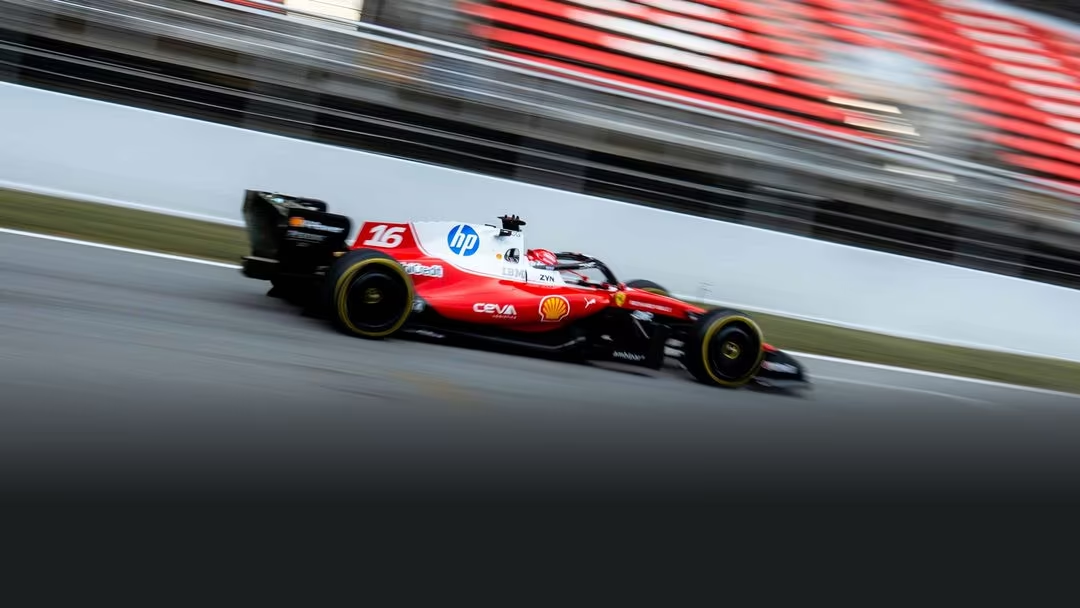
When Adrian Newey turns his pencil toward a fresh set of technical regulations, the Formula 1 paddock holds its breath. The Aston Martin AMR26 represents Newey’s first ground-up blueprint for the Silverstone squad—a machine that blatantly rejects conventional design trends in favor of aggressive aerodynamic solutions, intricate mechanical integration, and a bespoke packaging layout for the works Honda V6 hybrid power unit.
1. Engine Cover Revisions: Heat Management & Flow Manipulation
The AMR26’s engine cover is a masterclass in aggressive heat dissipation without compromising high-pressure airflow to the rear.
- Triangular Intake & Winglet Array: At the top, the primary air scoop adopts a sharp triangular geometry. Flanking the intake are twin horn-shaped winglets and shoulder-mounted vertical vanes designed to clean up messy turbulent air around the halo and driver’s helmet.
- Mid-Body Hot Air Vents: Rather than dumping hot air near the rear wing—which weakens rear downforce—Newey incorporated massive exit ducts midway along the sides, directly behind the cockpit. The surrounding bodywork is deeply hollowed out, creating a vacuum effect that pulls hot air from the Honda V6 while maintaining clean external flow over the engine cover tail.
- Tightly Shrink-Wrapped Architecture: The lower engine cover creates a virtual “second skin” around the gearbox and internal plumbing, tapering drastically toward the centerline to minimize drag.
2. Sidepod Redesign: Channeling Undercut Performance
Moving down the chassis, the sidepod architecture represents one of the car’s most visually striking and functionally radical departures from standard grid concepts.
The Underbite & Periscope Inlet
The sidepod openings feature a distinct underbite—a protruding lower lip that acts as a flow splitter. Air entering the upper section feeds the engine radiators and intercoolers, while the lower section channels high-velocity air into a deep undercut underneath the pod.
Shortened “Tube” Geometry
Unlike traditional long, sloping sidepods, Newey designed exceptionally short, tubular pods that ramp down aggressively.
Key Aerodynamic Benefit: By terminating the sidepods significantly earlier than rival designs, the AMR26 leaves a massive expanse of exposed floor ahead of the rear tires. This allows an unprecedented volume of clean airflow to energize the floor edge and feed straight into the diffuser, drastically boosting underbody downforce.
3. Rear Wing & Suspension: Redefining Structural Aero
At the rear of the car, Newey’s mechanical and aerodynamic philosophies blend seamlessly, utilizing push-rod geometry to turn suspension arms into active downforce devices.
                  [ Upper Rear Wing ]
                         ||
                 [ Central Pylon ]
                   /           \
  (High-Mounted Upper Wishbone) --- (High-Mounted Upper Wishbone)
                 /               \
         [ Rear Left Wheel ]    [ Rear Right Wheel ]
- Pylon-Mounted Suspension Arms: In a radical engineering stroke, the trailing arms of the upper wishbones are anchored extraordinarily high—attaching directly to the central rear wing mounting pylon rather than the lower crash structure.
- Beam Wing Workaround: Placing the upper suspension arms in this ultra-high position accomplishes two critical goals:
- It leaves the lower area directly above the diffuser exit entirely unobstructed, allowing air to expand out of the rear diffuser without turbulence.
- The angled profile of the high wishbones helps connect the airflow exiting the diffuser to the low-pressure pocket under the rear wing, effectively replicating the function of a traditional beam wing.
- Airfoil-Profile Endplates: The rear wing endplates feature sculptured, curved outer profiles that outwash tire wake away from the rear wing structure, maximizing overall rear-end stability.
4. The Contingency: Referencing the dlifestylemagazine.com “Plan B” Analysis
While the baseline AMR26 pushes the boundaries of aero efficiency, aggressive concepts carry inherent risks—a reality analyzed in detail in a feature on dlifestylemagazine.com examining Newey’s contingency roadmap.
As highlighted in the analysis, Newey openly acknowledged that taking such a bold aerodynamic gamble under tight initial deadlines and legacy infrastructure created early baseline challenges. To ensure the team wasn’t locked into a dead-end performance ceiling if the initial concept hit a developmental wall, Newey instituted a multi-phase “Plan B” strategy:
1. The B-Spec Overhaul
If the radical tube-sidepod and extreme high-suspension concept failed to deliver the expected lap-time delta or presented narrow setup windows, Aston Martin prepared a comprehensive B-Spec package targeted for mid-season deployment. This overhaul focuses on a redesigned floor layout, revised sidepod outer skins, and aggressive weight-saving revisions across the chassis.
2. Operational Overhaul & In-House Production
A core pillar of the Plan B contingency outlined on dlifestylemagazine.com involves rectifying internal bottlenecks inherited from older factory setups:
- Bringing Manufacturing In-House: Crucial components—including floor patterns, carbon floor layups, and gearbox casing manufacturing—have been transitioned directly into Aston Martin’s new Silverstone facility.
- Quality Control & Rapid Iteration: Shifting away from outsourced manufacturing grants the technical team tighter feedback loops. If floor modifications or aero tweaks are required during a race weekend, in-house production allows prototype updates to be designed, validated, and manufactured in a fraction of the time.
3. Coping for the Rest of the Season
Rather than rushing unproven incremental patches to race weekends, Newey’s strategy relies on foundational modularity. By designing the core chassis with adaptable pickup points and structural flexibilities, the team can swap out external appendages (wings, floor fences, and body covers) without needing to re-homologate the primary tub. This ensures Aston Martin can pivot their aerodynamic direction mid-season without writing off the year’s development cycle.