When Ferrari pulled the silk off the Luce its first-ever fully electric vehicle the internet did what it always does: it panicked. The design was polarizing, the cab-forward proportions were a radical departure from classic front-engine grand tourers, and the €550,000 ($640,000) entry point raised eyebrows.
Yet, when the order books opened in China, the entire initial allocation of 88 units vanished instantly. At RMB 3.988 million apiece, Chinese ultra-high-net-worth individuals didn’t hesitate.

This immediate sellout highlights a massive structural shift in the Asian luxury EV market, a sandbox that Porsche had largely commanded for years.
The Business End: Porsche’s Mass-Premium Challenge vs. Ferrari’s Absolute Scarcity
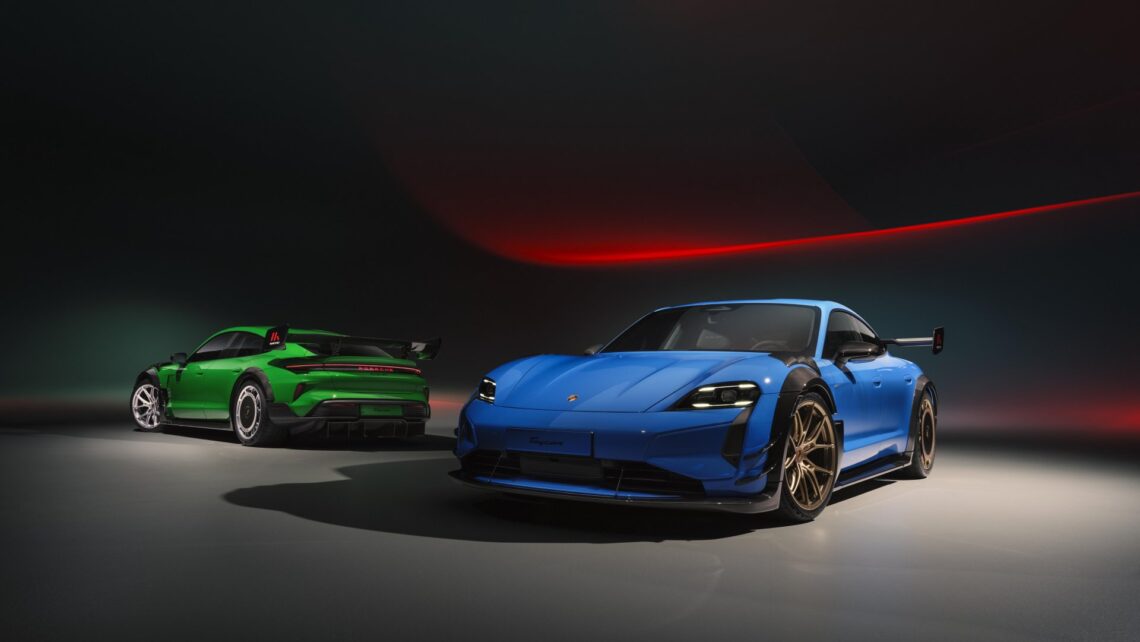
For the last several years, China was Porsche’s crown jewel market. The Taycan enjoyed an unbothered run as the default choice for affluent tech executives and cosmopolitan buyers looking for a badge with sports car pedigree. However, Porsche’s strategy relies on volume-driven premium luxury. As domestic Chinese hyper-EVs like the Yangwang U9 and Lotus Emeya offer astonishing tech and mind-bending performance specs at a fraction of the cost, Porsche’s volume models have faced fierce margin compression and softening demand.
Ferrari operates on a completely different economic plane. By allocating a microscopic 88 units of the Luce to China, Maranello bypassed the hyper-competitive mainstream EV bloodbath entirely.

Furthermore, the Luce benefits from a unique structural loophole in China: the displacement tax. Traditional V12 or V8 imports face heavy penalties based on engine size, but the all-electric Luce avoids these levies entirely, allowing Ferrari to offer the car with an unexpected 7% relative discount compared to European pricing.
Maranello isn’t chasing the mass-premium EV buyer. They are capitalizing on absolute brand equity, targeting a brand-new segment of younger, eco-conscious ultra-wealthy consumers who value unpretentious technical excellence over old-school engine rumble.
Under the Skin: The Tech and “Drive Feel”
While traditionalists feared an electric Ferrari would feel like a silent, sterile appliance, early technical breakdowns and preview impressions reveal that Maranello threw its entire motorsport engineering playbook at the Luce.
FERRARI LUCE ARCHITECTURE
[ Front Axle: Dual Motors | 210 kW | 30k Max RPM ]
[ Floor-Integrated 122-kWh NMC Battery Pack ]
[ Rear Axle: Dual Motors | 620 kW | 25.5k Max RPM ]
1. A New Way to “Shift”
The Luce features a novel Torque Shift Engagement system. The solid-aluminum paddles behind the steering wheel don’t simulate artificial gear ratios. Instead, clicking the right paddle progressively steps up the available power delivery in stages, while the left paddle modulates the aggressive regenerative braking. It gives the driver a tactile, mechanical variable to manage mid-corner, mimicking the cognitive engagement of a dual-clutch transmission without the gimmicks.
2. The Acoustic “Guitar” Solution
Instead of pumping fake space-age hums or synthetic V8 exhaust notes through the speakers, Ferrari mounted a high-precision accelerometer directly to the rear e-axle subframe. It captures the actual, real-time physical vibrations of the mechanical components and runs them through a specialized amplifier—highly similar to an electric guitar pickup. The result is a mechanical, authentic, and completely unique EV soundtrack that scales naturally with speed and load, audible both inside and outside the cabin.
3. Defying Physics via Chassis Control
Weighing in at 2,260 kg (4,982 lbs), the Luce is undeniably the heaviest production road car to ever leave Maranello. However, by dropping the 122-kWh battery pack completely flat into the floor, Ferrari lowered the center of gravity by a massive 95 mm compared to the Purosangue SUV. Combined with a four-motor setup delivering a combined 1,035 horsepower (1,050 cv) and active suspension architecture derived from the F80 hypercar, engineers claim the car’s yaw management makes it feel roughly 400 kg lighter than it is when diving into sharp transitions.
It is Ferrari’s first five-seater, riding on massive 23-inch front and 24-inch rear wheels, but the inclusion of active rear-wheel steering ensures it preserves the razor-sharp front-end bite the brand is famous for. The sellout in China proves that despite a changing powertrain landscape, the power of the Prancing Horse remains absolute when backed by uncompromising engineering.
Ferrari’s First EV: The LUCE | Exclusive First Look Review 2026
This video offers a comprehensive walkaround and exclusive first look at the design details, cabin architecture, and tactile switchgear of Ferrari’s groundbreaking new EV.