
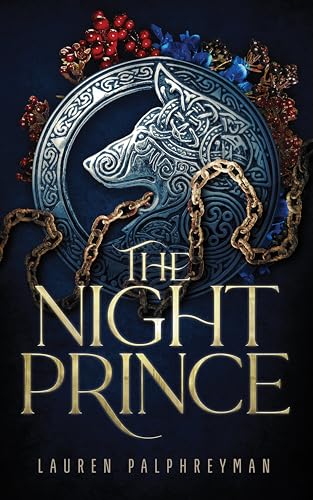
The “romantasy” boom has officially claimed its next major prestige television adaptation. STARZ has acquired the rights to and put into active development Lauren Palphreyman’s international bestselling trilogy *The Wolf King*, *The Night Prince*, and *The Wolf Queen*. With *Vida* creator Tanya Saracho attached as showrunner and executive producer, fans are preparing to see the brutal, high-stakes conflict between the realms of men and wolves brought to life with premium cable production values.
For readers tracking the development, the series promises a heavy blend of political warfare and complex character dynamics.
The Border War and Blake’s Dark Entrance

The overarching conflict of *The Wolf King* rests on a bloody geopolitical divide: a fragile, deeply corrupt human kingdom to the south, and the rugged, wild, and unpredictable territory of the werewolf clans to the north. In the human realm, Princess Aurora is treated as little more than a decorative political pawn, destined for a forced marriage she desperately wants to escape. The humans hold absolute animosity toward the wolves, even capturing them for underground sport.
While the first installment heavily features Callum, the alpha king who abducts Aurora believing she is the key to winning the war, it is the introduction of **Blake** in the sequel, *The Night Prince*, that completely upends the narrative chess board. Blake enters the fray as a highly feared, deeply calculating alpha an enemy to Callum who becomes inextricably bound to Aurora through a dark, life-linked connection.

For fans watching the adaptation develop, Blake’s presence instantly injects a classic, high-friction dynamic reminiscent of the iconic **Jacob and Edward “Team” vibes**. He isn’t just a rival for power; he represents an entirely different, shadowy allure that forces Aurora to question her loyalties and her heart, making “Team Blake” a highly anticipated faction for TV audiences.
Casting the Ranks: International Vibe & Human Fragility
Because the source material leans heavily into a sweeping, atmospheric fantasy world—often described by readers as “werewolves meets *Outlander*”—industry expectations point toward STARZ utilizing an international casting call.
• Callum: Primal, commanding alpha alpha king with a distinct, rugged Irish cadence.
• Blake: Enigmatic, brooding rival alpha wrapped in deep northern secrets.
• Aurora: Starts as a sheltered human princess, evolving into a resilient sovereign.
According to the fan community, the commanding alpha **Callum** carries a distinctly rugged, old-world Irish vibe in his dialogue and presentation. To capture that authentic, untamed alpha cadence, casting directors are highly likely to scout talent across the UK and Ireland.
In sharp contrast, **Aurora** represents the human anchor of the series. Her character arc requires an actor who can portray the immense fragility of a sheltered princess trapped in a brutal, animalistic world, before gradually uncovering her own “wild strength” to navigate a lethal love triangle and a bloodthirsty war.

The Visual Strategy: CGI vs. Practical Wild Footage
One of the largest questions looming over any werewolf adaptation on a premium network like STARZ is how the transformations and beast forms will be handled.
[ Visual Effects Breakdown ]
• Hybrid Approach: Blending practical filmmaking with targeted digital enhancement.
• Practical Elements: Real trained wolves and wilderness stock footage for wide, natural b-roll.
• CGI Integration: In-house and contracted VFX teams for high-intensity action and transformation sequences.
While STARZ has not yet finalized its visual effects studio contracts, the network’s production history with series like *Outlander* suggests a hybrid approach. Rather than relying entirely on heavy, fully-digital CGI environments that can occasionally look artificial, the production is expected to leverage a mix of practical, location-based cinematography and high-fidelity VFX.
Using practical “wolf in the wild” stock footage and trained animal handlers for wide-angle, atmospheric shots establishes a gritty, grounded realism. This can then be seamlessly blended with high-end CGI tracking for the intricate, close-up transformation sequences and supernatural combat scenes, avoiding the common pitfalls of over-digitized creature design.
The World Blueprint: Old World or Modern Day?
For viewers wondering if this is an urban fantasy set in modern skyscrapers or an epic historical saga, *The Wolf King* firmly plants its flags in **Old World fantasy**.
The narrative rejects modern technology, cell phones, or contemporary cities. Instead, it relies heavily on traditional, high-fantasy architectural and social structures:
The South:
Dominated by stone castles, royal courts, arranged marriages, and monarchical politics.
The North:
Defined by dense, primeval forests, rugged borders, tribal pack laws, and ancient magical bonds.
By embracing this historical, old-world atmosphere, Tanya Saracho’s adaptation has the opportunity to deliver a dark, moody, and highly texture-driven romantasy landscape that feels untamed, dangerous, and deeply romantic.


Good to know.