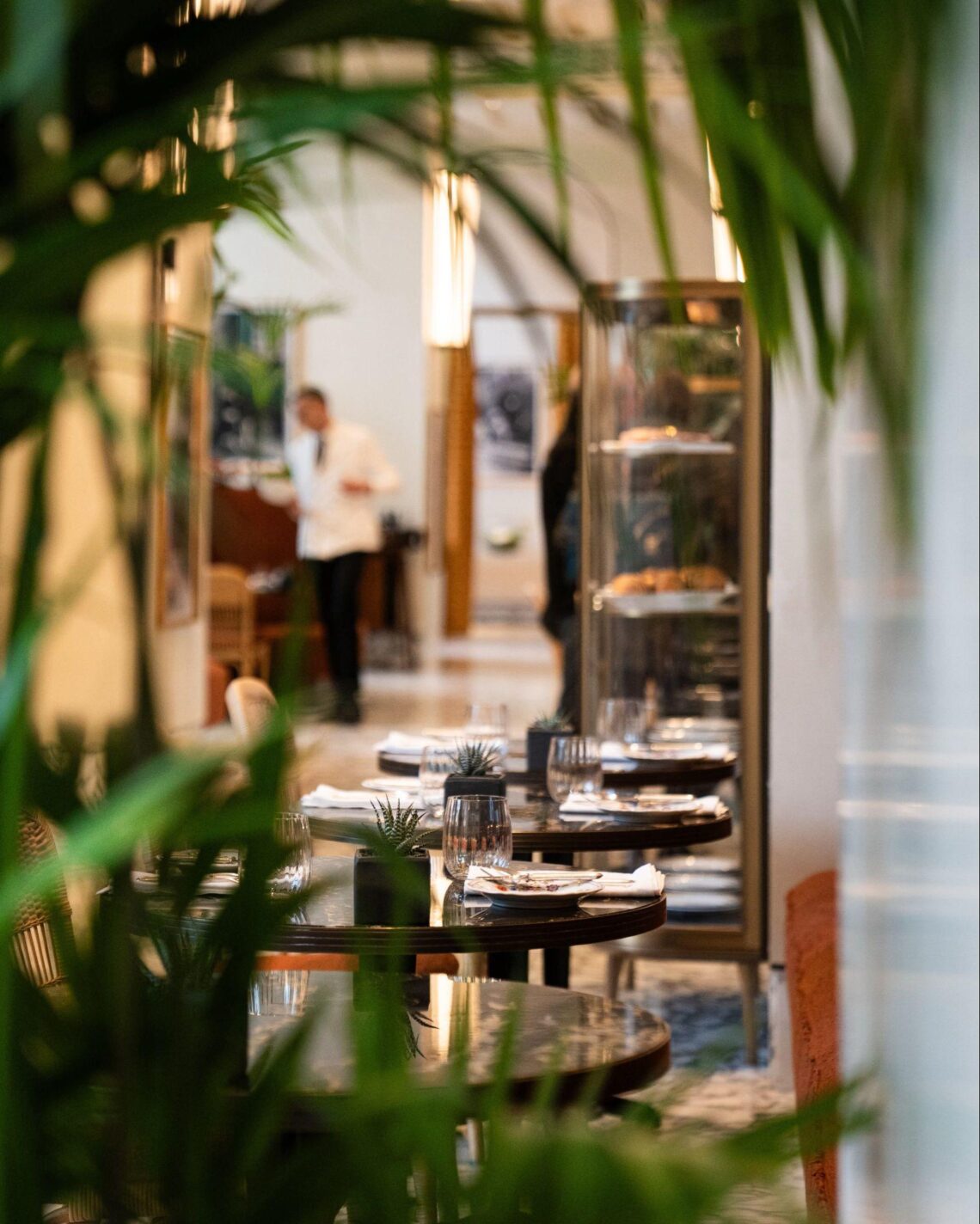
The intersection of haute cuisine and spatial design has evolved past mere aesthetics; it is now a discipline of narrative architecture. This philosophy is nowhere more evident than within the newly minted Bulgari Hotel Roma. On the fifth floor of this architectural monument, Il Ristorante – Niko Romito operates as a sensory bridge between the city’s profound historical landscape and a highly refined contemporary design lexicon. While the main dining room commands attention with its rich mahogany walls and expansive views over the Mausoleum of Augustus, the venue’s Private Dining Room serves as the true conceptual anchor of the property. The design framework of this intimate space subtly deconstructs the visual heritage of Rome’s Renaissance palazzi, creating a continuous conversation between the interior textiles, the exterior architecture, and the plate.

1. The Textual Architecture of Rubelli
At the heart of the Private Dining Room’s transformation is an exclusive partnership with Rubelli, the legendary Venetian textile house renowned for its deep historical archives and artisanal weaving techniques. For this specific enclave, Rubelli engineered a bespoke fabric that functions as a structural narrative rather than a simple wall covering. [ The Visual Continuum ]
│
┌─────────────────────┴─────────────────────┐
▼ ▼
[ Inside the Enclave ] [ On the Loggia ]
Bespoke silk-blend Rubelli textile Rustic, hand-pressed terracotta
depicting the twelve zodiac signs. formelle panels on the ceiling.
The silk-blend weave depicts the twelve signs of the zodiac, a direct nod to the celestial iconography that dominated the frescoed ceilings and hidden studies of Renaissance nobility. By wrapping the room in this customized cosmological motif, the interior architects the acclaimed Italian studio ACPV ARCHITECTS Antonio Citterio Patricia Viel—have successfully recreated the intimate atmosphere of a classical Roman studiolo. 2. The Interior and Exterior EchoTrue to the exacting standards of luxury Italian design, the room’s layout rejects isolated decoration in favor of absolute spatial symmetry. The zodiac pattern chosen by Rubelli was directly dictated by the structural details of the building’s exterior terrace loggia.• Interior Medium: Refined, luminous silk-blend tapestry
- Exterior Medium: Earthy, tactile raw terracotta panels (formelle)
- Shared Motif: The twelve astrological sequences of the zodiac
- Spatial Result: A seamless material transition from indoor luxury to outdoor heritage
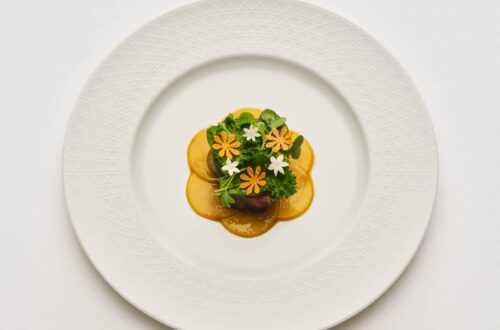
When dining inside, the woven zodiac signs visually connect to the rustic, hand-pressed terracotta panels (formelle) that adorn the ceiling of the external loggia directly overlooking the terrace. This deliberate material juxtaposition—translating the exact same astronomical sequence from raw, earthy baked clay on the outside to shimmering, sophisticated silk on the inside—embodies a signature design philosophy. It prioritizes tactile depth, raw engineering of space, and authentic heritage over loud, pretentious ornamentation.3. Niko Romito’s Gastronomic AlignmentThis architectural dialogue sets the stage for the culinary philosophy of three-Michelin-starred chef Niko Romito. Romito’s menu is famous for its rigorous reductionism, stripping away traditional excess to reveal the absolute essence, purity, and lightness of classic Italian ingredients.- The Conceptual Parallel: Just as ACPV and Rubelli distilled centuries of heavy Roman palace architecture into a clean, modern textile pattern, Romito strips away the heavy fats and complex masks of historical Italian cooking to present a hyper-focused, structurally perfect plate. [ Architectural Synthesis: The Private Dining Room ] • The Building: 1930s Rationalist Modernism (Piazza Augusto Imperatore)
• The Interior: Renaissance Palazzo Reimagined (Bespoke Rubelli Silk)
• The Culinary: Contemporary Italian Gastronomy (Niko Romito Canon)
In the Private Dining Room at the Bulgari Hotel Roma, the plate and the room operate on the exact same wavelength. Surrounded by the celestial order of Rubelli’s zodiac, guests are treated to an experience where every element—from the weave of the walls to the clarity of the broth—is a calculated, elegant tribute to the enduring spirit of Italian craftsmanship.