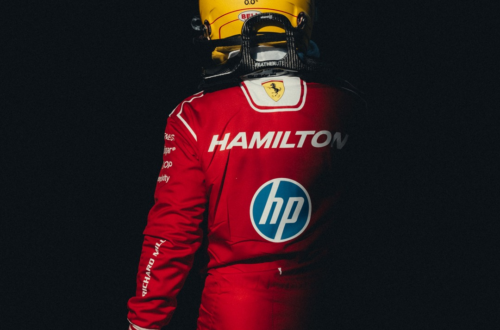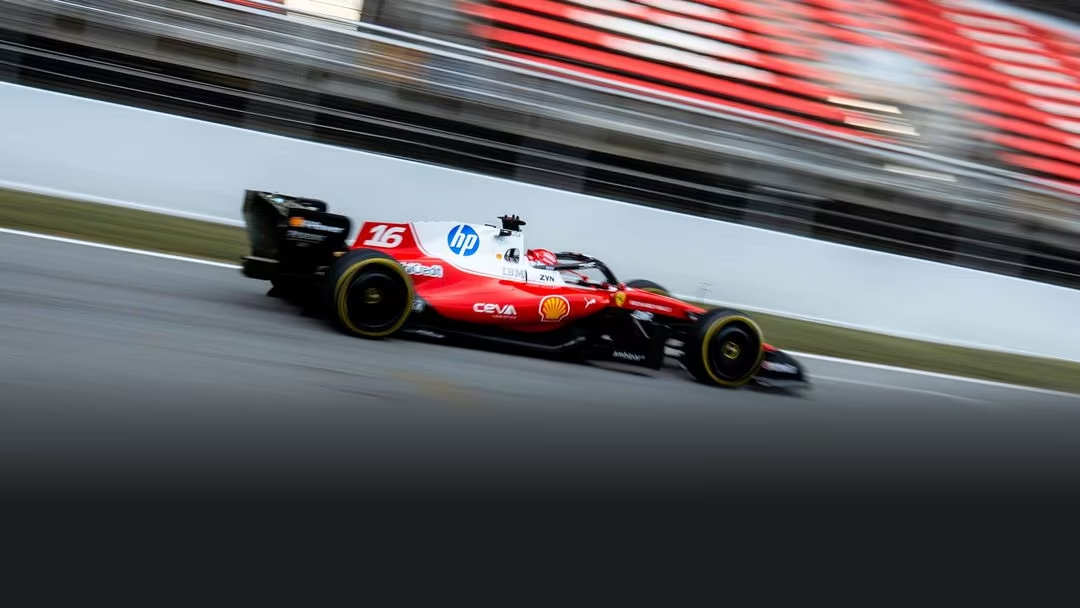
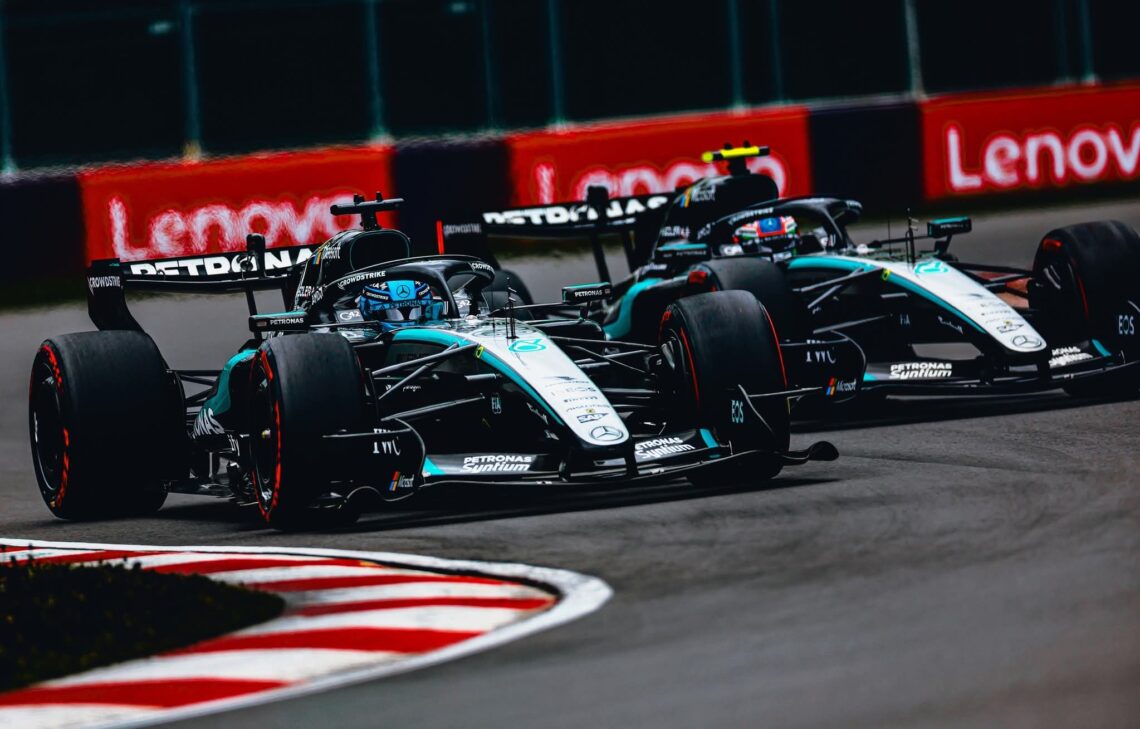
The dust has barely settled on the high-drama Barcelona-Catalunya Grand Prix, but the shockwaves from Toto Wolff’s post-race Sky Sports interview are still vibrating through the paddock.
Following a race that saw championship leader Kimi Antonelli suffer a catastrophic late-race power unit failure and an aggressive mid-race battle between his two drivers, Wolff looked visibly exasperated. He targeted two distinct areas: the mechanical frailty costing Mercedes massive chunks of points, and the on-track wheel-to-wheel warfare between George Russell and Antonelli that he claims cost them a shot at defeating Ferrari’s Lewis Hamilton.

While Wolff is half-right, his critique of his drivers misses the very essence of world championship racing.
The Part Wolff Got Right: The Fragility Machine
First, let’s give credit where it’s due: Wolff is entirely correct to be sounding the alarm bells over reliability. Mercedes may have engineered a remarkably fast package for the 2026 regulations, but speed is completely irrelevant if the car is a ticking time bomb.
[Montreal: Russell Leads ➔ Engine Failure DNF] ➔ [Barcelona: Antonelli P2 ➔ Battery/PU Failure DNF]
Losing “fat points” in consecutive races is the easiest way to bleed out a championship lead. We saw George Russell’s power unit surrender while leading in Montreal, and just two races later in Spain, Antonelli’s engine died with a mere three laps to go. To make matters worse, Mercedes’ customer teams are suffering from the exact same mechanical vulnerability.

You cannot win a Drivers’ or Constructors’ World Championship with a car that leaves 25-point hauls smoking on the tarmac. On this point, Toto’s anger is completely justified—Mercedes High Performance Powertrains (HPP) has serious homework to do.
The Infighting Myth: Why Toto Has It Wrong
Where the narrative falls apart is Wolff’s frustration with his drivers racing each other.
During his Sky Sports briefing, Wolff lamented that Russell and Antonelli lost four to six critical seconds to Lewis Hamilton while aggressively fighting for position at half-distance. He dropped hints that team orders or better management might be necessary in the future to protect the team game.
With all due respect to Toto, internal friction isn’t the problem; it’s the byproduct of a championship-grade environment.
Formula 1 is a brutal, multi-layered arena. It is a literal fight to get ahead on the asphalt, in the pit lane, and inside the psychological dynamics of the team itself. To demand that two elite drivers back off when they have a pace differential is fundamentally counter-intuitive to the sport’s DNA.
The Grand Prix Reality:
- Drivers' Championship = Pure Egotism & Self-Preservation
- Constructors' Championship = Team Execution & Bulletproof Engineering
Scraping for Points Everywhere
A true champion-grade car cannot be a fragile diva that needs a perfectly sanitized track environment and rigid team orders to succeed. Real racing happens everywhere: deep in the mid-pack traffic, defending on the front line, or clawing forward from the back of the grid.
Russell and Antonelli did exactly what they are paid to do—they raced hard, fair, and right on the limit. If a team wants to lift both world titles, its drivers must have the freedom to scrap for every single point, whether they are fighting a rival manufacturer or the sister car next to them in the garage.
If Mercedes wants to stop losing races to a resurgent Ferrari, the solution isn’t to leash their drivers or muzzle their competitive fire. The solution is simple: give them a car that actually finishes the race.