There is a precise moment in the lifecycle of a baking loaf where chemistry borders on magic. It is the moment when the raw, yielding dough first encounters a hostile thermal environment, and the starches and sugars on the surface begin to melt, fuse, and form their protective armor.

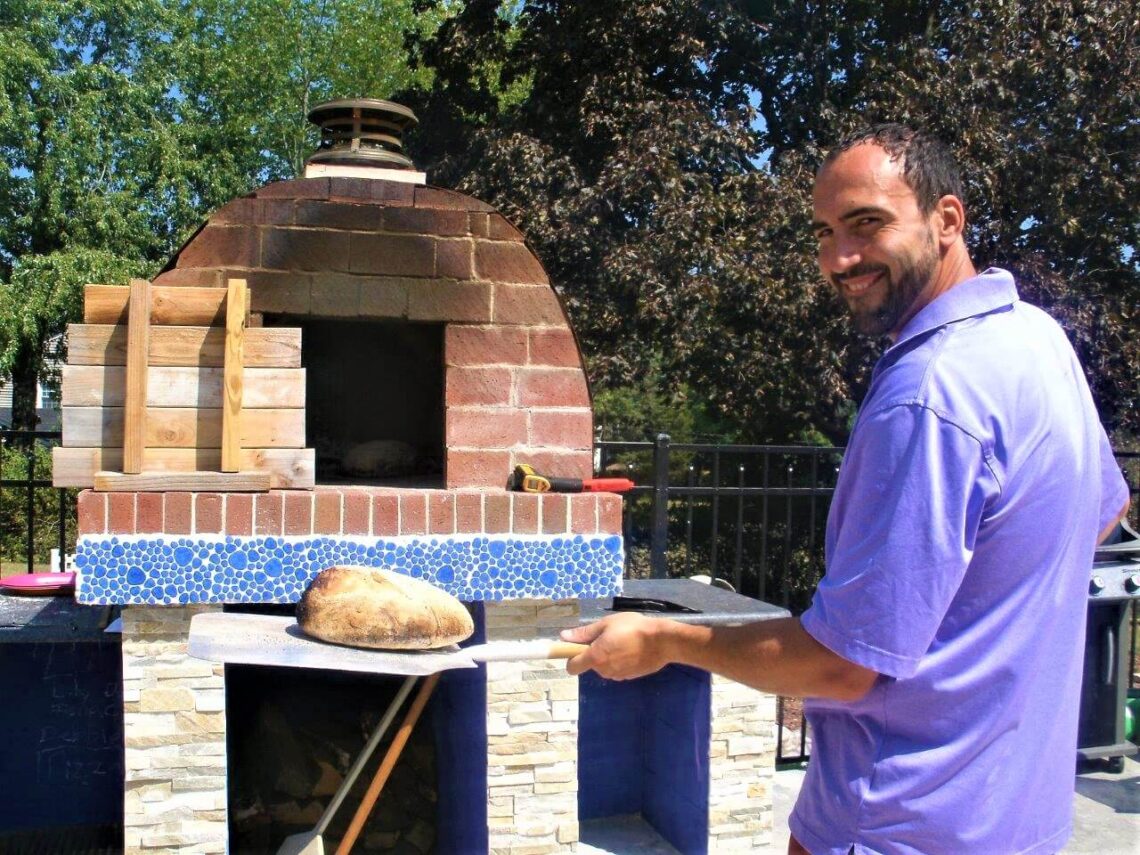
In a modern, sterile indoor kitchen, this process is clinical—a mathematical dance of calibrated heating elements and digital timers. But for anyone who grew up watching bread rise inside the belly of an old, wood-fired steel barrel in the backyard, the experience is indelible.
Baking bread in a steel drum over a live wood fire isn’t just a rustic cooking method; it is a completely distinct thermodynamic and chemical event that a kitchen oven cannot replicate.
The Physics of the Barrel: Radiant Aggression
To understand why barrel-baked bread develops its singular character, you have to look at how heat moves.
A standard indoor oven relies primarily on convection—moving heated air around a heavily insulated box. It is a slow, ambient soak.
An old steel barrel, however, functions as an intense radiant heat engine.
[ Live Wood Fire ] ──► Superheats Steel Wall ──► [ Aggressive Infrared Radiation ] ──► Instant Crust Fusion
When hardwood burns beneath or inside the drum, the thin steel walls absorb the energy and instantly begin vibrating with high-intensity infrared radiation. The heat hitting the dough isn’t just hot air; it is an aggressive, direct wave of thermal energy.
The moment the pan slides onto the metal shelf, this radiant energy causes an immediate, violent expansion of the gas bubbles trapped within the dough—a phenomenon bakers call oven spring. The loaf expands to its absolute maximum volume in a fraction of the time it would take indoors.
The Formation of the Armor: Melting Sugar and Gelatinized Starch
The distinct, shatteringly crisp, deep-amber crust of backyard bread—the “armor”—is a product of extreme surface transformation.

As the intense infrared heat strikes the wet dough, the moisture on the very outside of the loaf flashes into steam. This rapid evaporation forces the natural sugars in the flour, along with any added sugar, to liquefy and migrate outward.
At the same exact time, the trapped steam inside the closed barrel causes the surface starches to gelatinize, turning into a glossy, sticky coating. As the baking continues, this mixture of melted sugars and gelatinized starches undergoes a accelerated combination of caramelization and the Maillard reaction (the browning of amino acids).
+———————————————————————–+
| THE CRUST EVOLUTION MATRIX |
+———————————————————————–+
| |
| [ Raw Surface ] ──► Instant High Radiant Heat ──► Moisture Flash |
| │ |
| ▼ |
| [ The Fusion ] ──► Sugars Melt + Starches Gelatinize ─────────────────┤
| │ |
| ▼ |
| [ The Armor ] ──► Rapid Caramelization ──► Brittle, Glossy Shell |
| |
+———————————————————————–+
In a kitchen oven, this process happens gradually, yielding a uniform, sometimes thick and chewy crust. But the raw, spike-heavy heat of the steel barrel fuses these surface elements almost instantly into a thin, brittle, glass-like shell. It is a literal suit of armor that locks the remaining moisture deep inside the crumb of the loaf.
The Live Atmosphere: Wood Smoke as an Ingredient
The final, irreplaceable variable is the atmosphere itself. An indoor electric oven is a sterile vacuum; it contributes nothing to the flavor profile but heat. A wood-fired barrel is a living, breathing ecosystem.
As the wood combusts, it breaks down lignins and celluloses, releasing volatile organic compounds, trace oils, and a clean, lightweight moisture into the air. This smoke-laden humidity swirls around the barrel, settling onto the sticky, gelatinizing surface of the dough before the crust completely hardens.
This is where the signature nostalgia of the barrel lives. The smoke doesn’t just coat the outside of the bread; it chemically bonds with the melting surface sugars. When the crust finally solidifies into its dark golden armor, it traps those complex, smoky, phenols directly within the glass-like matrix of the crust.
A Grounded Mastery
Baking in a steel drum requires a level of intuition that no digital screen can teach. You cannot set a barrel to exactly 400°F. You have to read the color of the smoke, feel the heat radiating off the metal skin, and listen to the hiss of the wood sap cracking underneath.