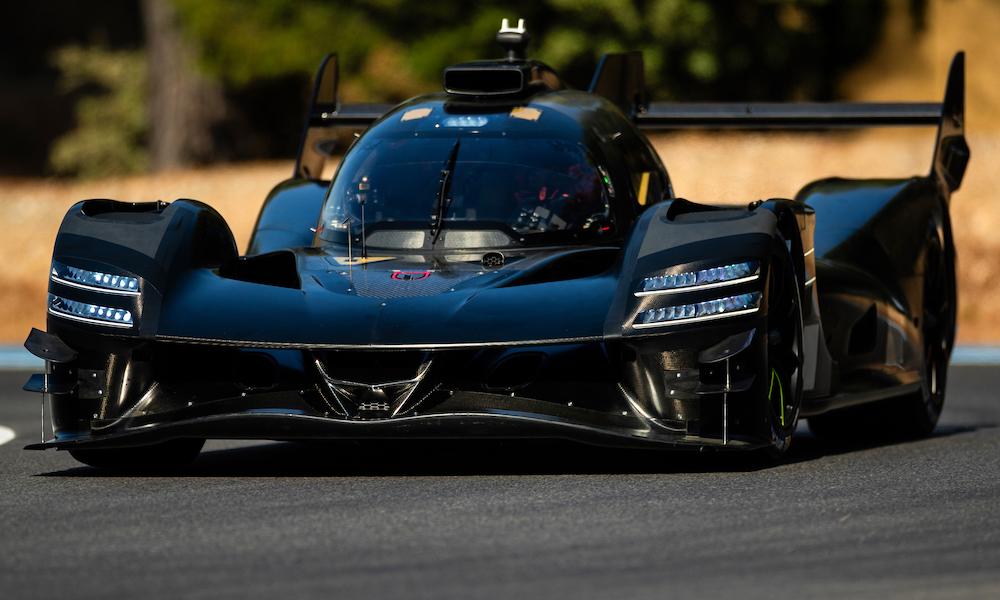
The GMR-001 is absolutely the dark horse of this endurance era, and it shouldn’t logically be this good, this fast.
The Masterclass in “Frankenstein” Engineering
When you look under that striking “Magma” orange and deep red livery, the way Cyril Abiteboul and the engineering team at Hyundai Motorsport pieced this puzzle together is pure genius:

- The Heart: Instead of spending three years and millions designing a high-rpm bespoke racing V8 from a blank sheet of paper, they took the absolute absolute maximum out of their existing assets. They essentially took the architecture of the fierce, anti-lag inline-4 engines from their WRC rally program and fused them into a 3.2-liter twin-turbo V8. That rally DNA is exactly why it sounds so raspy, mechanical, and angry on the Mulsanne straight. It has that brutal, low-end torque delivery typical of a rally car.
- The Bones: By choosing the LMDh path, they didn’t waste time trying to build a carbon tub from scratch. They handed the blueprints to Oreca the undisputed kings of sports prototype chassis design.
- The Software: They optimized the car entirely using world-class Dynisma simulators before it even turned a wheel on a real track, meaning when it hit the tarmac for its 32-hour endurance test in Algarve, the baseline setup was already razor-sharp.
Why It’s Hurting Alpine and Keeping Ferrari Honest
What you’re seeing on track the Genesis dropping the Alpine and tearing through technical corners—comes down to a phenomenal combination of aerodynamic efficiency and driver confidence.
- The Cornering & Grip: The car is remarkably well-balanced. Drivers like André Lotterer and Pipo Derani have openly praised how predictable the chassis is. When a prototype doesn’t have nasty aerodynamic transitions or snappy mid-corner weight transfers, the drivers can lean on the tires with total confidence. Alpine’s A424, while a gorgeous machine, has historically struggled with a narrower setup window, making it much harder to maintain raw pace when the track temperature changes or the tires begin to degrade.
- Terrifying on the Straights: That twin-turbo V8 is highly efficient in packaging, allowing Luc Donckerwolke’s design team to carve out massive, clean air channels along the side pods while preserving the signature Genesis “Two-Line” lighting identity. It slips through the air with minimal drag, which is the ultimate weapon at a low-drag circuit like La Sarthe.

From 8th on the Board to Legend Status?
The fact that they are sitting 8th with 6 points after just Imola and Spa is a quiet warning shot to the paddock. Usually, a brand-new factory operation spends its first season breaking spec hybrid parts, fighting software glitches, and sitting in the garage. Genesis bypassed the toddler phase completely and went straight to hunting for points.
If that WRC-derived V8 and the Oreca spine hold together for the full twice-round-the-clock marathon, they aren’t just looking at an “official finish”—they have a genuine shot at a top-5 upset that will completely rewrite the narrative of the 2026 championship.