There is a distinct, unpretentious form of luxury that doesn’t need to shout to dominate a room or an ocean. It is a philosophy where masterly engineering and pristine raw materials speak for themselves, delivering a sensory experience centered on performance, comfort, and tactile perfection.
To understand this grounded approach to modern luxury, one must look at two of Italy’s greatest structural visionaries: Carlo Riva and ZEGNA. While one conquered the water and the other redefined the modern wardrobe, both built their legends on the exact same premise: true sophistication is an engineering reality, not a marketing gimmick.
The Man: Carlo Riva’s Obsession with Structural Harmony
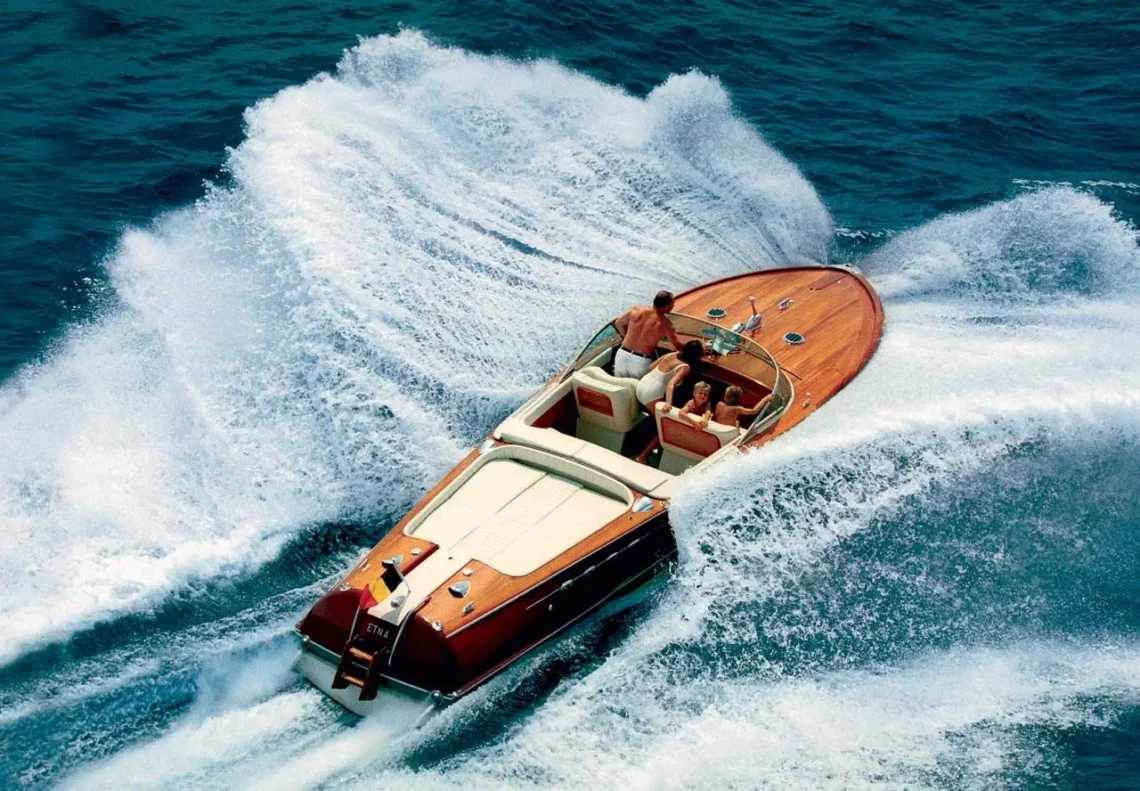
Carlo Riva (1922–2017) did not view boats as mere vessels; he viewed them as mechanical sculpture. Taking over his family’s historic yard on Lake Iseo in 1950, he systematically dismantled the traditional, slow-moving artisan process and replaced it with a maniacally precise series-production system that rivaled the finest automotive houses.

Carlo was an engineer driven by an obsession with structural integrity and functional beauty. He personally selected exotic wood essences Kaya Ivorensis, Sipo, and premium African Mahogany—storing them in color-coded bays for years to dry perfectly. To battle the relentless punishment of salt water and wave impact, he pioneered the use of specialized marine lamellar plywood, a technological breakthrough that permanently altered the durability of wooden watercraft.
Every screw, dashboard instrument, and chrome fitting on a Riva was custom-designed by Carlo himself. His focus was always on achieving a low center of gravity and flawless weight distribution, ensuring that his boats didn’t just look like the Dolce Vita incarnate they handled open water with unyielding stability.
The Fabric: ZEGNA and the Blueprint of Fluid Professionalism
What Carlo Riva achieved with mahogany and chrome, Ermenegildo Zegna achieved with raw fiber. Founded in 1910 in the alpine hills of Trivero, the house of ZEGNA revolutionized men’s tailoring by controlling its entire supply chain from the sheep farms of Australia to the historic wool mill in Oasi Zegna.

Under the modern artistic direction of Alessandro Sartori, ZEGNA has pioneered the concept of “fluid professionalism.” Moving away from the stiff, heavily structured canvas suits of the past, the brand focuses on relaxed silhouettes, luxury leisurewear, and unstructured overshirts that move naturally with the body.
For the warm season, ZEGNA emphasizes weightless, highly breathable textiles woven from precise blends of Oasi Cashmere, linen, and organic cotton. The aesthetic is completely unpretentious: there are no loud logos, just a deep, undeniable focus on the drape of the fabric and the sensory comfort of the wearer.
The synergy between the two heritages came alive for the Summer 2026 collection, where ZEGNA showcased its fluid tailoring against the backdrop of Lake Maggiore. The center of the campaign? The Zegna family’s personal, impeccably restored Riva runabout, proving that the relaxed summer essence of a fluid linen shirt matches perfectly with the timeless glide of Italian maritime engineering.
Beyond the Aquarama: The Rare and Collectible Masterpieces
While the twin-engine Aquarama remains the most famous silhouette of the jet-set era, true connoisseurs look to the incredibly rare, highly collectible variants and post-wooden anomalies that highlight Carlo Riva’s relentless drive for innovation.
1. The Super Tritone and Aquarama Special
Before the Aquarama, there was the Tritone the first twin-engine mahogany runabout built by the yard to handle open sea conditions. The Super Tritone variants are incredibly rare museum pieces today. Later, the evolution culminated in the Aquarama Special, featuring a distinct, sloping transom and an integrated swim platform step that refined the boat’s balance and aesthetic lines.
2. The Riva-Bertram Fiberglass Collaborations
In the late 1960s, Carlo foresaw that fiberglass was the future of high-performance boating. Rather than ignoring the shift, he directly faced the problem. He imported hulls from legendary American racer Dick Bertram and completely redesigned them with Italian proportions, mitigating the coldness of bare plastic with warm, exposed wood interior finishes.
- Riva 20 Bertram Bahia Mar: Only 75 units were produced, powered by a single Riva V8 engine.
- Riva 25 Bertram Sport Fisherman: A highly sought-after collector’s item with only 71 units built, featuring twin Riva V8-210 setups.
3. The Monte Carlo Offshorer (The Stepped-Hull Pioneer)
Perhaps the ultimate insider collectible is the Monte Carlo Offshorer. After selling the original Riva yard, Carlo stayed at the cutting edge of engineering by co-developing this brand alongside American raceboat designer Bob Hobbs and engine expert Cal Connell.

Built out of high-strength fiberglass by RAM (the maintenance and restoration division still owned by the Riva family), the Monte Carlo 30 Offshorer featured a revolutionary three-plane, two-step hull designed to bleed off hydrodynamic drag and cushion intense wave impact at high speeds.
To optimize performance, the twin Crusader 454 V8 engines were centerline-mounted in tandem with heavy-duty chain drives transferring torque to forward-mounted V-drives. This radical layout kept the boat’s center of gravity drastically lower than conventional side-by-side engine configurations, allowing the boat to slice through heavy chops at a steady 55 knots. With only around 400 built, it became the definitive Riviera high-speed tender even earning a starring role driven by James Bond in GoldenEye.
The Verdict
Carlo Riva and ZEGNA both represent the pinnacle of Italian craft because they treat luxury as a discipline of engineering. Whether it is the book-matched grain of a mahogany deck designed to withstand decades of salt spray, the weightless architecture of a stepped fiberglass hull, or the effortless drape of an Oasi cashmere overshirt, the goal remains identical: absolute performance wrapped in quiet, unpretentious sophistication.