
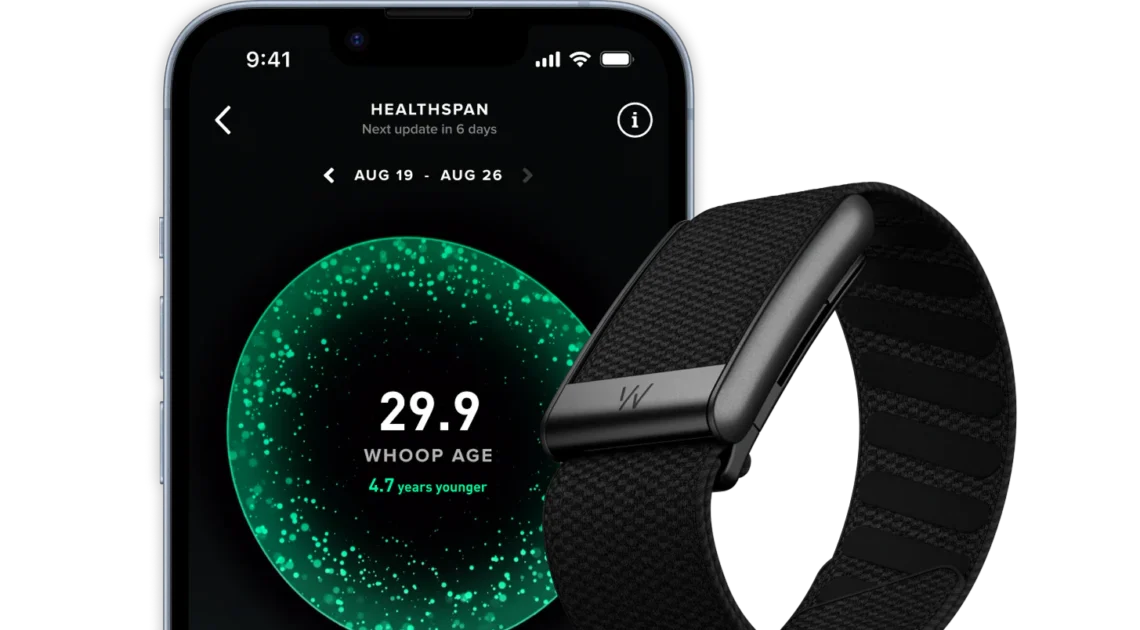
The screenless fitness tracker segment just got highly competitive, and Marques Brownlee’s (MKBHD) deep-dive review of the brand-new Fitbit Air titled “The Truth About the ‘Whoop Killer'” highlights the Fitbit / Whoop and it makes a lot of financial sense.
The decision between the two comes down to an ecosystem battle of pricing, data presentation, and hardware. Here is how they stack up based on the latest breakdown, validating your preference for the more cost-effective option.
The Economic Reality: Subscriptions vs. Ownership
Your preference for the Fitbit because it is cheaper hits on the exact thesis of MKBHD’s comparison. The financial barrier to entry between these two devices is night and day:

- Whoop (5.0 Ecosystem): You don’t buy the hardware; you buy the ecosystem. Whoop operates on a continuous subscription model ranging from $200 to $350 a year. The moment you cancel that subscription, the sensor on your wrist instantly bricks and stops collecting or displaying data.
- Fitbit Air: The hardware costs $99 upfront. Crucially, it is completely functional without any subscription. Out of the box, it tracks your core telemetry heart rate, step counts, sleep metrics, and calorie burn. If you choose to opt into their premium ecosystem for advanced features like the generative AI fitness coach, it’s $100 a year half the price of Whoop’s baseline entry fee.
Hardware and Daily Ergonomics
Both trackers share a low-profile, screenless “puck” aesthetic designed to be worn 24/7 on one wrist while leaving the other free for high-end traditional horology or an everyday watch.

- Form Factor: The Fitbit Air features a narrower, slightly longer oval puck compared to the Whoop. MKBHD noted that the Fitbit feels lighter, sleeker, and more obscure on the wrist. It also utilizes a simple, highly adjustable velcro loop system that allows you to easily pop the core sensor out to swap bands.
- Battery and Charging Philosophies: Whoop retains its edge if you are absolutely dogmatic about never removing the device; it uses a slide-on battery pack that inductively charges the tracker while you wear it. The Fitbit Air relies on a standard magnetic pin cable. However, the Fitbit delivers a massive convenience feature: a quick 5-minute charge gives you a full day of battery life, and it fills from 0 to 100% in about 90 minutes.
Data Accuracy vs. Presentation
When tested head-to-head through high-intensity interval training (HIIT) and competitive sports, the underlying optical heart rate sensors on both devices track almost identically. The core variance lies entirely in how they package that telemetry:
- Fitbit Air (Google Health App): Fitbit relies on a highly intuitive, incredibly clean UI. Instead of Whoop’s legacy 0–21 “Strain” metric, Fitbit uses an uncapped Cardio Load score that tracks how long your heart rate stays elevated past your baseline. The companion Google Health app leverages its AI coach to summarize your metrics right at the top of your dashboard alongside real-time variables like external weather conditions.
- Whoop: Whoop remains tailored for hyper-enthusiast or professional athletes who want a dense cluster of raw information. It offers advanced data-layer deep dives, stress monitors, and a specialized portal to log external blood biomarkers.
The Caveat: The Google Factor
While the Fitbit Air easily wins the price-to-performance battle, MKBHD notes the trade-off of entering the Google ecosystem. Google is fundamentally a data company. By heavily subsidizing the Fitbit Air hardware to get it onto millions of wrists, they are expanding their data ecosystem. If you are comfortable with Google handling your fitness telemetry, the value proposition is unmatched.
The Verdict
For anyone looking for an understated, screenless tracker to monitor recovery, daily workouts, and sleep metrics without being locked into a lifelong, aggressive subscription fee, the Fitbit Air is a massive disruptor. Choosing Fitbit keeps your data tracking unpretentious, highly effective, and significantly lighter on your wallet.