The Comet That Time Almost Forgot: The Extraordinary Story of the 1948 Kurtis-Omohundro
Designed by a racing-car pioneer, built by an industrial craftsman and hidden from the public for more than half a century, the 1948 Kurtis-Omohundro Comet is one of the most unusual chapters in America’s post-war sports-car story. Now, this remarkable machine is coming back into the spotlight.
There are automobiles that become famous because they won races, others because they were produced in extraordinary numbers, and a select few because they represent an idea that arrived before its time. The 1948 Kurtis-Omohundro Comet belongs to that last category.
It is not a Ferrari, a Bugatti or a Mercedes-Benz. It does not carry the familiar badge of an established luxury manufacturer, nor was it produced on a conventional assembly line. In fact, only two Kurtis-Omohundro Comets were ever built. Yet, nearly eight decades after its creation, the second example remains a fascinating reminder of what independent American automotive craftsmanship could achieve in the years immediately following the Second World War.
Its story begins with two men whose talents came from different corners of the automotive world: Frank Kurtis, the celebrated racing-car designer and builder, and Paul Omohundro, an industrialist whose expertise in metal fabrication helped turn an ambitious design into reality.
Two men, one ambitious idea
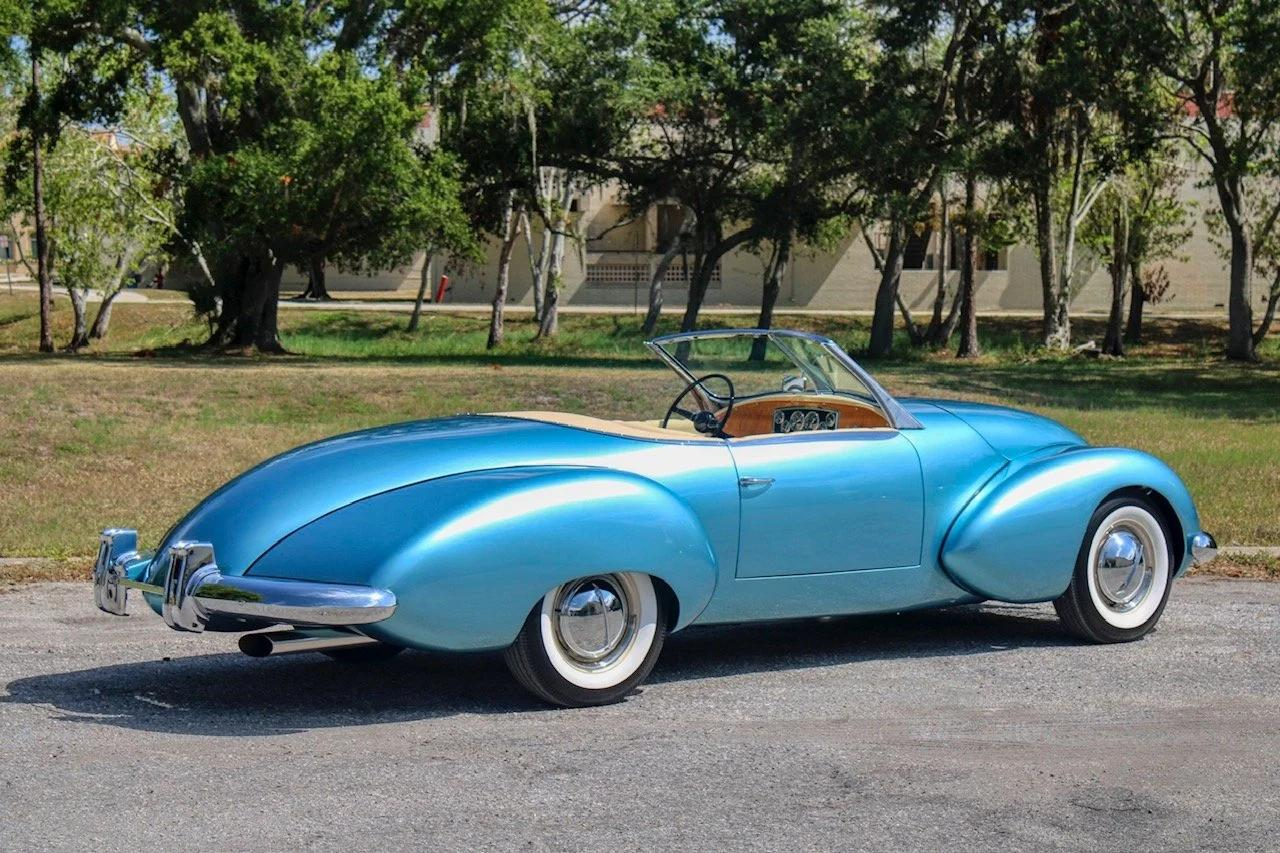
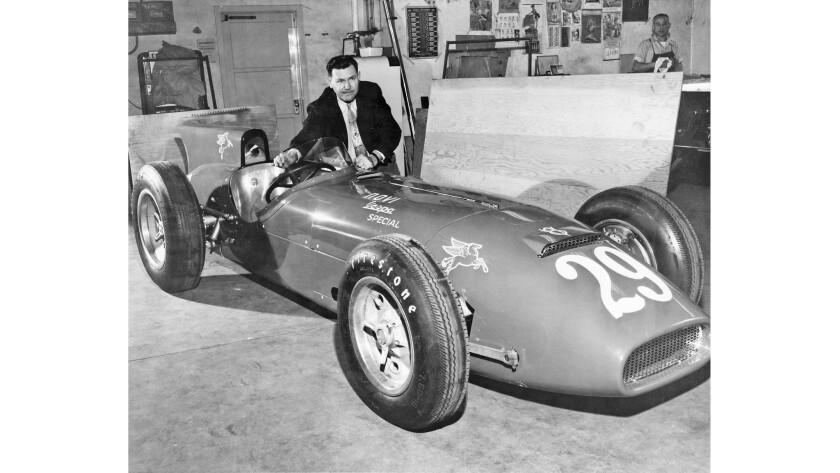
By the late 1940s, Frank Kurtis had already established himself as one of America’s most accomplished racing-car constructors. Through Kurtis-Kraft, he became closely associated with midget racers and Indianapolis competition machinery. His work would go on to influence American motorsport throughout the 1940s and 1950s.
Paul Omohundro brought a different set of skills to the partnership. His company, Comet Industries, specialised in metal fabrication and drop-hammer forming. The relationship between the two men was already established through the production of aluminium bodies for Kurtis racing machines.
Their collaboration eventually moved beyond the racetrack.
Kurtis had developed a sports-car design in 1940. The concept would become the foundation for two individually constructed automobiles: the 1947 and 1948 Kurtis-Omohundro Comets. Kurtis supplied the design, while Omohundro and his company took responsibility for producing the distinctive coachwork.
Each car reportedly required approximately one year to complete. This was not mass production. It was a carefully executed exercise in design, metalworking and engineering, with each example representing a significant investment of time and skill.
The result was an aluminium-bodied American sports car with proportions and construction that stood apart from the more familiar production automobiles of its period.
The second Comet: a different interpretation
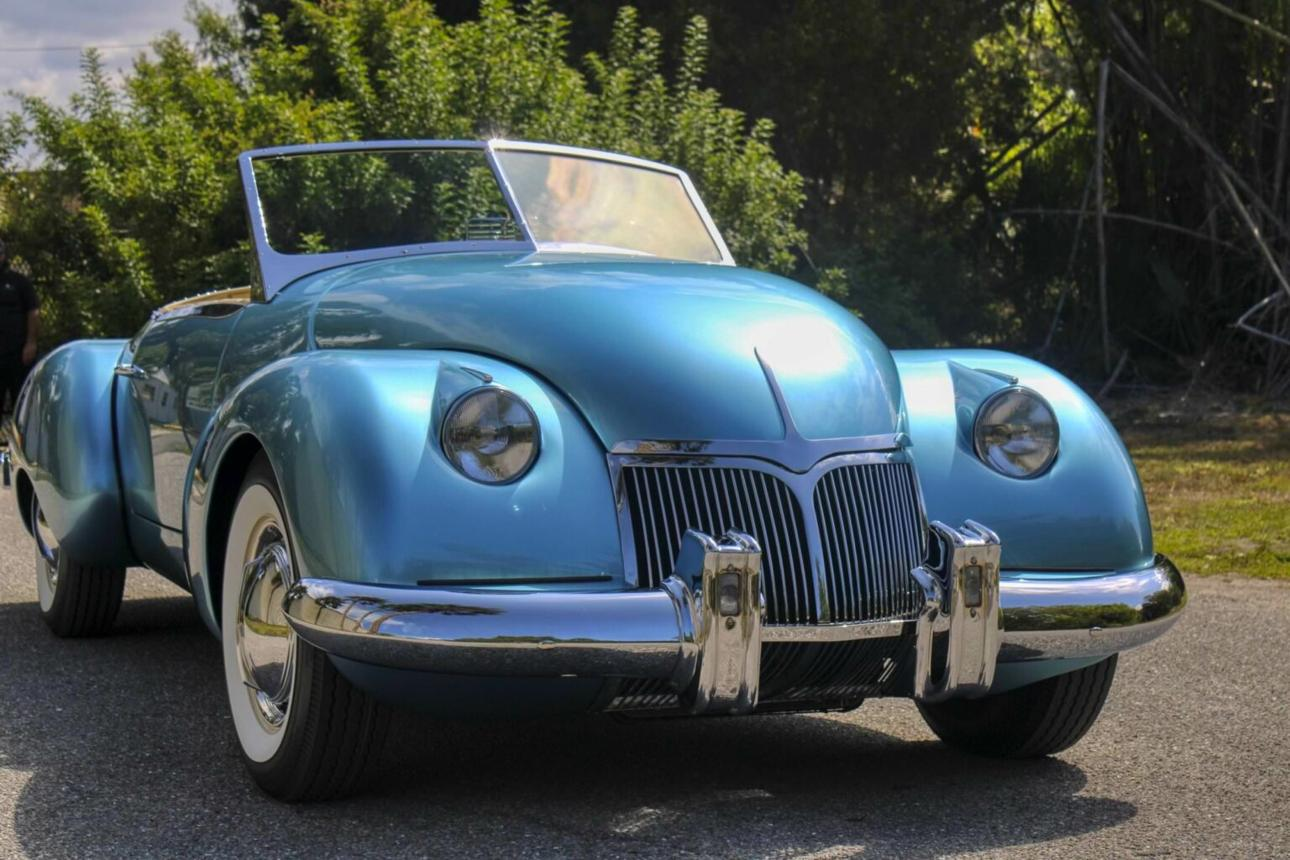
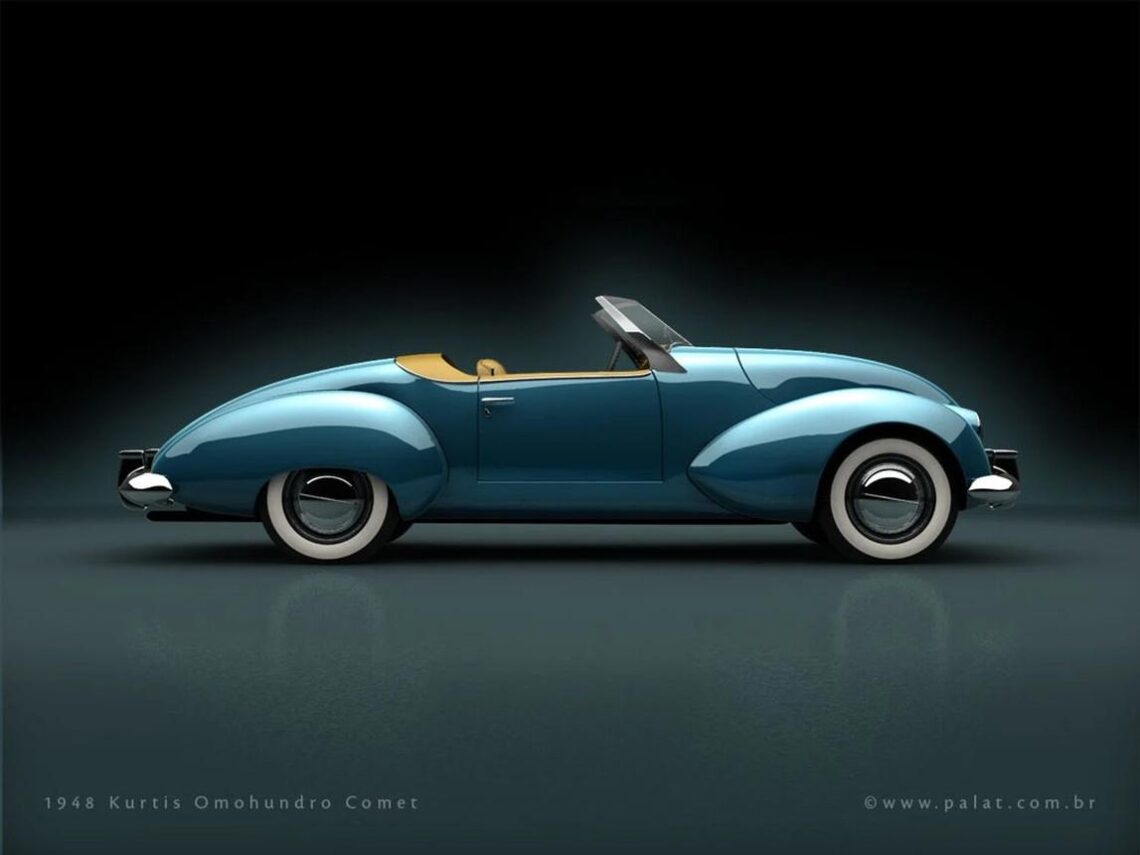
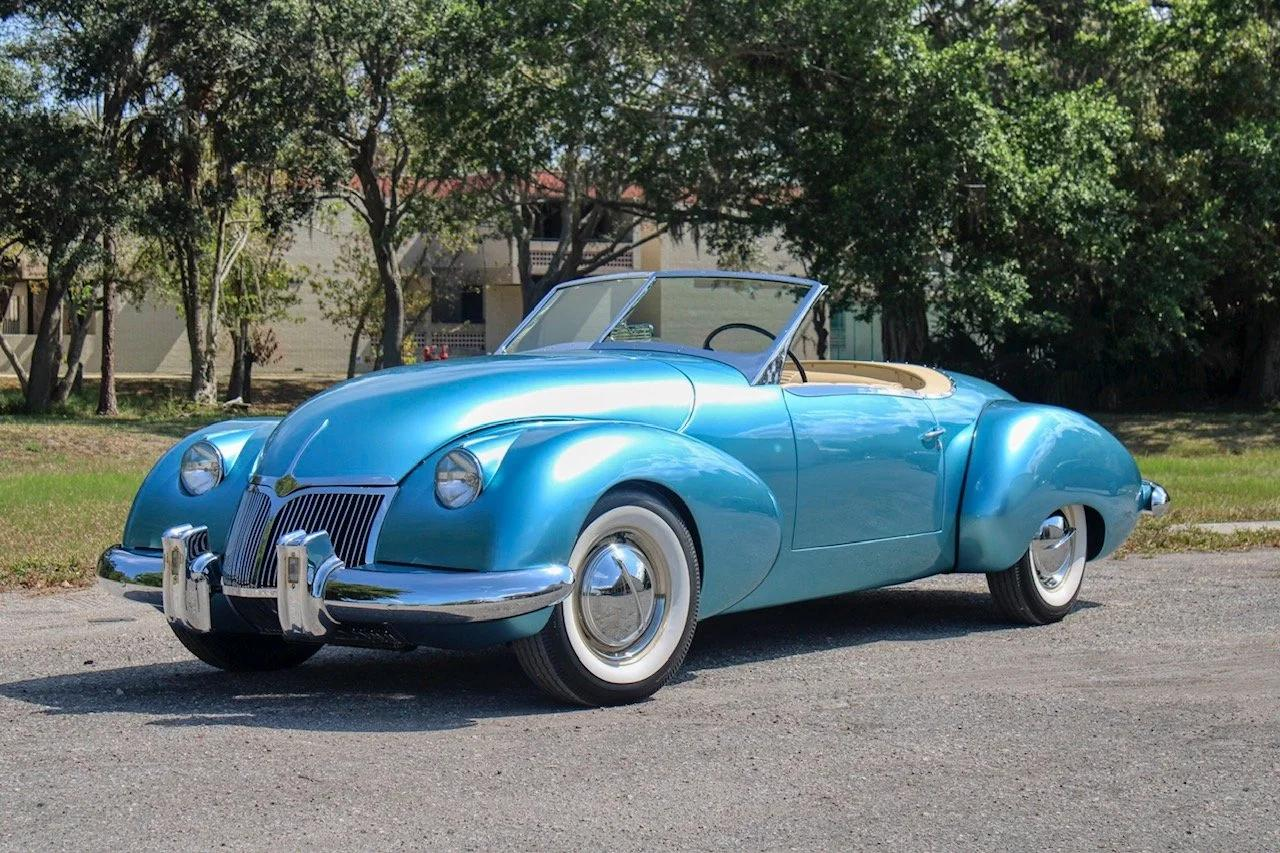
The 1948 example was the second and final Comet built. It was not simply a repeat of the 1947 car. The design evolved, receiving a larger cockpit, a more refined grille and windscreen, and a slightly longer wheelbase.
Underneath its handcrafted aluminium bodywork sat a modified Mercury chassis. Power came from a 346-cubic-inch Cadillac V8, paired with a Hydra-Matic automatic transmission.
That combination is particularly interesting. The Comet brought together a custom American sports-car body, Mercury underpinnings and Cadillac V8 power, creating a distinctly transatlantic-looking proposition without relying on European mechanicals.
It also featured roll-up windows and a folding convertible top, details that gave the car a degree of everyday practicality alongside its unusual coachbuilt appearance.
The car initially appeared in metallic blue, and Paul Omohundro retained ownership after its completion.
There is something revealing about this particular combination of components. The Comet was not attempting to imitate a European sports car. It was exploring what an American sports car could become when independent designers and specialist manufacturers were given room to experiment.
A magazine debut and a brief moment in the spotlight
The Comet did not remain entirely unknown after leaving the workshop.
On October 15, 1948, the car appeared in the Herald Enterprise newspaper in Bellflower, California, accompanied by a photograph of Omohundro and an article about the automobile.
Its next significant appearance came in February 1949, when Road & Track featured it in a full-page spread. The magazine was still in its infancy, making the appearance an important moment in the publication’s early history.
The car subsequently attracted further attention in automotive publications, including Popular Mechanics, Britain’s Autocar, and Motor Trend. It was also included in the 1951 book Trend Book 101: Custom Cars.
For a machine built in such limited numbers, this was a remarkable amount of period exposure. The Comet was being introduced to an audience that was beginning to look beyond conventional American automobiles and imagine a new generation of sporting machines.
But its moment in the spotlight would not last.
From private ownership to more than 50 years in hiding
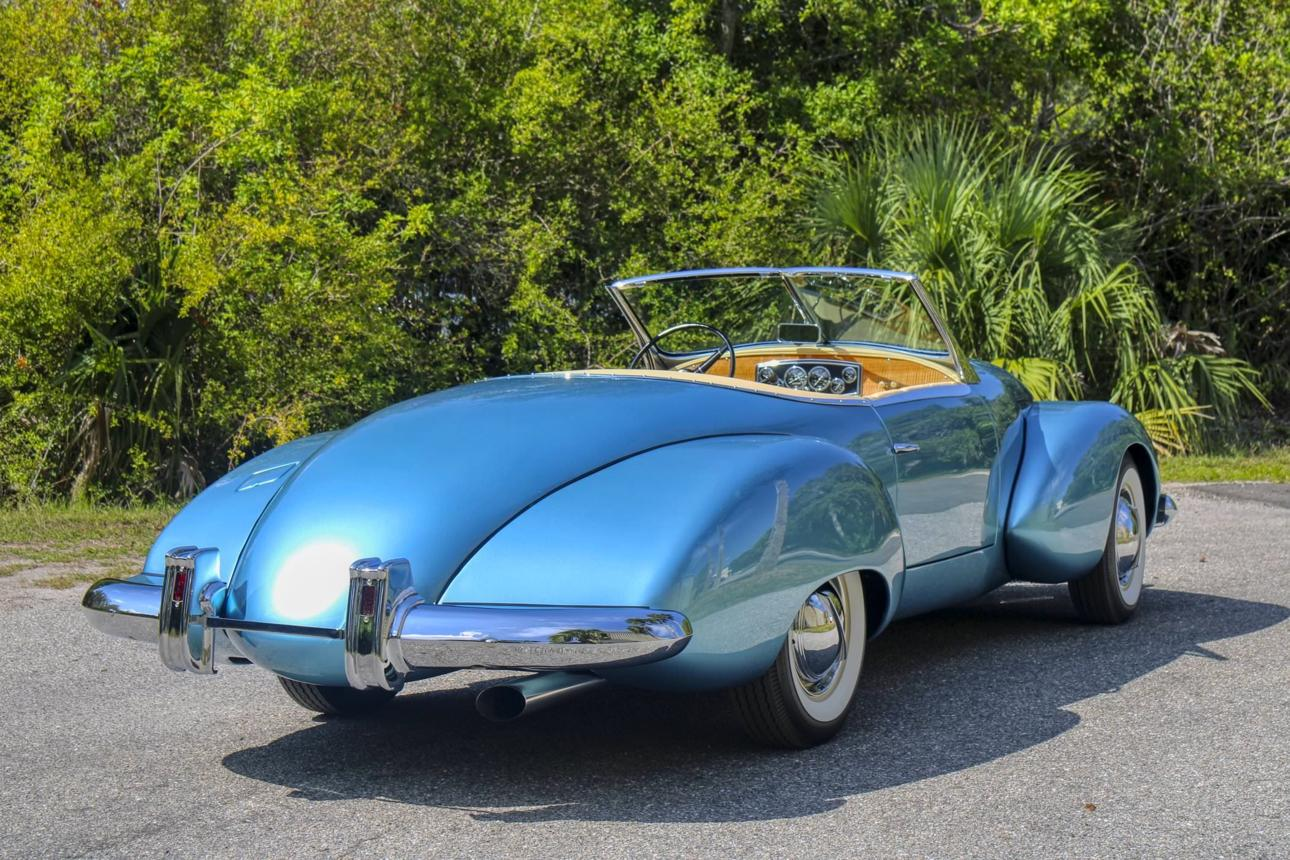
In 1951, Omohundro sold his Comet. Its next owner was Jim Neidy of Detroit, Michigan, who became the car’s second recorded owner.
It subsequently passed to Sam Cornell, a Michigan collector who also owned the 1947 Kurtis-Omohundro Comet. For a period, both examples were reunited under the same ownership.
In 1959, Cornell sold the cars. The 1948 Comet then disappeared into storage, where it remained for more than five decades.
For an automobile with such an unusual construction and a documented presence in early motoring publications, that long absence is extraordinary. Its story was not erased, but the car itself had become largely inaccessible to the public.
The two Comets were eventually separated, and their rediscovery became an important part of the work undertaken by Geoff Hacker and the team at Undiscovered Classics.
In 2009, the two cars were acquired and reunited under Hacker’s ownership. Their histories could be revisited, researched and brought back to the attention of enthusiasts who might otherwise never have encountered them.
The 1948 example would eventually return to the concours stage, making its appearance at the 2023 Pebble Beach Concours d’Elegance.
More than half a century after it disappeared from public view, the Comet was once again being admired for what it represented.
Why the Comet matters
The Kurtis-Omohundro Comet is frequently discussed in the context of America’s first post-war sports cars. The Tucson Auto Museum describes it as widely considered the first post-war American sports car, while its history is also tied to the broader development of independent American sport-custom design.
It is worth being precise about that distinction: the 1947 Comet preceded this example, and the two cars should not be confused. The 1948 car is the second of the pair, with its own revised body and mechanical specification.
Its importance is not simply that two were built. It represents a moment when independent American designers and specialist workshops were attempting to create something beyond the established production-car formula.
The Comet’s aluminium coachwork, modified chassis and Cadillac powertrain show how far that ambition could go without the resources of a major manufacturer.
It also tells us something about the people behind it. Kurtis was a racing-car constructor with a vision for road-going sports cars. Omohundro was an industrial craftsman whose company possessed the specialist knowledge to bring that vision to life.
Their partnership produced only two cars, but those cars left a lasting mark on the history of American automotive design.
### A rare opportunity at Kruse Auctions
 — collection history and specifications.
* [Undiscovered Classics — Pebble Beach 2023 background](https://www.undiscoveredclassics.com/proposals/pebble-beach-folder/pebble-beach-archive-folder/background-pebble-beach-2023/?utm_source=chatgpt.com) — rediscovery and historical background.
* [Autoweek — The rediscovery of the 1947 Comet](https://www.autoweek.com/car-life/a1977356/1947-kurtis-omohundro-comet-rediscovered-part-one-look-back-americas-first-postwar/?utm_source=chatgpt.com) — background on Frank Kurtis and Paul Omohundro. Tucson Auto Museum +2
Editorial note: The auction catalogue is the source for the specific history and condition claims relating to Lot 30. The broader historical context is supported by the Tucson Auto Museum and Undiscovered Classics. The “first post-war American sports car” description is best treated as a historical characterisation, not an uncontested industry designation.
7
7
7
7