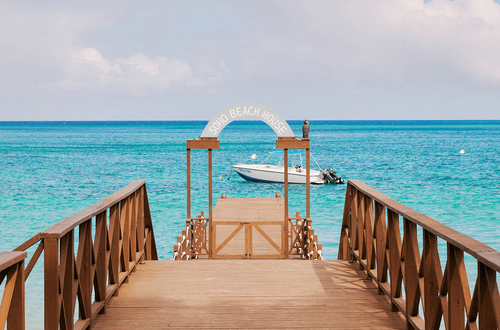
A Village, Not a Resort: The Architectural Grammar
Arriving at Charlestown Bay by boat, the first glimpse of Soho Beach House Canouan reveals a deliberate departure from traditional luxury silhouettes. Rather than imposing a monolithic structure upon the small Grenadian island, the property which debuted in 2017 presents a series of low-slung, thatched pavilions. These structures are nestled into the dry tropical forest, following the natural curve of the hillside as if they were part of the original topography.

The core design philosophy was paradoxical: to create a world-class destination that looks as though it lacks a formal design brief. The result is an aesthetic rooted in the “fishing village” tradition. Whitewashed timber columns and woven palm roofs provide the structural framework, while sea walls are hand-built from volcanic fieldstone harvested directly from the local landscape. Reviewers from Wallpaper* have noted that this commitment to local materiality allows the property to anchor itself to the shoreline with an authenticity rarely seen in high-end developments.


The Interior Narrative: Lived-in Luxury
Inside, the aesthetic transitions from the brand’s signature moody, urban grit to a palette defined by the Caribbean light. The interiors embrace an “accumulated style” a curated mix of textures and eras that suggests a home built over decades rather than decorated in a single season.
- Atmospheric Textures: Guest rooms are wrapped in horizontal shiplap painted a soft, warm white. This serves as a backdrop for plantation shutters that modulate the intense tropical sun, casting rhythmic shadows across the space.
- The Sleeping Quarters: Central to the rooms are bamboo four-poster beds, layered with block-print textiles in earthy ochre and botanical green.
- The Furnishings: The use of wicker chairs, fringe-trimmed linens, and dark-stained timber chests creates the nostalgic, cozy atmosphere of a coastal cottage.
Design critics often describe these spaces as “effortlessly residential,” avoiding the clinical perfection of a standard hotel suite in favor of something that feels deeply personal and well-loved.
The Public Pavilions: A Study in Slowness
The social heart of the property, the open-air restaurant and bar, exists almost entirely within the elements. By removing traditional walls, the design invites the beach inside. Furnished with teak sofas, rattan chairs, and enamel pendant lights, the space feels unhurried and permanent.
As many design editorials have highlighted, the genius of the composition lies in its placement. Sitting directly in the sand, the pavilions offer a seamless transition from the sea to the sanctuary. It is a masterclass in architectural restraint: a property that doesn’t just sit on the land, but belongs to it.