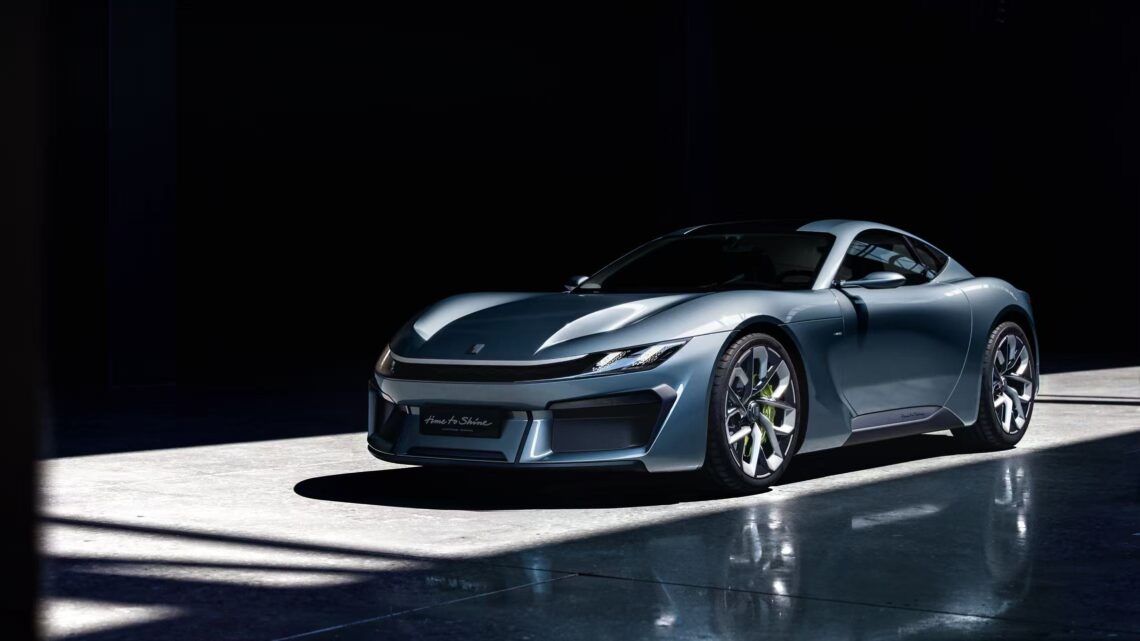
There’s a specific kind of “stop-scrolling” energy that hits when you see a machine stop acting like a static object and start acting like a living thing. I recently caught a clip of the Lynk & Co “Time to Shine” GT Concept, and honestly, it’s the first time in a while a concept car has felt like it’s heading in a direction that actually matters.

We’ve spent decades obsessed with “modes” Sport, Comfort, Eco, which usually just mean a different color on the dashboard and a slightly jerkier throttle. But Lynk & Co is playing with something much more visceral: Physical Transformation.
The “Plus” Factor
The headline here isn’t just the 0 to 100 km/h in 2 seconds though in a rear-wheel-drive setup, that’s borderline terrifying. The real story is the Spark Yellow “+” button on the center console.


When you hit it, the car doesn’t just change its “mindset”; it changes its geometry.
- The Drop: The suspension slammed down by 15 mm, trading ground clearance for a low-slung, “stuck-to-the-tarmac” center of gravity.
- The Stretch: Aerodynamic elements at the front and rear extend the body by a full 100 mm. It’s the “push and pull” of design made manifest effectively lengthening the wheelbase’s aero-footprint at high speeds to hunt for stability.
- The Purge: In a move that feels very “Pinkies Down” (functional over flashy), the interior screens actually retract. It’s a mechanical admission that at high speeds, you don’t need a face full of pixels; you need a clear line of sight and a direct connection to the asphalt.
The “Harvey” Effect: Precision and Variable Presence
This shift toward “Variable Performance” isn’t happening in a vacuum. Look at the recent Mercedes-AMG campaign featuring Gabriel Macht (better known as Harvey Specter from Suits). It’s a brilliant bit of casting because the Harvey Specter persona is built on precision, presence, and the ability to adapt to the “tug” of a high-stakes environment.


Mercedes is pushing the idea that the new AMG isn’t just a hammer; it’s a variable instrument. Between the active roll stabilization and the fully variable all-wheel drive, the car is constantly tweaking grip and suspension stiffness in real-time. It’s about creating a personal driving experience where the car’s “character” is as fluid as the driver’s intent.
“It’s not just about speed anymore; it’s about the architecture of the drive. The car should be a reflection of the moment stiff and aggressive when you’re hunting a corner, but relaxed and ‘flat’ when you’re just covering ground.”