For years, the lineage of McLaren’s Ultimate Series was clear-cut. There was the iconic F1, followed by the groundbreaking P1 hypercar hybrid. When the automotive world began whispering about Project XP2 a rumored all-electric halo car heavily studied in 2025 the assumption was simple: this was the true, linear successor to the P1. This was the car destined to carry the torch of McLaren’s highest performance tier into the zero-emissions era.

Then, corporate reality intervened. Under the weight of battery cooling issues and track-stamina constraints, the official word from Woking was that the EV project had been shelved. The hybrid W1 took the spotlight instead.
But a project like XP2 doesn’t just die. It retreats into the shadows. The latest rumors swirling through the industry suggest that instead of a mass-production flagship, XP2 is taking form within the secretive halls of MSO (McLaren Special Operations) and the breadcrumbs lead directly from a recent DLifestyleMagazine social media spotlight to McLaren’s brand-new Le Mans contender.
The 2025 Blueprint and the P1 Expectation
When engineers first began laying down the math for Project XP2 in 2025, it carried the immense weight of the P1’s legacy. It wasn’t meant to be an experimental plaything; it was tasked with redefining electric acceleration through the lens of McLaren’s signature lightweight carbon philosophy.

While the public was told that an EV hypercar was impossible by today’s standards due to a massive weight penalty and a 45-minute battery recharge deficit, MSO operates under a completely different set of rules. They don’t build for global dealership networks; they build one-offs and ultra-limited track weapons for collectors who care entirely about raw engineering marvels. XP2 didn’t die; its mission statement simply shifted from a standardized production car to a bespoke MSO masterpiece.
The Hyundai Connection: Cracking the Thermal Wall
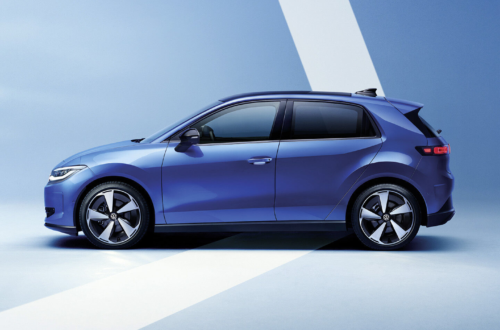
On paper, a connection between a mainstream Korean brand and the elite halls of MSO seems distant. In reality, it is a brilliant tactical pivot. Hyundai’s high-performance electric divisions have spent the last few years mastering two things that McLaren desperately needs to rescue XP2: violent, communicative chassis feedback in an EV platform and high-discharge battery thermal management.

To make an electric hypercar worthy of the MSO badge, it cannot feel sterile like a straight-line EV dragster, and it cannot overheat after ten minutes on a track. By leveraging minds that have spent years torturing high-output electric powertrains on the NĂĽrburgring, MSO is solving the exact physics problem that originally stalled the project.
The MCL-HY: A Trojan Horse in the Pit Lane
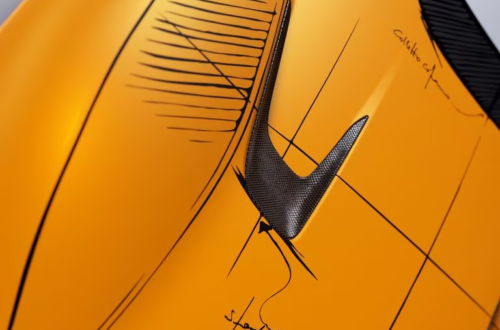
The ultimate catalyst for this theory is McLaren’s highly anticipated return to the 24 Hours of Le Mans with the MCL-HY prototype, alongside MSO’s client-spec track weapon, the MCL-HY GTR.
When MSO announced the MCL-HY GTR, they made a fascinating engineering choice: they completely stripped the race-regulated hybrid system out of the car, leaving clients with a pure, ultra-lightweight, internal combustion twin-turbo V6 track car.
By removing the standard hybrid components, MSO has effectively created a structural vacuum inside one of the most advanced, rigid carbon-fiber monocoques on earth. A chassis designed to handle the brutal aerodynamic and cornering loads of Le Mans is the perfect host environment. MSO isn’t just building a customer track car; they are using the physical footprint of the MCL-HY to construct a rolling testbed for the resurrected XP2 powertrain.
The Ultimate Shift
We initially expected the successor to the P1 to be a highly publicized, factory-backed EV revolution. Instead, it appears McLaren is taking a far more fascinating, “Pinkies Down” approach to high engineering. They are bypassing the corporate red tape and building it where raw passion overrides market research.
Project XP2 is no longer a corporate mandate to satisfy emissions regulations. In the hands of MSO, armed with high-discharge engineering expertise and a race-proven Le Mans chassis, it is becoming exactly what a true hypercar should be: an uncompromised, boundary-pushing anomaly built purely for the sake of science, speed, and raw defiance.