The Formula 1 paddock never remains quiet for long, but as the summer temperature rises, the technical chess match across the grid has reached a fever pitch. Between political battles over engine tricks, aggressive development curves, and the shifting power balance between manufacturer heavyweights and ambitious newcomers, the current technical narrative is one of the most fascinating storylines in modern motorsport.
Furthermore, as teams lock in their mid-season development packages, the raw hierarchy of the grid is becoming undeniably clear.
Red Bull’s Benchmark Balance vs. The Mercedes Power House
When evaluating what makes a championship-winning car, pure horsepower is only one piece of a complex puzzle. Red Bull Racing continues to serve as the ultimate operational benchmark because their car functions as an impeccably balanced, total package.
While rival power units might throw higher peak figures around, Red Bull’s aero stability, mechanical compliance, and race-distance tire management allow them to extract every ounce of performance regardless of track layout.
Conversely, Mercedes has asserted its authority through pure power unit supremacy. The Mercedes Internal Combustion Engine (ICE) along with their aggressive MGU-K deployment strategies remains the gold standard of the current engine era. However, straight-line power comes with its own headaches.
As Mercedes works through powertrain thermal management and complex electrical lockout behaviors, their focus has shifted toward patching powertrain reliability before their rivals close the gap.
Scuderia Ferrari HP: The Deficit, The Chassis, and Pure Mechanical Grip
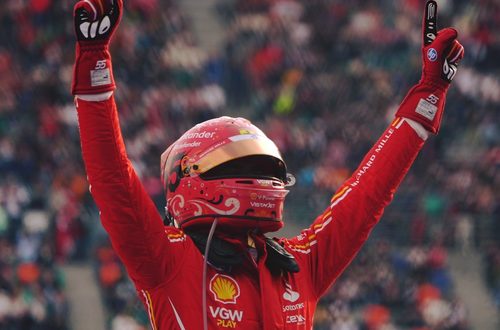
Naturally, this dynamic leaves Scuderia Ferrari HP in a compelling position. Critics and paddock chatter are quick to point out that while Ferrari’s ICE unit is remarkably refined, it still faces a horsepower deficit compared to the monstrous Mercedes benchmark.
Nevertheless, focusing solely on straight-line output misses the genius of Maranello’s current design philosophy.
In truth, Scuderia Ferrari HP’s true potential lies in what is arguably the finest chassis on the grid. What Ferrari surrenders in absolute peak ICE output, they claw back through breathtaking mechanical grip, slow-speed traction, and hyper-efficient drag shedding. By pairing sophisticated floor board geometry with clean straight-line aero modes, the SF-26 maximizes turn-in stability and exit drive. Consequently, Ferrari remains an absolute threat on any circuit that rewards balance over pure brute force.
The Technical Trade-off: Ferrari’s chassis prowess proves that an engine is only as good as the platform carrying it. By mastering mechanical grip and low-speed stability, Maranello turns every technical sector into a recovery zone against higher-horsepower rivals.
Mid-Summer Crossroads: Haas, Aston Martin, and the Cadillac Surge
Beyond the top-three war, the rest of the paddock is undergoing a seismic realignment of its own as the mid-summer upgrade deadline approaches:
- Haas F1 Team: Operating as Ferrari’s close technical partner, Haas continues to punch above its weight. By capitalizing on Ferrari’s supreme rear-end traction and targeted cooling packages, Haas is establishing itself as a lethal midfield point-scorer.
- Aston Martin: With their Honda works engine transition on the horizon, Aston Martin is aggressively tweaking floor profiles and wing mechanics. Their mid-season focus centers on stabilizing high-speed downforce to keep pace with the elite.
- Cadillac: The grid’s newest powerhouse isn’t merely taking up garage space. Bringing ambitious floor and nose updates to every passing grand prix, Cadillac’s rapid development cycle is putting established mid-pack squads on high alert.